Why You Cannot Sleep Even When You Are Exhausted (And What Your Nervous System Is Doing)
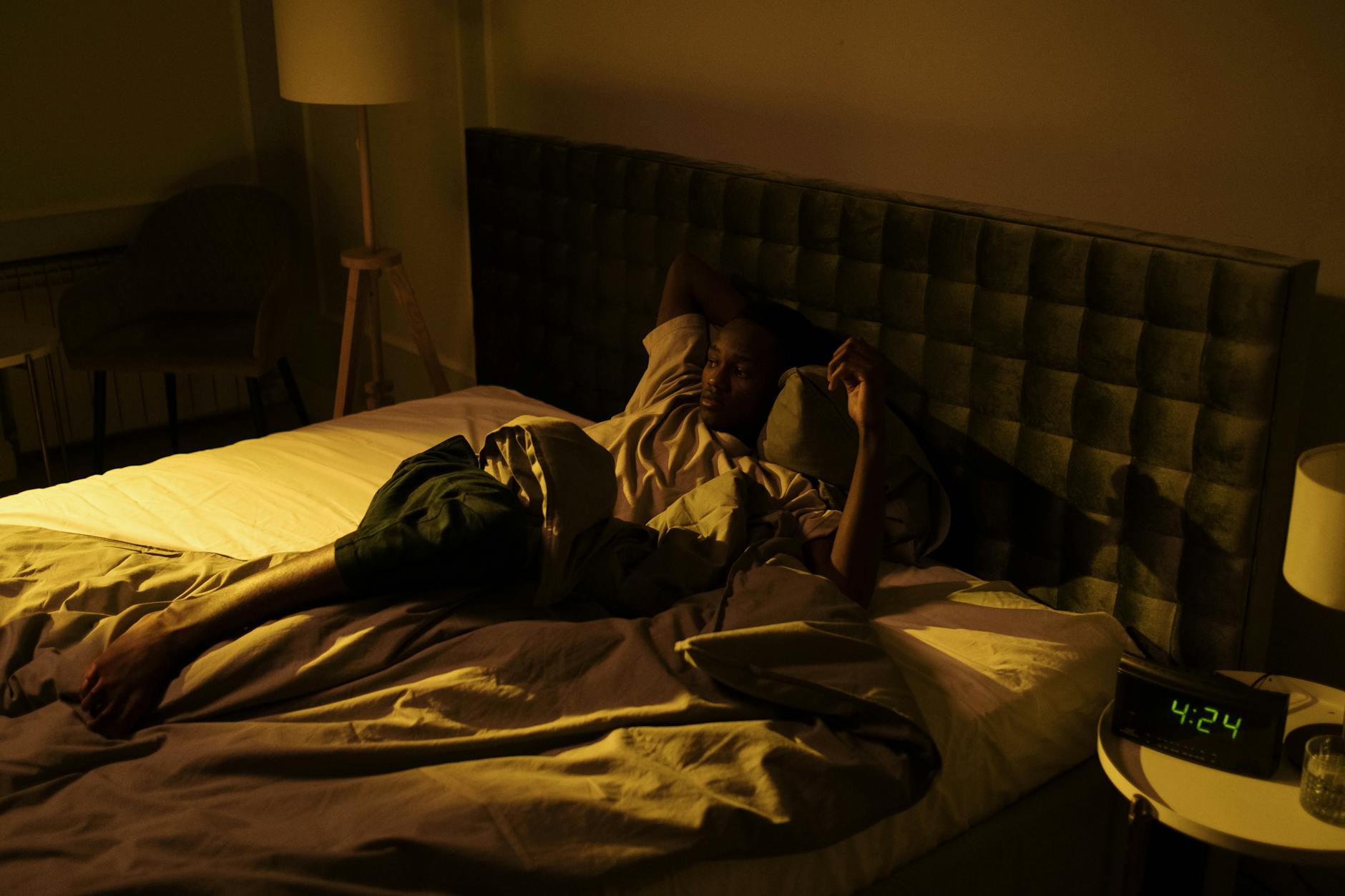
It is 2 a.m. Your body aches. Your eyes feel like sandpaper. You have been awake for seventeen hours and every cell in your body is begging for rest. Yet the moment your head hits the pillow, your brain switches on like a stadium floodlight. If you can't sleep when exhausted, you are not imagining it, and you are not broken. Your nervous system is doing exactly what it was designed to do — just at the completely wrong time.
This is one of the most common and least understood sleep complaints. Millions of people search "why can't I sleep when tired" every single night, convinced that exhaustion should automatically produce sleep. It doesn't. Sleep is not simply the absence of wakefulness. It is an active neurological state that your brain has to be coaxed into — and when your stress-response system is running the show, that coaxing becomes nearly impossible.
This article explains the biology behind the exhausted-but-wired paradox, what cortisol and sleep have to do with each other, and — most importantly — what nervous-system-specific strategies can actually shift you out of that stuck state. No generic advice about blue light or warm milk. We are going deeper than that.
The Exhausted-But-Wired Paradox: What Is Actually Happening
Sleep researchers call this state hyperarousal insomnia. It is distinct from simple poor sleep hygiene. People with hyperarousal insomnia don't just struggle to sleep because the room is too bright or they drank coffee too late. Their entire nervous system is stuck in a high-alert mode that is physiologically incompatible with sleep onset — even after prolonged wakefulness.
Under normal conditions, a molecule called adenosine accumulates in the brain throughout the day. The longer you stay awake, the more adenosine builds up, creating what scientists call "sleep pressure." In healthy sleepers, this pressure eventually becomes overwhelming and sleep follows naturally. But adenosine only controls one half of the sleep equation. The other half is your arousal system — the network of brain regions and neurochemicals that keep you alert, vigilant, and reactive.
When the arousal system is chronically over-activated — as it is in people under sustained stress — it can override even massive amounts of sleep pressure. You can be deeply exhausted and still be neurologically too alert to sleep. The gas pedal and the brake are both pressed to the floor simultaneously. This is not a willpower problem. It is a biological conflict your conscious mind cannot resolve by simply deciding to relax.
Cortisol: The Hormone That Is Keeping You Awake
To understand why you can't sleep when exhausted, you need to understand cortisol — not as a vague "stress hormone," but as a precise biological signal with a very specific relationship to your sleep-wake cycle.
Cortisol follows a daily rhythm governed by your circadian clock. In healthy sleepers, cortisol levels peak about 30 to 45 minutes after waking — a phenomenon called the cortisol awakening response — and then steadily decline throughout the day, hitting their lowest point in the hours just before and during sleep. This low-cortisol window is precisely when your brain can enter and maintain deep, restorative sleep stages.
Stress disrupts this rhythm in two critical ways. First, psychological stress triggers the HPA axis (hypothalamic-pituitary-adrenal axis) to release cortisol at unpredictable times throughout the day and, crucially, at night. Research published in the journal Sleep has consistently shown that people with chronic insomnia have measurably elevated cortisol levels in the evening compared to healthy sleepers. Second, chronic stress can flatten the normal diurnal cortisol curve, leaving levels elevated at a moderate-but-constant level around the clock — like an engine that never fully idles down.
Cortisol signals the body to increase heart rate, elevate core body temperature, sharpen attention, and suppress processes the brain considers non-essential for survival — including digestion, immune repair, and, critically, sleep. When cortisol is elevated at bedtime, it is not a quirk or a mood. It is a chemical instruction to your body that now is not a safe time to be unconscious. Your brain is not being dramatic; it is following orders.
The cruel irony is that sleep deprivation itself raises cortisol levels the following day. This creates a self-reinforcing loop: stress raises cortisol, elevated cortisol and sleep disruption feed each other, lack of sleep raises cortisol further, which makes the next night harder, and so on. This is why hyperarousal insomnia tends to compound over time rather than resolve on its own without deliberate intervention.
The Autonomic Nervous System: Why the Off Switch Is Stuck
Your autonomic nervous system has two branches that operate like a seesaw. The sympathetic nervous system (SNS) governs the fight-or-flight response — it accelerates your heart rate, dilates your pupils, redirects blood to your muscles, and raises mental alertness. The parasympathetic nervous system (PNS) governs rest-and-digest — it slows your heart rate, lowers blood pressure, promotes digestion, and creates the physiological conditions in which sleep becomes possible.
Sleep onset requires a clear shift toward parasympathetic dominance. Your heart rate needs to slow. Your core body temperature needs to drop by roughly 1 to 2 degrees Fahrenheit — a process that happens as blood vessels in the hands and feet dilate to release heat. Your breathing needs to slow and deepen. Brain wave activity needs to transition from the fast, high-frequency beta waves of alertness through alpha waves and into the slower theta waves of light sleep.
Every single one of these transitions is blocked when the sympathetic nervous system is dominant. And in people with hyperarousal insomnia, studies using polysomnography (overnight sleep lab testing) have found that SNS activity remains measurably elevated throughout the night — not just at bedtime. This means the nervous system and sleep conflict is not just about falling asleep; it is about the quality of sleep itself. Sufferers often wake unrefreshed despite technically having slept because they never fully transitioned into slow-wave or restorative sleep stages.

Why Standard Sleep Hygiene Often Fails These Sleepers
Standard sleep hygiene advice — dim the lights, avoid screens, keep a consistent schedule, cut caffeine after noon — is genuinely useful. But it is designed primarily for people whose sleep problems stem from circadian disruption or poor habits. For people whose insomnia is rooted in nervous system dysregulation, these tips address the periphery of the problem while leaving the central mechanism untouched.
Telling a person in sympathetic overdrive to "just relax before bed" is a bit like telling someone experiencing a panic attack to "calm down." The instruction is technically correct but fails to account for the fact that the autonomic nervous system is not under direct voluntary control. What is needed is not a better bedtime routine, but a direct physiological intervention on the nervous system itself — something that gives the body a concrete biological pathway toward parasympathetic activation.
Nervous-System-Specific Strategies That Actually Work
The following approaches have meaningful scientific support specifically for people whose insomnia is driven by sympathetic over-activation and elevated stress hormones. They work by directly engaging the parasympathetic nervous system rather than simply optimizing the sleep environment.
Extended Exhale Breathing
The ratio of your inhale to your exhale directly influences your heart rate variability (HRV) and autonomic nervous system balance. Inhaling activates the SNS slightly; exhaling activates the PNS. Making your exhale longer than your inhale — a 1:2 ratio — reliably shifts the nervous system toward parasympathetic dominance within minutes. Research published in Frontiers in Psychology found that just five minutes of slow, controlled breathing with extended exhales significantly reduced cortisol-related arousal markers in subjects primed for stress.
A clinically tested protocol is the 4-7-8 method: inhale for 4 counts, hold for 7, exhale slowly for 8. Another well-supported variation is simple resonance breathing — inhale for 5 seconds, exhale for 5 to 7 seconds — which synchronizes heart rate with breathing and maximizes vagal tone. Practicing this while lying in bed, rather than trying to force sleep, gives the nervous system a concrete physiological task and a direct pathway toward rest.
Progressive Muscle Relaxation
Progressive muscle relaxation (PMR) is one of the most rigorously tested interventions for hyperarousal insomnia. It works by systematically tensing and then releasing major muscle groups throughout the body, exploiting the fact that the PNS automatically activates following a period of sustained muscular tension. Multiple meta-analyses, including a landmark review in the Journal of Sleep Research, have confirmed that PMR reduces sleep onset latency and improves sleep quality in chronic insomniacs over a period of two to four weeks of consistent practice.
The mechanism is partly muscular and partly attentional. The focused, body-directed attention required by PMR directly competes with the ruminative thought patterns that keep the arousal system activated. You cannot simultaneously focus on releasing tension in your calf muscles and catastrophize about your to-do list. This is not a placebo effect; it is a deliberate hijack of the brain's attentional architecture.
Warm Bath or Shower Before Bed
Core body temperature drop is a prerequisite for sleep onset, and you can actively accelerate it. Taking a warm bath or shower 60 to 90 minutes before bed causes peripheral blood vessels to dilate, drawing heat away from the body's core toward the skin surface. When you step out of the warm water, the rapid evaporative cooling accelerates the core temperature drop that triggers sleepiness. A 2019 meta-analysis in Sleep Medicine Reviews found this protocol to be one of the most effective passive interventions for reducing sleep onset time, cutting it by an average of 10 minutes in subjects who had difficulty initiating sleep.
Cognitive Shuffling
Developed by cognitive scientist Luc Beaulieu-Prévost and sleep researcher Dr. Luc Beaulieu, cognitive shuffling is a technique designed to mimic the random, loosely associated thought patterns that naturally occur during sleep onset. When the brain detects logical, emotionally laden, problem-solving thinking — the kind of rumination that keeps insomniacs awake — it interprets this as a signal that the person is still engaged with the waking world and suppresses sleep onset signals accordingly.
The technique involves deliberately visualizing a series of completely unrelated, emotionally neutral images in rapid succession. You might picture a red apple, then a sailing boat, then a brick wall, then a horse, without allowing any narrative thread to connect them. This pattern of thinking closely resembles the hypnagogic imagery associated with natural sleep onset and sends a signal to the arousal system that it is safe to stand down. Users of the associated app (mySleepButton) report meaningful reductions in sleep onset time, and a 2022 study in the journal Sleep found the technique superior to counting sheep and general distraction in reducing pre-sleep cognitive arousal.
Cold Face Immersion (The Dive Reflex)
One of the fastest-acting ways to trigger the parasympathetic nervous system is through the mammalian dive reflex. When your face — specifically the area around the eyes and forehead — comes into contact with cold water, your heart rate drops almost immediately via vagal nerve activation. This is a hard-wired survival mechanism, not a learned response, and it cannot be blocked by the thinking brain.
Submerging your face in a bowl of cold water (around 50 to 60°F) for 15 to 30 seconds, or applying a cold, wet cloth to the eye area and forehead, can reduce heart rate by 10 to 25% within seconds. For people lying awake with a racing heart and a flooded stress response, this is one of the fastest available tools for braking the sympathetic nervous system. It is particularly useful during the 2 a.m. wide-awake episode that is characteristic of cortisol-driven natural sleep improvement challenges.
The Role of Daytime Habits in Nighttime Cortisol
It would be incomplete to discuss why you can't sleep when exhausted without addressing the daytime inputs that fuel nighttime cortisol elevation. The arousal system does not reset at midnight. What happens between 7 a.m. and 9 p.m. directly shapes the neurochemical environment you bring to your pillow.
Sustained low-grade psychological stress — the kind produced by constant email, social media comparisons, financial worry, or relationship tension — keeps a low-level cortisol drip running throughout the day. By evening, the cumulative load is high enough that even normal wind-down signals (darkness, reduced noise, decreased activity) are insufficient to bring cortisol below the sleep threshold.
Skipping sunlight exposure in the morning is a significant but underappreciated factor. Morning light exposure — ideally within 30 to 60 minutes of waking — calibrates the circadian clock and produces a robust cortisol awakening response. Counterintuitively, a strong morning cortisol spike actually leads to a lower cortisol baseline later in the day. People who work from home and rarely go outside often have blunted morning cortisol peaks and elevated evening cortisol, exactly the pattern associated with difficulty sleeping.
Intense late-evening exercise — particularly high-intensity interval training or heavy resistance work after 8 p.m. — is a reliable cortisol elevator. While regular exercise is one of the most effective long-term interventions for improving sleep quality, timing matters significantly for people who are already operating in sympathetic overdrive. Moderate activity like walking, yoga, or gentle cycling in the evening is far less likely to spike cortisol than intense training.
Alcohol deserves special mention because many people use it as a sleep aid, and it genuinely does suppress the arousal system in the first half of the night. However, as the body metabolizes alcohol (typically 3 to 5 hours after consumption), cortisol rebounds sharply — often causing the 3 a.m. wake-up that is so common in people who drink to sleep. The net effect of regular alcohol use on sleep architecture is significantly negative, particularly for REM sleep and slow-wave sleep.
When to Seek Professional Help
The strategies outlined above are evidence-based and accessible, but they are not a substitute for professional care when insomnia is severe, prolonged, or affecting daily functioning. Cognitive Behavioral Therapy for Insomnia (CBT-I) is currently the most effective treatment for chronic insomnia according to sleep medicine guidelines from both the American Academy of Sleep Medicine and the European Sleep Research Society. It outperforms sleep medications in long-term outcomes and specifically targets hyperarousal through sleep restriction therapy, stimulus control, and cognitive restructuring.
If you have been struggling to sleep for more than three months, experiencing significant daytime impairment, or finding that stress-related wakefulness is escalating rather than stabilizing, speaking with a sleep specialist or a therapist trained in CBT-I is the most direct path to lasting change. In some cases, underlying conditions — anxiety disorders, subclinical depression, sleep apnea, or thyroid dysfunction — can drive the hyperarousal pattern and require targeted treatment beyond behavioral intervention.
Key Takeaways
- Being unable to sleep when exhausted is a biological phenomenon called hyperarousal insomnia, not a personal failure or a willpower deficit.
- Elevated cortisol — triggered by chronic stress and compounded by sleep deprivation itself — directly blocks the physiological conditions required for sleep onset.
- Sleep requires a shift to parasympathetic nervous system dominance: slower heart rate, lower core body temperature, and reduced brain wave frequency. Cortisol and SNS dominance prevent all three.
- Standard sleep hygiene does not address the root mechanism. Nervous-system-specific tools — extended exhale breathing, PMR, warm baths, cognitive shuffling, and the dive reflex — work by directly activating the parasympathetic system.
- Daytime cortisol load (stress accumulation, lack of morning light, late-night alcohol) directly shapes nighttime sleep chemistry. Addressing sleep means addressing the full 24-hour cortisol cycle.
- CBT-I remains the gold-standard treatment for chronic hyperarousal insomnia and should be considered when self-directed strategies are insufficient.
The exhausted-but-wired feeling is not a mystery your body is inflicting on you randomly. It is a coherent, well-documented physiological state with identifiable causes and specific solutions. Understanding the mechanism — the cortisol loop, the nervous system conflict, the parasympathetic deficit — is the first step toward being able to intervene in it deliberately, rather than lying awake wondering why sleep refuses to come.