What Is Emergency Preparedness and Why Most Families Are Not Ready
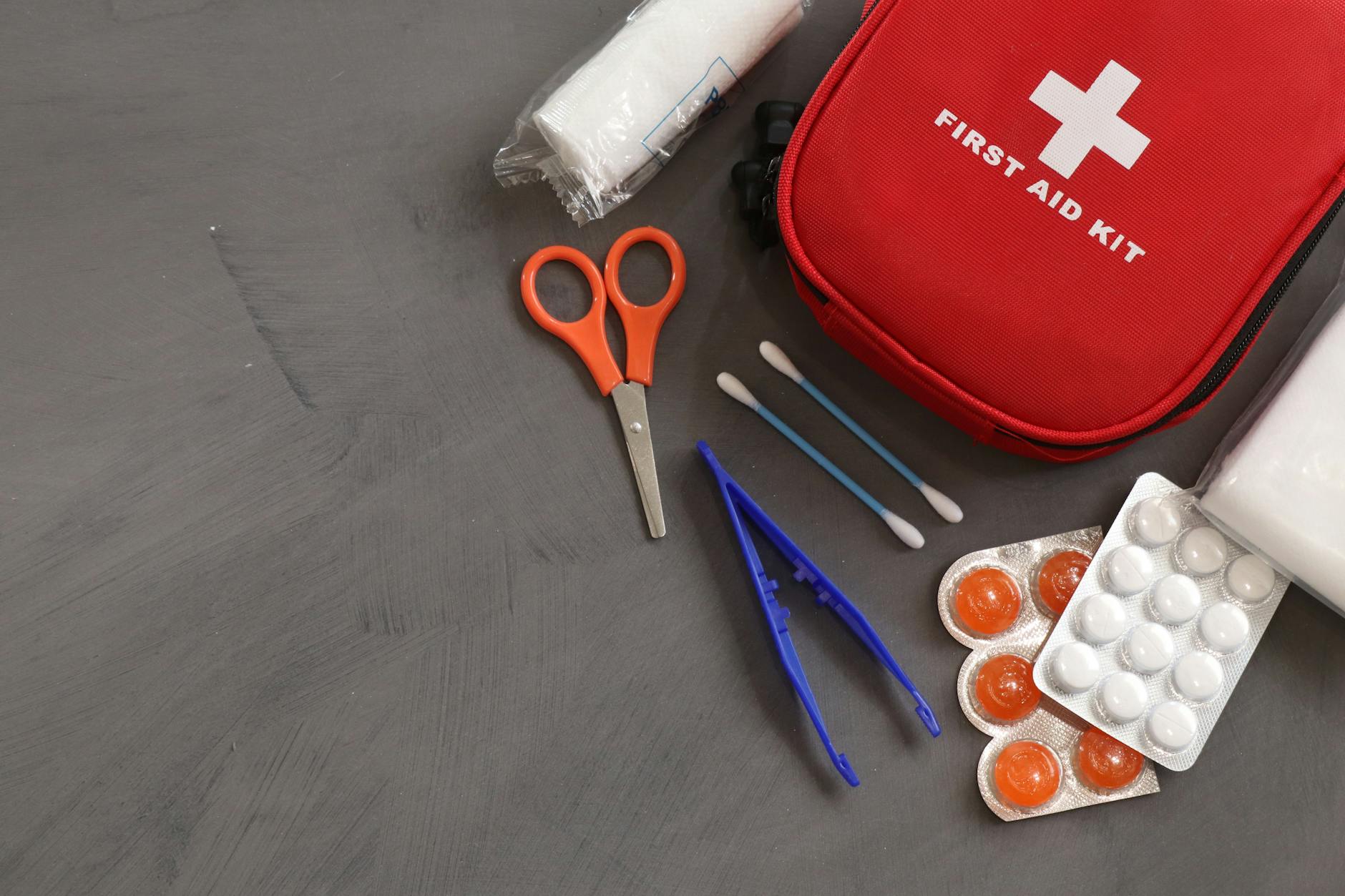
Most families assume they are more prepared than they actually are. When asked, the majority of adults say they have "thought about" what they would do in a major emergency. But thinking about it and having an actual, tested plan are two completely different things — and in a real crisis, that gap can cost you dearly.
Emergency preparedness is the practice of proactively organizing your household so that every family member knows exactly what to do, where to go, and what information they need access to during a disaster, natural catastrophe, or sudden crisis. It is not about fear-mongering or building a bunker. It is about reducing chaos when chaos is unavoidable.
According to the Federal Emergency Management Agency (FEMA), only about 39% of Americans have discussed and documented a household emergency plan. Separate research from the American Red Cross found that fewer than half of U.S. households have a three-day supply of food and water set aside for emergencies. These numbers are sobering in an era when wildfires, hurricanes, ice storms, floods, and power grid disruptions are becoming increasingly common and unpredictable.
This guide breaks down the five core pillars of household emergency preparedness, the most common mistakes families make, and a practical step-by-step action plan you can begin implementing today — no special equipment required.
Why Emergency Preparedness Matters More in 2026 Than Ever Before
The landscape of risk has shifted considerably in recent years. Extreme weather events have increased in frequency and severity. In 2024 alone, the United States experienced 27 separate billion-dollar weather and climate disasters — a record high. But natural disasters are only one category of threat. Cyberattacks on infrastructure, power grid vulnerabilities, public health emergencies, and even localized events like house fires or sudden medical crises can disrupt daily life in ways that demand a prepared household.
The problem is that most families treat emergency planning the same way they treat scheduling a dentist appointment — they know they should do it, they intend to do it, and then they simply do not. Life gets in the way. The urgency feels abstract until it is suddenly, acutely real.
Emergency preparedness is also not just about survival kits and flashlights. The most overlooked dimension of family safety planning is information management: knowing where your documents are, who to call, and what your family members' medical needs are — all of which can be impossible to reconstruct from memory under stress.
The Five Pillars of Household Emergency Preparedness
A genuinely prepared household is built on five interconnected pillars. Miss one, and you have a significant gap that can undermine everything else.
Pillar 1: Evacuation Plan and Meeting Points
An evacuation plan answers the single most important question in any emergency: where does everyone go? Without a predetermined answer, family members make independent decisions under stress — and that is how families get separated.
A solid evacuation plan includes the following elements:
- Two escape routes from every room in your home, including windows. This is especially important for children's bedrooms on upper floors.
- A primary meeting point just outside your home — typically the end of the driveway or a neighbor's yard — for scenarios like house fires where you need to evacuate immediately.
- A secondary meeting point farther from home — a local landmark, school, or community center — for scenarios where the neighborhood itself is affected (flood, wildfire, chemical spill).
- A designated out-of-area contact that all family members can check in with if local phone lines are congested. Counterintuitively, long-distance calls often connect more reliably during local disasters than calls within the affected region.
- Assigned responsibilities for each family member — who grabs the go-bag, who accounts for pets, who assists elderly or disabled household members.
Practice your evacuation plan at least twice a year. A plan that has never been rehearsed is not a plan — it is a good intention. Children especially need physical rehearsal to overcome the confusion and fear that real emergencies produce.
Pillar 2: Emergency Contacts and Communication Plan
Modern smartphones have made most people dangerously reliant on digital contact lists. If your phone is lost, dead, or damaged, can you recall a single family member's phone number from memory? Most adults cannot.
A proper communication plan for family safety includes a written list — on paper — of every critical contact number. This list should be laminated or stored in a waterproof sleeve and kept in your go-bag, your car's glove compartment, and your children's school backpacks.

Your emergency contacts list should include:
- All immediate family members' cell phone numbers
- The out-of-state contact agreed upon in your evacuation plan
- Nearest relatives and close friends who could provide shelter
- Family physician and all specialists for household members with chronic conditions
- Pharmacy name and phone number
- Insurance company contact numbers (health, home, auto)
- Employer HR contacts (for reporting absences during extended emergencies)
- Children's school emergency lines
- Local police non-emergency line, fire department, and poison control (1-800-222-1222 in the U.S.)
- Utility companies for gas, electric, and water shutoff reporting
Also establish a family text-check-in protocol. Agreeing in advance that everyone will text a specific group chat within the first 30 minutes of a crisis — regardless of what is happening — eliminates a large amount of panic and duplication of effort in real emergencies.
Pillar 3: Financial and Legal Document Access
One of the most commonly overlooked aspects of emergency preparedness is financial and legal document organization. In a house fire, flood, or forced evacuation, families who cannot quickly grab copies of critical documents face weeks or months of administrative nightmare at the worst possible time.
The documents you need accessible — ideally in both physical and digital form — include:
- Passports and government-issued IDs for all family members
- Birth certificates and Social Security cards
- Marriage and divorce certificates
- Wills, trusts, and power of attorney documents
- Property deeds and mortgage documents
- Vehicle titles
- Insurance policies (home, auto, health, life)
- Recent bank and investment account statements
- Tax returns from the past two years
- Military discharge papers (if applicable)
Physical copies should be stored in a fireproof, waterproof document safe or lockbox. Digital copies should be encrypted and stored in a secure cloud location — not just on your hard drive. A hard drive left in a flooded home is just as inaccessible as a paper document. The goal of document safety is redundancy: multiple copies in multiple formats in multiple locations.
Pillar 4: Medical Records and Medication Information
Medical information is arguably the most time-sensitive element of a family disaster plan. If a family member requires prescription medication for a chronic condition — diabetes, epilepsy, heart disease, asthma — and their prescription is lost along with everything else in a disaster, obtaining emergency refills without documentation can be genuinely dangerous and extremely difficult.
Every household should maintain a medical information sheet for each family member that includes:
- Full name, date of birth, and blood type
- Current medications: name, dosage, prescribing physician, and pharmacy
- Known allergies (medications, food, environmental)
- Chronic diagnoses and relevant medical history
- Names and contact numbers of all treating physicians
- Health insurance policy numbers and provider contact information
- Vaccination records (especially important for children)
- Any implanted devices (pacemakers, insulin pumps) with device identifiers
If any household member requires daily medication, keep a minimum 7-day emergency supply in your go-bag, rotating it regularly so medications remain current. Coordinate with your physician and pharmacist in advance to understand what documentation is needed to obtain emergency refills if your regular supply is lost.
Pillar 5: Digital Backups and Cloud Storage
The fifth pillar is one that most families have partial solutions for — but almost never a complete one. Digital preparedness means ensuring that irreplaceable digital assets (family photos, important documents, financial records, passwords) are backed up in a way that survives any single point of failure.
Security experts and data professionals commonly recommend the 3-2-1 rule for data backup:
- 3 copies of any important data
- 2 different storage formats (e.g., cloud and external drive)
- 1 copy stored off-site (a copy that is not in your home)
For most families, this translates to: automatic cloud backup of phones and computers, a local external hard drive or NAS device for full system backups, and a copy of the most critical files stored somewhere outside the home — a trusted family member's location, a safe deposit box, or a secondary cloud service.
Passwords deserve special mention. If your household uses a password manager — which is strongly recommended for home security — ensure that at least one trusted family member knows how to access the master password and account recovery information. A digital lockout during an emergency creates cascading problems accessing accounts you urgently need.

Common Mistakes Families Make With Emergency Planning
Even families who have made some effort toward emergency preparedness often share a handful of predictable blind spots. Recognizing these mistakes is the first step toward closing the gaps.
Relying entirely on memory. In a high-stress situation, memory is profoundly unreliable. Adrenaline narrows focus, and the information you "know" can feel completely inaccessible when your house is on fire or you are rushing to evacuate ahead of a storm. Everything important needs to be written down.
Making a plan and never revisiting it. A family disaster plan written three years ago may already be obsolete. Phone numbers change. Children grow up and get their own phones. Family members develop new medical conditions. Employers and schools change. Plans need an annual review at minimum.
Forgetting pets. Pets are family members, and they require their own emergency provisions: food, water, carriers, vaccination records, and identification. Many public emergency shelters do not accept pets, which means pet owners need alternate shelter arrangements identified in advance.
No go-bag, or a go-bag that has never been opened. A go-bag packed with expired medications, dead batteries, and out-of-date documents provides false confidence. Everything in a go-bag has an expiration — physical and practical. Review it every six months.
Assuming the internet will be available. Many digital-only plans fall apart when power is out and data networks are overwhelmed, which is precisely what happens in major regional disasters. Critical information must be accessible offline. Paper still matters.
Not involving children in the plan. Children who understand the plan and have practiced it behave more calmly in emergencies. Children who have never heard the plan are a liability. Age-appropriate conversations about what to do in an emergency are not traumatizing — they are empowering.
How to Get Started: A Step-by-Step Action Plan
Getting started does not require a single marathon session. Emergency preparedness is best built in focused, 30-minute blocks over several weekends. Here is a practical sequence:
Week 1 — Evacuation Plan. Walk every room in your home and identify two exit routes. Draw a simple floor plan. Identify your primary and secondary meeting points. Choose your out-of-area contact and notify them. Write this all down and share it with every household member.
Week 2 — Emergency Contacts. Compile your complete emergency contact list. Print it. Laminate it (or put it in a plastic sleeve). Place copies in your go-bag, your car, and each child's backpack. Establish your family group text check-in protocol.
Week 3 — Documents. Gather all critical financial and legal documents. Make photocopies or scan them. Store originals in a fireproof lockbox. Store digital copies in encrypted cloud storage. Identify what is missing and schedule time to obtain it.
Week 4 — Medical Records. Complete a medical information sheet for every household member. Photograph all prescription bottles (front and back). Check your go-bag for a 7-day medication supply and rotate as needed. Identify your nearest urgent care and ER alternatives.
Week 5 — Digital Backups. Enable automatic cloud backup on all phones and computers. Purchase and configure an external hard drive if you do not have one. Verify that your password manager master access is documented and known to a trusted household member. Store a copy of your most critical digital files off-site.
Week 6 — Practice Drill. Run a tabletop exercise with your family. Pose a scenario ("There is a fire — go.") and walk through the plan in real time. Note what was unclear or missing. Update accordingly.
Maintaining Your Emergency Plan: Annual Review Checklist
Emergency preparedness is not a one-time project. It is an ongoing habit. Schedule a dedicated annual review — many families tie this to a memorable date like a birthday, New Year's Day, or the start of hurricane season. Use the following checklist:
Annual Emergency Plan Review Checklist
- Update all phone numbers on emergency contact sheets
- Replace expired food and water in go-bag
- Rotate medications and check expiration dates
- Update medical information sheets with any new diagnoses, medications, or allergies
- Verify that digital document backups are current and accessible
- Confirm evacuation routes are still practical (roads, bridges, construction changes)
- Update children's emergency cards to reflect current grade, school, and teacher
- Confirm that your out-of-area contact is still available and aware of their role
- Check batteries in flashlights, radios, and smoke detectors
- Verify pet vaccinations are current and documentation is in the go-bag
- Review your home and auto insurance coverage limits and update if needed
- Run a brief drill — especially if there are new household members, children, or caregivers
Key Takeaways
Emergency preparedness is not about catastrophizing or living in fear. It is about making a small investment of time and attention now to protect your family's ability to function and recover when something goes wrong. And something will go wrong eventually — the variable is not whether, but what.
The five pillars — evacuation plan, emergency contacts, financial document access, medical records, and digital backups — each address a different category of vulnerability. A family that has covered all five is not invincible, but they are dramatically better positioned than the majority of households around them.
The most important single step you can take today is to stop treating this as something you will get to eventually. Pick up a notebook, start the emergency contact list, and schedule your first 30-minute planning session this week. Your future self — and your family — will be grateful you did.