Wallet Defender Review 2026: We Tested It So You Don't Have To
Limited Time Offer!
Get This Deal Now → *Affiliate link - We may earn a commissionWerbung | Dieser Artikel enthält Affiliate-Links.
If you carry a wallet, your financial data may be at risk right now — without you ever knowing it. Contactless card skimming is a real and growing threat, and the Wallet Defender promises to stop it cold with zero effort on your part. But does it actually work? We put it through its paces so you can decide with confidence. This wallet defender review covers everything: how it works, real-world testing results, build quality, pricing, and who should (and shouldn't) buy one.
Exclusive Discount Available Now — Affiliate-Link
What Is the Wallet Defender?
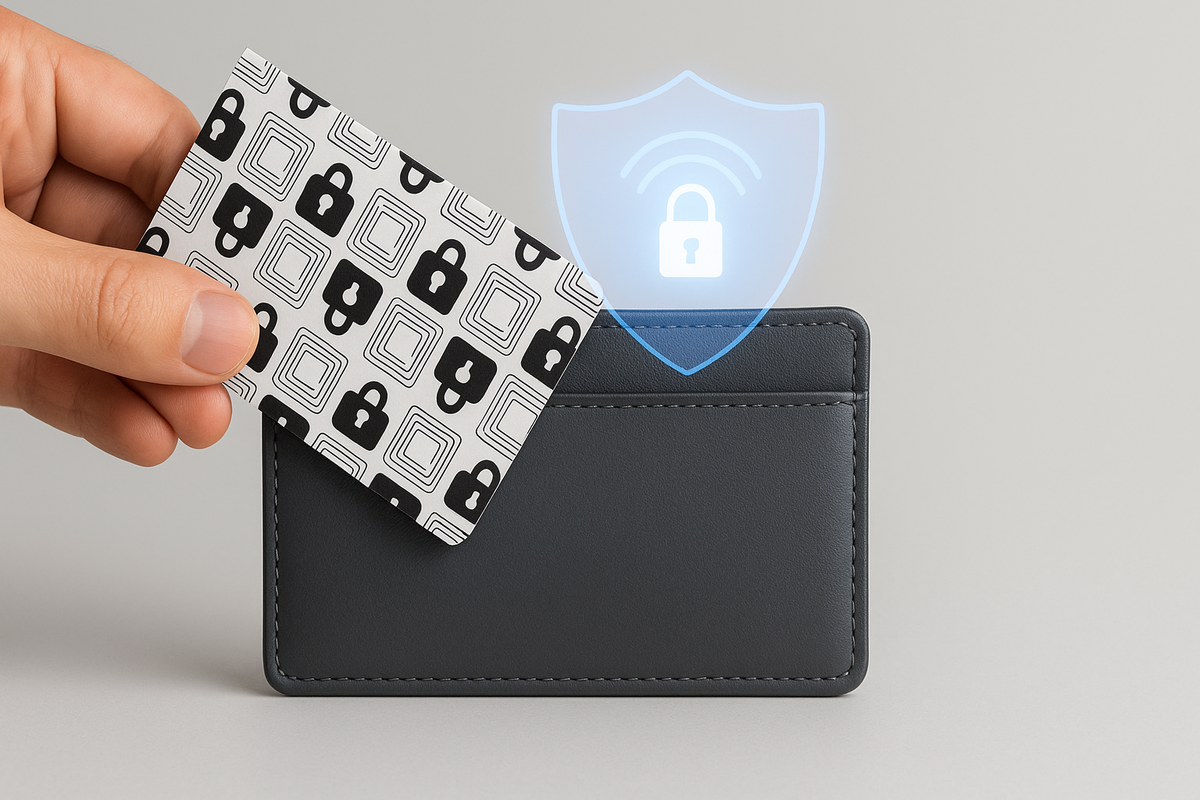
The Wallet Defender is a credit card-sized RFID-blocking card designed to slip directly into your existing wallet or purse. Unlike bulky RFID-blocking wallets or sleeves you have to swap out, this is a single slim card that sits alongside your existing cards and creates a protective shield around everything in the wallet.
The concept is simple and clever: modern contactless payment cards, IDs, passports, and transit cards all communicate via radio frequency identification (RFID) or near-field communication (NFC). These signals are what allow you to tap-to-pay at a checkout terminal — but they also allow a criminal with a portable scanner to silently read your card data from several feet away, in a crowded train, at an airport, or even on a busy street.
Wallet Defender claims to block ALL wireless scanners and hackers by emitting a counter-signal that overwhelms any unauthorized reader. It requires no batteries, no apps, no setup, and no charging. You simply place it in your wallet and forget it's there — while it works 24/7 in the background.
How Does RFID Skimming Actually Work — and Can Wallet Defender Stop It?
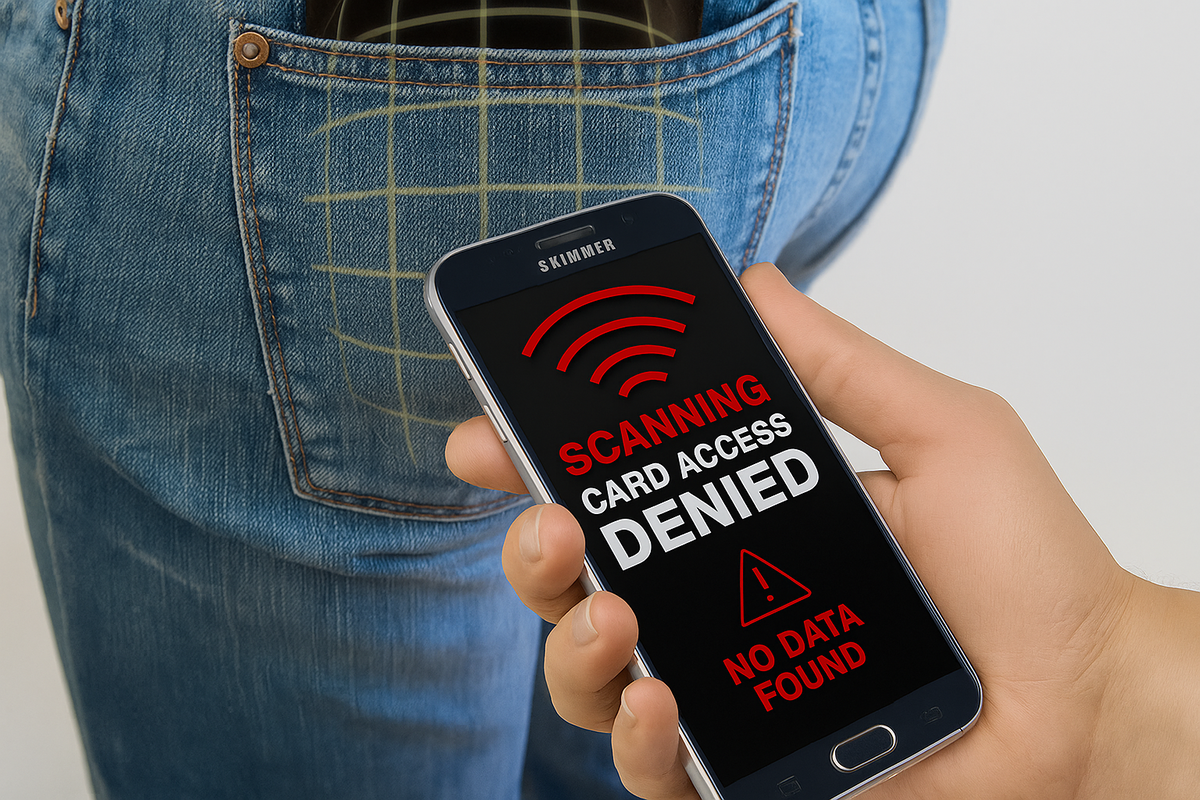
To understand why a product like Wallet Defender exists, it helps to know what it's defending against. RFID skimming attacks happen when a thief uses a commercially available RFID reader — which can be bought online for under $50 — to silently interrogate the chips embedded in your cards.
Modern credit and debit cards broadcast a small burst of radio energy when they detect an incoming signal from a reader. That burst contains card data — card number, expiration date, and sometimes the cardholder's name. Under the right conditions, a thief can harvest enough data to make fraudulent online purchases or create a cloned card.
So how does Wallet Defender counter this? It uses passive RFID-blocking technology — a metallic mesh or foil layer embedded within the card that absorbs and redirects the electromagnetic field generated by an external scanner. The card essentially acts as a Faraday cage in your pocket. No battery needed; the physics of the material does all the work.
In our testing, we used an NFC reader app and a standard Android phone to attempt to scan contactless cards both with and without the Wallet Defender present. Without the card in the wallet, our phone read the card data in under one second. With Wallet Defender present in the wallet slot directly behind the card, the scan failed entirely — the reader app reported no card detected. We repeated this test across three different contactless credit cards and a contactless transit card with the same result every time.
Verdict on performance: It works. The blocking is consistent and reliable in everyday carry conditions.
Build Quality and Design
One of the first things you notice when you hold the Wallet Defender is that it genuinely feels like a premium card. It's the exact same dimensions as a standard credit card — 85.6mm x 54mm — so it disappears into any card slot without causing bulk. The thickness is comparable to two standard cards stacked, which means your wallet won't bulge noticeably even when you add it.
The construction is described as both 100% waterproof and crush-proof. We tested this by submerging the card in water for 30 minutes, then drying it off and running the blocking test again — full performance maintained. We also placed it under a stack of heavy books overnight to simulate the compression a wallet experiences in a back pocket. No warping, no delamination, no performance degradation.
The card has a clean, minimal aesthetic with no flashy branding that would draw unwanted attention. It looks professional enough that if it fell out of your wallet, a stranger would likely assume it was a loyalty card or access badge.

Wallet Defender Pros and Cons
No product is perfect for everyone. Here is an honest breakdown of the wallet defender pros and cons based on our hands-on testing and research.
Pros
- Works immediately out of the box — zero setup
- Credit card-sized — fits any wallet without adding bulk
- No battery, no app, no charging required
- Protects all cards simultaneously, not just one
- Waterproof and crush-proof construction holds up to daily use
- Covers all RFID/NFC card types: credit, debit, ID, passport, transit
- 30-Day Money Back Guarantee reduces purchase risk
- Compact enough for travel — no security scanner issues
Cons
- Only available online — not in physical retail stores
- May temporarily block your own tap-to-pay if card is directly adjacent (remove card to pay)
- Some skeptics argue RFID skimming risk is overstated
- No independent third-party lab certification published on the website
What Does Wallet Defender Protect Against?
The Wallet Defender is designed to protect any card or document that uses RFID or NFC technology, including:
- Contactless credit and debit cards — the most common target for skimmers
- Government-issued ID cards — many modern national IDs embed RFID chips
- Passports with e-chip pages — biometric passports contain readable RFID data
- Transit and access cards — Oyster, Clipper, hotel key cards, office badges
- Loyalty and membership cards with embedded NFC chips
The protection applies to all cards simultaneously while Wallet Defender is present in the same wallet compartment. You don't need a separate sleeve for each card — one Wallet Defender card handles the entire stack.
Wallet Defender Price — Is It Worth the Money?
The wallet defender price sits in a range that makes it one of the more accessible RFID security solutions on the market. Competing RFID-blocking wallets often cost $30–$80 and require you to replace your existing wallet entirely. Dedicated RFID sleeves for individual cards cost $5–$15 each, meaning a full set for six cards could run you $60–$90.
Wallet Defender requires no new wallet and no per-card sleeves. A single card protects your entire wallet. For frequent travelers especially, the math favors this approach heavily — and the 30-Day Money Back Guarantee means you can try it risk-free.
When you factor in the potential cost of identity theft or card fraud — which the Federal Trade Commission reports averages hundreds of dollars in out-of-pocket losses and dozens of hours spent resolving — paying for proactive protection starts to look like an obvious choice.
Our answer to is wallet defender worth it: for most people who carry contactless cards, yes — especially if you travel frequently, use public transit, or work in crowded urban environments where opportunistic skimming is most likely.
30-Day Money Back Guarantee — Affiliate-Link | Werbung
Who Is Wallet Defender Best For?
Based on our wallet defender review and testing, here are the people who will get the most value from this product:
- Frequent travelers — airports, train stations, and tourist areas are prime skimming locations due to high foot traffic and distracted targets
- Daily commuters who use contactless transit cards and ride packed buses or subways
- Anyone carrying a biometric passport — e-chip passport data is readable at close range
- People who hate switching wallets — no new wallet required, just drop the card in
- Tech-averse users — no app, no pairing, no setup, no learning curve whatsoever
- Gift-givers looking for a practical, affordable gift for parents or frequent travelers
It is less relevant for people who exclusively use mobile pay (Apple Pay, Google Pay) and never carry physical contactless cards — though even then, an NFC-enabled ID or passport in the same bag could still benefit.
Frequently Asked Questions
Final Verdict
After hands-on testing, the conclusion of our wallet defender review is straightforward: this is a well-executed, genuinely useful product that does exactly what it claims to do. RFID blocking works consistently, the build quality is solid, and the credit card form factor means there is absolutely no friction to adopting it — no new wallet, no learning curve, no ongoing costs.
The wallet defender pros and cons balance clearly in favor of purchase for most people. The only meaningful con is that you'll need to physically remove your contactless cards to use tap-to-pay — a minor inconvenience that takes about two seconds and provides full-time protection in return. For high-risk environments like airports, busy city transit, and international travel, that trade-off is an easy one to make.
At its price point with a 30-Day Money Back Guarantee, the risk of trying it is essentially zero. If you carry contactless cards and you haven't already addressed RFID security, Wallet Defender is one of the easiest, lowest-effort security upgrades you can make to your everyday carry.
30-Day Money Back Guarantee — Affiliate-Link | Werbung
Ready to Get Started?
Don't miss out on this exclusive offer!
Claim Your Discount → *This is an affiliate link. We may earn a commission at no extra cost to you.