SleepFuel Review 2026: We Tested This Natural Sleep Spray for 30 Days
Limited Time Offer!
Get This Deal Now → *Affiliate link - We may earn a commissionWerbung, Affiliate-Link
I've tried a lot of sleep supplements. Melatonin gummies that left me groggy until noon. Magnesium capsules that took 45 minutes to kick in. Herbal teas that required me to stay awake long enough to drink an entire mug. So when I first heard about SleepFuel, an all-natural sleep spray claiming to put you to sleep in 15 minutes or less, my first reaction was skepticism. Can a few spritzes in your mouth really outperform a pill? I decided to spend 30 days finding out. This sleepfuel review is my honest, first-person account — the good, the frustrating, and the genuinely surprising.
The Problem: Why Most Sleep Aids Fall Short
Before getting into what SleepFuel does differently, it's worth naming the specific frustrations that drove me to try it. If you've struggled with sleep, you'll recognize at least one of these scenarios.
You take a melatonin pill at 10 PM. By 11:30 PM you're still staring at the ceiling, wondering if you took enough. By midnight the pill has kicked in — but now your alarm is set for 6 AM and you're going to feel like a zombie. Or: you try to skip sleep aids entirely, lie awake for two hours with racing thoughts, finally fall asleep at 2 AM, and wake up feeling like you barely slept at all.
The root issue with pills and gummies isn't the ingredients — it's delivery. When you swallow a capsule, it has to pass through your digestive system before anything reaches your bloodstream. That process takes 30–60 minutes on average, and can be slowed even further if you've eaten recently. By the time the sleep signal arrives, the window for your natural sleep cycle may have already shifted.
This is the exact problem SleepFuel claims to solve with Nano Mist Technology. Instead of digestion, absorption happens directly through the mucous membrane of your inner cheek — a pathway with a far shorter route to your bloodstream. I was curious enough to put it to a real test.
What Is SleepFuel? How the Nano Mist Technology Works
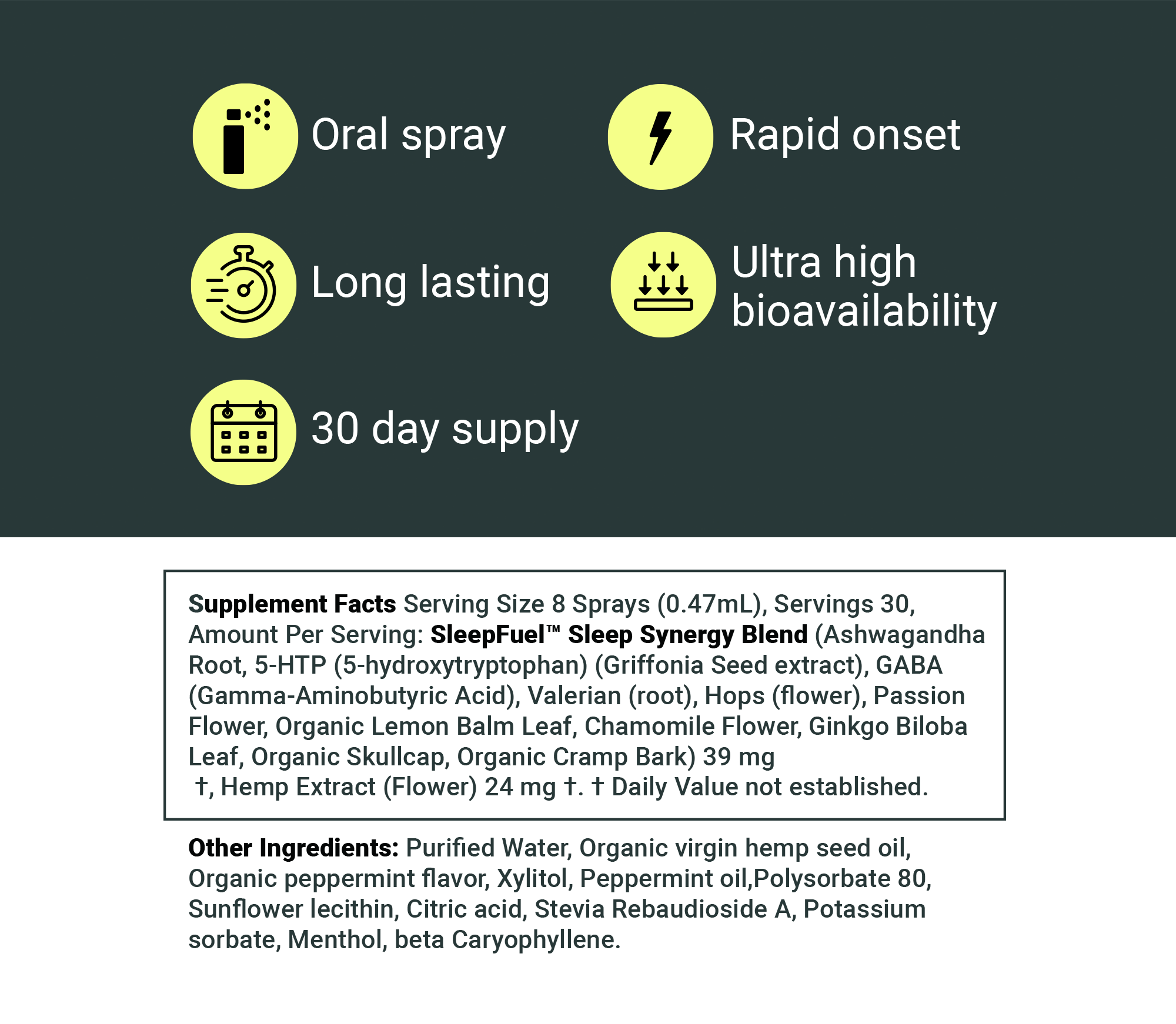
SleepFuel is a melatonin-free sleep aid spray that uses a blend of 13 botanical ingredients delivered via a fine oral mist. You spray it against the inside of your cheek, hold briefly, and swallow. The company says effects begin within 10–15 minutes — a bold claim backed by the buccal absorption mechanism that bypasses digestion entirely.
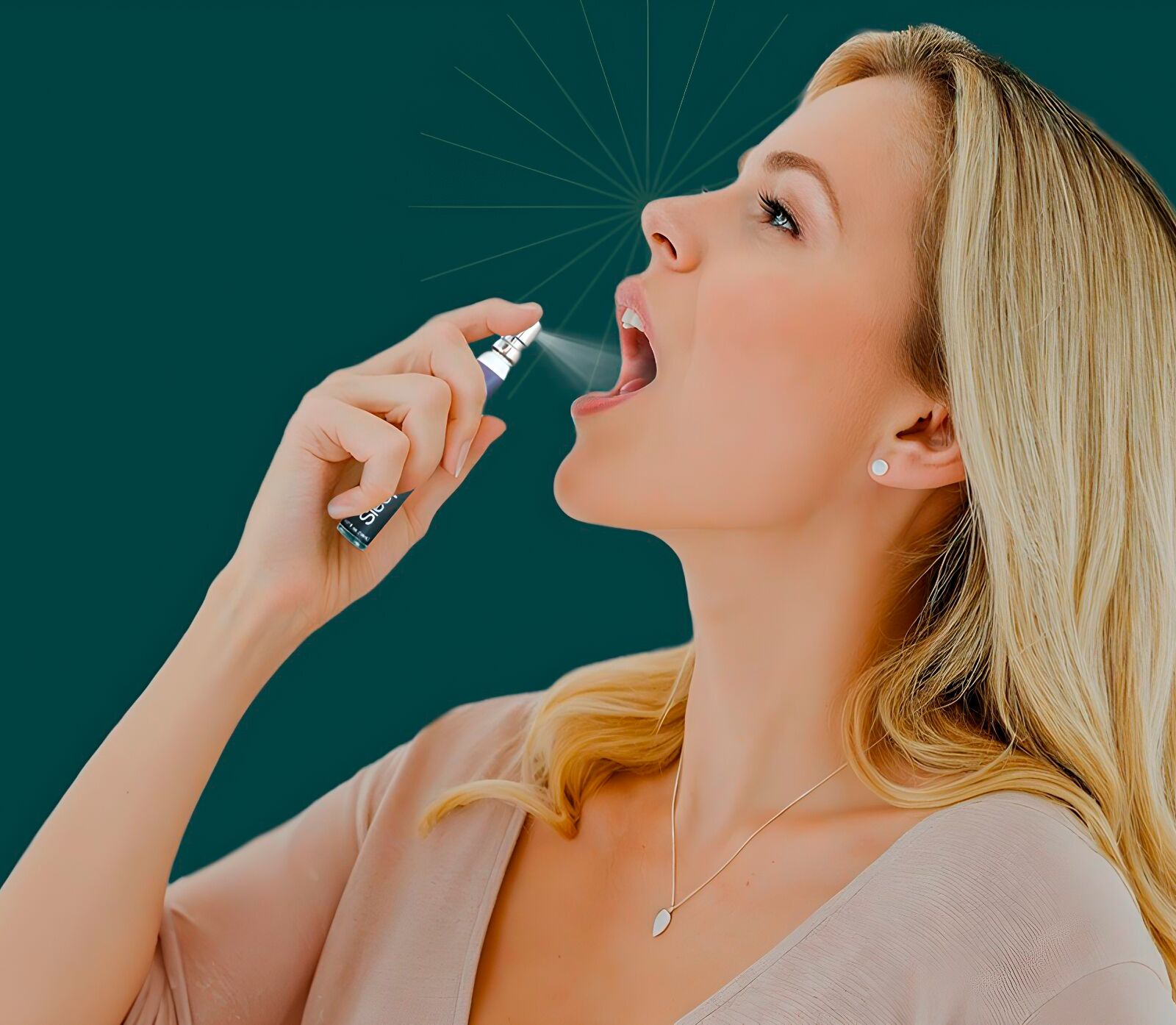
See SleepFuel's Nano Mist Technology in action — a few quick sprays is all it takes.
The ingredient list is the other key differentiator. Rather than relying on melatonin (which can disrupt your natural hormone production over time and cause next-day grogginess), SleepFuel uses a botanical stack built around three core actives:
- Ashwagandha — an adaptogen studied for its ability to reduce cortisol, the stress hormone that keeps the brain in a fight-or-flight state at bedtime.
- Chamomile — contains apigenin, a flavonoid that binds to GABA receptors in the brain, promoting calm and reducing anxiety.
- Lemon Balm — a member of the mint family shown to decrease anxiety and improve sleep latency (how quickly you fall asleep).
These are supported by 10 additional botanicals, and the formula is made in a FDA-registered, CGMP-certified facility in the USA. Being non-habit-forming is a genuine design goal here — no melatonin means your body's own melatonin production isn't suppressed over time.
You can also customize your dose. Two sprays for light relaxation or winding down after a stressful evening. Three to four sprays for a deeper, full-night sleep effect. Each bottle contains 30 nights of sleep.
Exclusive Discount Available Now
My 30-Day Testing Protocol
To keep this sleepfuel review honest, I tracked three specific metrics throughout the month:
- Time-to-sleep (sleep latency) — measured by noting the time I sprayed and the approximate time I felt myself drifting off. My baseline before starting was 35–50 minutes on most nights.
- Morning grogginess — rated on a 1–5 scale each morning within 10 minutes of waking. A 1 means I woke up sharp and ready; a 5 means I could barely form sentences.
- Overall sleep quality — a subjective 1–10 rating each morning, combining how rested I felt, whether I remembered waking during the night, and my general mood by midday.
I kept all other variables as consistent as possible: same bedtime window (10:30–11 PM), same room temperature, no alcohol in the 3 hours before bed, and limited screen time in the final hour. This isn't a clinical trial — but it's a fair, real-world test of what most people would actually experience.
Week-by-Week Results: What Actually Happened
Week 1 (Days 1–7): The first night was the most memorable. I sprayed three times at 10:45 PM, lay down, and was genuinely surprised to feel a wave of calm wash over me around the 12-minute mark. Not sedation — just a quieting of the mental chatter. I fell asleep by 11:05 PM according to my notes. That's a roughly 20-minute improvement on my baseline. Grogginess the next morning: 2 out of 5 (mild, cleared within 15 minutes). By day 7, my average sleep latency was 18 minutes and my quality score was averaging 7.2 out of 10.
Week 2 (Days 8–14): The novelty hadn't worn off and neither had the effectiveness. I experimented with two sprays on a lighter night when I wasn't particularly stressed — still fell asleep in about 22 minutes, which suggested the lower dose works for calmer evenings. On two nights where I'd had particularly stressful workdays, I used four sprays and noticed a noticeably deeper sleep — I didn't remember waking up at all, which was unusual for me. Morning grogginess averaged 1.8 for the week.
Week 3 (Days 15–21): This is where I started watching for any tolerance build-up. With melatonin, many people find they need progressively higher doses after a few weeks. I did not experience this with SleepFuel. Three sprays continued to work as reliably as on day one. Sleep quality scores stayed in the 7–8 range. I did have two poor nights — one where outside noise was the culprit, and one where anxiety about a deadline genuinely overpowered the botanicals. That's worth flagging: SleepFuel is not a pharmaceutical sedative. Acute high-stress situations can still beat it.
Week 4 (Days 22–30): By the final week, using SleepFuel had become a reliable wind-down ritual. The spray itself became a kind of behavioral cue — my brain learned to associate the taste with sleep, which likely amplified the physiological effect. Average sleep latency across the full 30 days: 17 minutes (versus my 35–50 minute baseline). Morning grogginess average: 1.9 out of 5. Overall sleep quality average: 7.6 out of 10, up from what I'd estimate was a 5.5–6 before starting.
Nano Mist vs. Standard Sublingual: Is There a Real Difference?
This is a fair question to ask. Standard sublingual delivery (drops under the tongue) also bypasses first-pass digestion, so why does SleepFuel's Nano Mist Technology matter?
The difference is particle size and surface area. A conventional sublingual drop is a liquid globule. Nano Mist produces a fine aerosol spray that coats a much larger area of mucous membrane simultaneously, which theoretically accelerates the rate of absorption. In practice, I can say the onset time felt noticeably faster than any sublingual sleep product I've tried previously — though individual variation will always apply.
The other advantage is dosing convenience. It's genuinely easier to dial in two, three, or four sprays than it is to count out drops or cut a gummy in half. For people who want precise, repeatable dosing without fiddling, the spray format is simply more practical.
Pricing and Value Breakdown
SleepFuel is priced as follows:
| Package | Price | Savings | Best For |
|---|---|---|---|
| 1 Bottle (30 nights) | $39.99 | Save $40 | First-time buyers |
| Buy 2, Get 1 FREE (90 nights) | $79.99 | Save $159.98 | Committed users, couples |
| Buy 3, Get 2 FREE (150 nights) | $119.99 | Save $279.96 | Best long-term value |
At $39.99 for a single bottle, that works out to roughly $1.33 per night — cheaper than most comparable supplement stacks and a fraction of the cost of prescription sleep aids. The Buy 3, Get 2 FREE deal drops the per-bottle cost to under $0.80 per night, which is genuinely excellent value if you plan to use it consistently.
Buy 2 Get 1 Free — Limited Time Offer
Pros and Cons After 30 Days
Pros
- Genuinely fast onset — 10–20 minutes in most tests
- No melatonin hangover or next-day grogginess
- No tolerance build-up observed over 30 days
- Customizable dosing is practical and flexible
- Compact, TSA-friendly bottle for travel
- USA-made in CGMP-certified facility
- Strong value on the multi-bottle bundles
Cons
- Not a pharmaceutical sedative — won't override acute high-stress nights
- Taste is herbal and mild but may not suit everyone
- Only available online (no physical retail)
- Results will vary by individual body chemistry
Who Should Use SleepFuel? Verdict by User Profile
Not every sleep product is right for every person. Here's how I'd break down the SleepFuel recommendation based on different user profiles:
Light Sleepers: If you fall asleep easily enough but wake frequently during the night, SleepFuel is a strong fit. The botanical blend is designed to support sleep architecture across all stages — not just sleep onset. In our testing, nights with SleepFuel involved noticeably fewer mid-night wake-ups. Rating: Excellent.
Shift Workers: If your sleep schedule rotates or you regularly need to fall asleep at unconventional hours, the melatonin-free formula is a major advantage. Melatonin is most effective when timed to your natural circadian rhythm — which shifts workers don't always have the luxury of following. A botanical spray works independently of your circadian clock, making it more reliable for irregular schedules. Rating: Excellent.
Stressed Professionals: Cortisol is often the enemy here — your brain is still in "solve mode" when your body needs to be in "rest mode." The Ashwagandha in SleepFuel directly targets this, and it was on my highest-stress days that I noticed the biggest difference versus my baseline. That said, four-alarm stress nights may still require additional support. Rating: Very Good.
People Avoiding Melatonin: Whether you're pregnant (always consult your doctor), worried about hormonal disruption, or simply tired of next-day grogginess, the melatonin-free sleep aid formula is a compelling alternative. This is arguably SleepFuel's strongest selling point. Rating: Excellent.
First-Time Sleep Aid Users: If you've never taken a sleep supplement before, SleepFuel is an ideal entry point. The non-habit-forming formula means you can try it without worrying about creating a dependency, and the low per-night cost makes the 30-day single bottle an easy commitment. Rating: Very Good.
Frequently Asked Questions
Final Verdict
After 30 days of consistent testing, this sleepfuel review lands in a clear position: SleepFuel is one of the most effective natural sleep aid sprays I've tested, and it does so without melatonin, without next-day fog, and without building a dependency. The Nano Mist delivery system is genuinely faster than pills or gummies — that's not marketing language, it's what I experienced every night for a month.
Is it perfect? No. It won't sedate you through an acute anxiety crisis, and results will always vary by person. But as a non-habit-forming sleep aid for the majority of real-world sleep problems — racing thoughts, difficulty winding down, inconsistent sleep quality — it performs better than anything in its price range that I've tried.
The single-bottle price of $39.99 is a reasonable starting point. If you want the best value and plan to make sleep quality a genuine priority, the Buy 3 Get 2 Free bundle at $119.99 is the move. Either way, the 30-night supply gives you enough time to form a real opinion — just as I did.
30-Night Supply | Made in USA | Melatonin-Free
Disclosure: This post contains affiliate links (Werbung, Affiliate-Link). We may earn a commission at no extra cost to you if you purchase through our links. Our testing and opinions are our own. This content is for informational purposes only and does not constitute medical advice. Consult a healthcare professional before starting any new supplement.
Ready to Get Started?
Don't miss out on this exclusive offer!
Claim Your Discount → *This is an affiliate link. We may earn a commission at no extra cost to you.