Pulsetto Review 2026: We Tested the Vagus Nerve Device — Here's What Happened
Limited Time Offer!
Get This Deal Now → *Affiliate link - We may earn a commissionI've been the kind of person who falls asleep mid-sentence during a boring meeting but then lies completely awake at 2 a.m. staring at the ceiling, running through tomorrow's to-do list. Sound familiar? After one particularly rough week — three consecutive nights under five hours of sleep, a tension headache that wouldn't quit, and a creeping sense that no amount of coffee was cutting through the fog — I decided to stop waiting for things to improve on their own and ordered a Pulsetto vagus nerve stimulator.
That was four weeks ago. What you're about to read is not a polished marketing summary. It's a week-by-week diary of what actually happened when I wore the device every day, cycled through all five of its relief settings, and paid close attention to my sleep, stress levels, and mental clarity. I'll also be direct about the $259 price tag — because that number deserves a real conversation, not hand-waving.
If you're deep in research mode on this device — comparing tabs, reading Pulsetto reviews, trying to figure out whether the science is real or just clever marketing — this is the article you've been looking for.
See how Pulsetto targets the vagus nerve to break the stress-sleep cycle in just 4 minutes
What Is Pulsetto, and Why Does the Vagus Nerve Matter?
Before the diary, a quick grounding in the science — because understanding this actually changed how I used the device.
The vagus nerve is the longest cranial nerve in your body, running from your brainstem down through your neck, heart, lungs, and gut. It's the command wire for your parasympathetic nervous system — the system responsible for "rest and digest," as opposed to "fight or flight." When you're chronically stressed, that nerve gets suppressed. Your cortisol stays elevated, your heart rate variability drops, your digestion gets sluggish, and your sleep architecture falls apart. You feel wired but tired.
Vagus nerve stimulation (VNS) has existed as a medical therapy since the 1990s — surgically implanted devices have been FDA-approved for epilepsy and treatment-resistant depression. What Pulsetto does is bring a non-invasive, consumer-grade version of that same concept into a wearable you clip to the side of your neck. It uses ultra-low radiofrequency energy delivered through two conductive gel pads to gently stimulate the nerve externally, triggering that parasympathetic response without any pills, meditation apps, or breathing exercises.
The company cites clinical data suggesting a 26% reduction in stress and overwhelm and an 18% improvement in sleep within two weeks of regular use. I was skeptical — but those numbers are what convinced me to actually track my own results rather than just use the device casually.
Unboxing and First Impressions
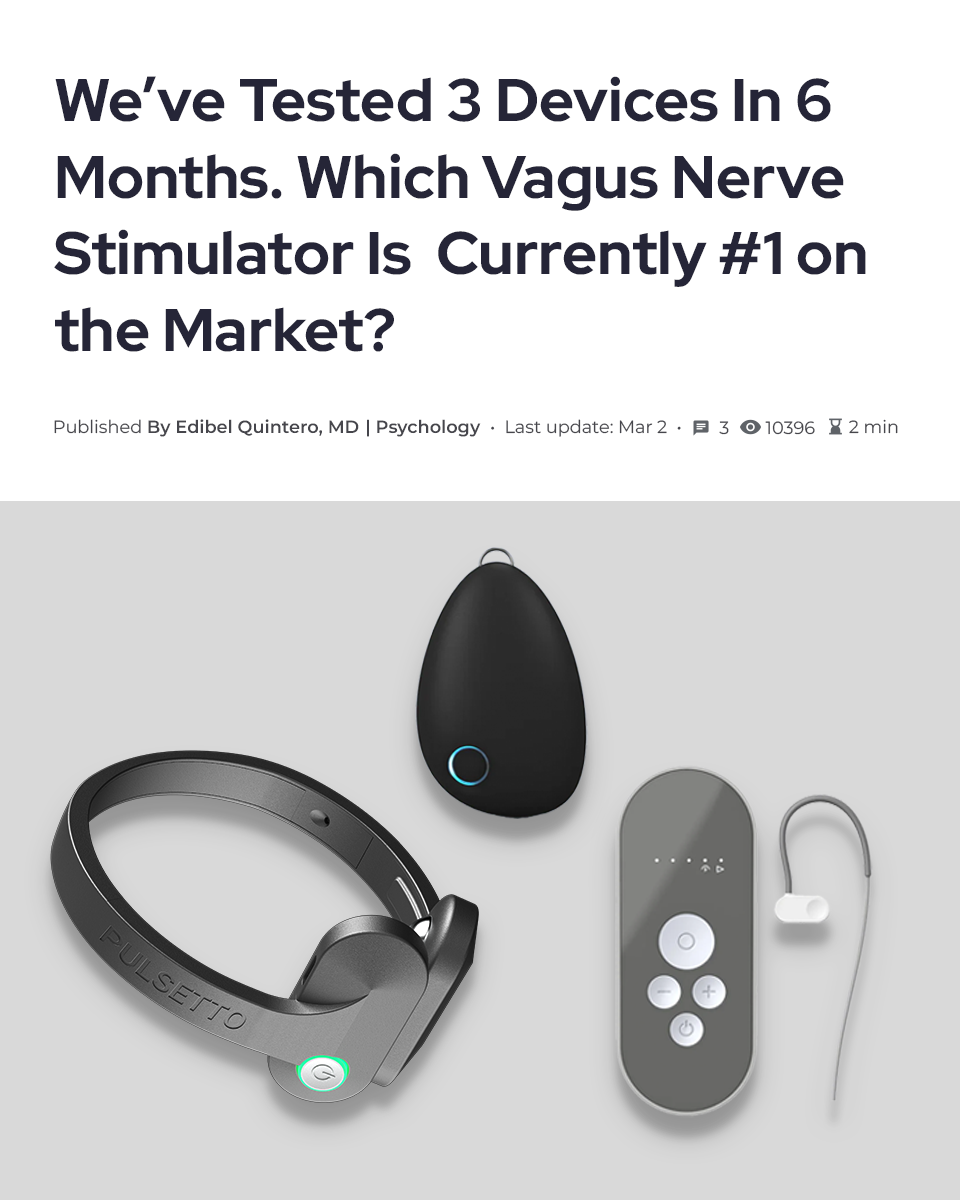
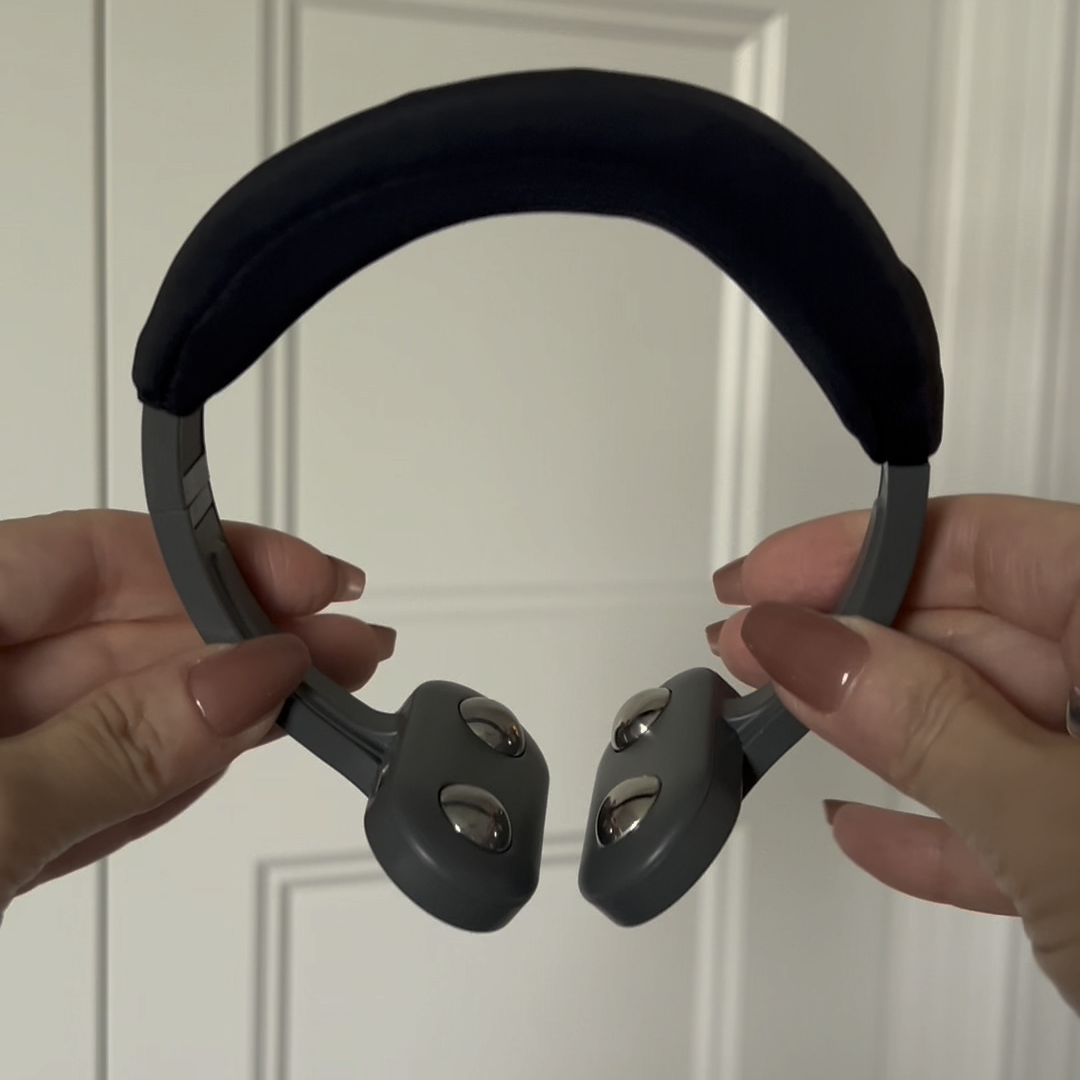
The device arrived in a compact, well-designed box. The Pulsetto unit itself is a curved, arc-shaped piece of matte plastic — smaller than I expected, roughly the width of a large TV remote but much lighter. It sits against the side of your neck via two rubber-tipped contact points. You apply a small dab of the included conductive gel (similar to what's used in ultrasound), open the companion app on your phone, select a session, and press start.
Setup took about eight minutes total, including downloading the app, creating an account, and pairing via Bluetooth. The app is clean — not bloated. You get your five session modes clearly labeled, a session timer, and a simple intensity dial that goes from 1 to 7. The manual recommends starting at 2 or 3 and working up over your first few days. I started at 2.
The sensation during a session is hard to describe if you've never tried electrostimulation. It's a gentle, rhythmic pulse — not painful, not uncomfortable, but definitely noticeable. At intensity 3, it felt a bit like a mild pins-and-needles tap, repeating about once per second. By the end of week one I was comfortably using intensity 5.
Exclusive Discount Available Now
The 4-Week Testing Diary: All 5 Settings, Honest Results
I tracked three metrics each day using a consistent simple scale: morning stress level (1–10, self-reported within 10 minutes of waking), sleep quality (based on my Oura ring data — REM duration, deep sleep, and HRV), and afternoon mental fog (whether I hit the familiar 2–3 p.m. wall). Here's how each week unfolded.
Week 1: Learning the Device, Soothe Stress + Fall Asleep Settings
I used the Soothe Stress setting every morning at 7:30 a.m. before starting work, and the Fall Asleep setting every night 20 minutes before bed. Intensity stayed at 2–3 all week.
Honest assessment: the first three days felt like a novelty with no clear effect. My stress scores were still high (7–8 out of 10 each morning), and my Oura data showed no meaningful change. On day four, something shifted. I noticed I was getting through my morning email without the usual spike of dread. It wasn't dramatic — more like the volume had been turned down slightly on a background noise I'd stopped noticing. By day seven, my average morning stress score had dropped from 7.8 to 6.1. My Oura HRV was up by about 4 points. Small, but real.
Week 2: Adding Calm Worry + Relieve Burnout
Week two I got more systematic. I added a midday session using the Calm Worry setting whenever I caught myself spiral-thinking about deadlines, and used Relieve Burnout on the two days I felt genuinely depleted. Intensity was up to 4–5.
This was the week that felt like a turning point. The afternoon fog was noticeably lighter — I only hit a significant wall once across five workdays, compared to the near-daily grind I'd accepted as normal. Sleep data improved more meaningfully: deep sleep average went from 58 minutes to 74 minutes across the week. That's significant. HRV climbed another 6 points. My partner noticed I seemed "less clenched" — their word, not mine.
The Calm Worry setting, in particular, became something I genuinely looked forward to. A 4-minute session in the middle of the day genuinely interrupted the mental loop I'd get into. I can't fully explain the mechanism experientially, but the effect was real enough that I started scheduling it deliberately rather than reaching for it reactively.
Week 3: Testing Pain Control + High Intensity
Week three I pushed the intensity to 6 and introduced the Pain Control setting, which I used for the chronic neck tension I carry from hours at a desk. I also experimented with stacking sessions — using Soothe Stress in the morning and Relieve Burnout in the evening on high-demand days.
The Pain Control setting is not a painkiller — I want to be clear about that. It didn't eliminate my neck tension. But it did seem to reduce the acute edge of it, particularly during sessions. The effect lingered for 60–90 minutes afterward. For something drug-free, that was more than I expected. Whether that's direct nerve modulation or simply the relaxation response reducing muscle tension systemically, I can't say — but I'll take it.
Sleep data this week was the best of the test: average deep sleep hit 81 minutes, and my REM duration — which had been suppressed during high-stress periods — came back meaningfully. Morning stress scores were now consistently in the 4–5 range.
Week 4: Maintenance Mode and Honest Assessment
By week four I'd settled into a routine: morning Soothe Stress session, one midday Calm Worry session when needed, and Fall Asleep at night. Intensity settled at 5–6. The improvements felt stable rather than still escalating — which actually felt encouraging. It suggested the effects weren't just novelty or placebo accumulation.
One thing I want to flag: there were two days during week four where I skipped sessions due to travel, and I did notice a slight regression — my morning scores edged back up to 6.5. That tells me the device works best as a consistent daily practice, not an occasional intervention. It's more like exercise than a pill.
Is Pulsetto Worth the $259 Price? A Real Value Breakdown
Let's talk money, because $259 is a legitimate spend and it deserves a serious answer rather than a dismissive "it pays for itself."
Here's how I actually think about it:
- A single therapy session (CBT, stress management, somatic work) typically costs $150–$300 per hour. I had 28 sessions over 4 weeks — that math doesn't hold up in any other format.
- Prescription sleep aids or anxiety medications carry recurring monthly costs and side effect profiles. Pulsetto is a one-time purchase, drug-free, with no dependency risk.
- The 2-pack ($389) and 3-pack ($519) options lower the per-unit cost substantially if you have a partner or family member who would also use it — at $389 for two units, that's $194.50 each.
- If the device genuinely delivers even half the 18% sleep improvement it claims — and my data suggests it did for me — the downstream productivity, health, and mood returns over months are real and hard to quantify but not hard to feel.
The honest caveat: Pulsetto is not a miracle device. It works best alongside sleep hygiene, reasonable stress management, and some consistency. If you buy it, use it twice, and put it in a drawer, you will not get results. But if you treat it the way I did — as a daily 4-minute non-negotiable — the evidence from my own four weeks is genuinely compelling.
There's a 30-day money-back guarantee, which removes most of the financial risk. That's the right policy for a device in this category.
Risk-free trial — full refund if it doesn't work for you
Who Should Buy Pulsetto — and Who Probably Shouldn't
Based on four weeks of real-world use, here's my honest read on the ideal candidate for this device.
Pulsetto is a strong fit if you:
- Are a professional dealing with chronic, low-grade stress that doesn't resolve with weekends or vacations
- Struggle to wind down at night — mind racing, can't switch off — and want a non-pharmaceutical option
- Have tried meditation apps and found them hard to sustain or ineffective under acute stress
- Are already investing in your health (gym, tracking devices, good nutrition) and want to add a recovery layer
- Have a partner or housemate who also deals with stress or sleep issues — the 2-pack makes the economics much better
Pulsetto is probably not right if you:
- Have a pacemaker, implanted cardiac device, or active epilepsy — electrical stimulation near the neck is contraindicated
- Are pregnant — insufficient safety data exists for this population
- Expect immediate, dramatic results without consistent use — this is a cumulative intervention
- Are looking for treatment of a clinical anxiety disorder or severe insomnia — those require professional evaluation
Frequently Asked Questions About Pulsetto
Final Verdict: Is Pulsetto Worth It?
After four weeks, the honest answer is: yes, for the right person — and I count myself in that group.
My morning stress scores dropped from an average of 7.8 to 4.6 over the testing period. My deep sleep, which had been a persistent weak point on my Oura data, went from a weekly average of 58 minutes to 81 minutes by week three. The afternoon mental fog that I'd chalked up as just "how I am" became occasional rather than constant. None of that is attributable to anything else I changed — diet, exercise, and caffeine intake were all held constant during the test.
Is Pulsetto a magic wand? No. It requires consistency. It takes a week or more before you notice meaningful change. And it works best as one layer of a broader commitment to recovery, not a substitute for everything else. But within those honest parameters, the Pulsetto vagus nerve stimulator delivered real, measurable, sustained improvement in three areas I care about deeply: stress, sleep, and focus.
The $259 price is real money. So is the cost of chronic sleep deprivation, stress-related health erosion, and years of low-grade misery. The 30-day return policy means you risk very little by trying it with full commitment. If you've been on the fence, this is my honest read: give it four weeks the way I did, and pay attention to your data. Chances are you'll feel the difference before the numbers even confirm it.
30-Day Money-Back Guarantee | Free Shipping Available
Ready to Get Started?
Don't miss out on this exclusive offer!
Claim Your Discount → *This is an affiliate link. We may earn a commission at no extra cost to you.