Moonbuddy Review 2026: Does This Breathing Device Really Help Kids Sleep in 4 Minutes?
Limited Time Offer!
Get This Deal Now → *Affiliate link - We may earn a commissionIf bedtime has turned into a nightly battle in your house — tears, "just five more minutes," and a child who simply cannot wind down — you are not alone. Millions of parents are searching for a solution that doesn't involve handing their child a screen or reaching for melatonin gummies night after night. That's exactly the problem the Moonbuddy was built to solve.
In this Moonbuddy review, we break down exactly how this tactile breathing guidance device works, who it helps most, and whether the price is justified compared to free YouTube breathing videos or over-the-counter sleep supplements. We've dug into the science, the design, and the real-world use cases so you can make a confident decision for your family.
Werbung | Affiliate-Link — Exclusive Discount Available Now
What Is Moonbuddy?
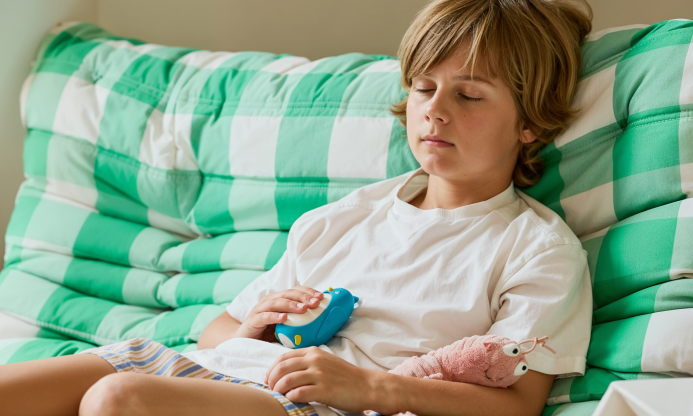
Moonbuddy is a small, handheld breathing device for kids that uses physical, tactile feedback to guide children through calming breathwork sessions. Instead of an app, a screen, or a parent standing at the bedside narrating a meditation, the device itself pulses, rises, and contracts — giving a child's hands something real to follow. You breathe in as it expands, breathe out as it contracts. No instructions needed.
Each session lasts exactly four minutes and works through one of four expert-designed breathing patterns. When the session ends, the device switches off automatically. The entire experience is screen-free, blue-light-free, and WiFi-free — which matters enormously at bedtime, when any light signal can suppress melatonin and reset a child's internal clock.
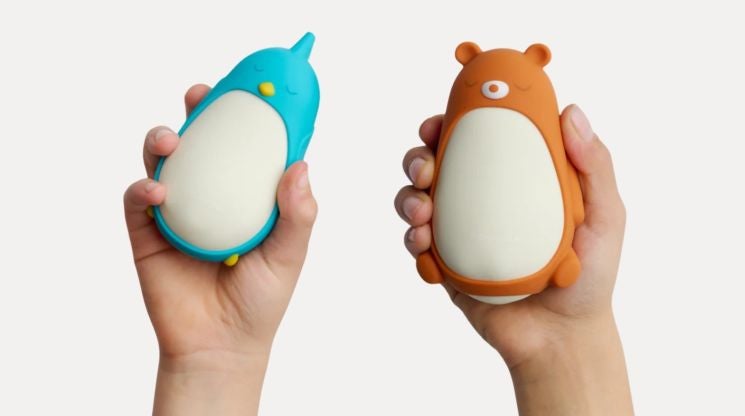
At just 88 grams, Moonbuddy is light enough for a child's hands and small enough to tuck into a school bag or carry-on luggage. It comes with interchangeable character sleeves — Barry the Bear and Bibi the Bird — so children develop an emotional attachment to the device rather than viewing it as a chore.
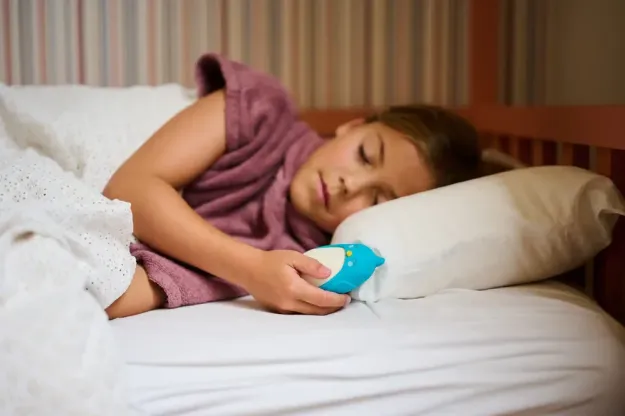
The Science Behind Moonbuddy: Why Tactile Breathing Works
Moonbuddy isn't built on a marketing gimmick. It's grounded in the same parasympathetic nervous system science used in clinical settings — and the brand explicitly references Mayo Clinic research as a foundation for its breathing pattern design.
When a child is anxious, overtired, or overstimulated, their sympathetic nervous system (the "fight or flight" system) is running the show. Cortisol and adrenaline are elevated. The heart rate is up. Falling asleep feels impossible because the body isn't ready to rest.
Controlled, slow breathing — particularly with an extended exhale — activates the vagus nerve and triggers the parasympathetic nervous system, shifting the body into "rest and digest" mode. Heart rate slows. Muscle tension releases. Melatonin can do its job. This is well-established science, not proprietary magic.
What Moonbuddy adds that free YouTube videos don't is tactile guidance. Research on sensory-motor integration shows that engaging the hands in a physical task anchors attention far more effectively than a voice instruction alone. For children with ADHD, anxiety, or sensory processing differences, this is especially valuable — the hands give the busy mind something concrete to track, which prevents the internal chatter that derails most meditation attempts.
The four breathing patterns built into the device are calibrated for different ages and arousal states, ranging from a gentle pattern suited to younger children to more advanced rhythms used in clinical anxiety management. One button press starts the appropriate session, and the device does the rest.
See how Moonbuddy's tactile breathing guidance works in real time
How the Four Breathing Patterns Work
One of the most thoughtful aspects of Moonbuddy's design is that it doesn't offer a one-size-fits-all approach. Children's needs vary enormously depending on age, anxiety level, and the situation — falling asleep at home is a different challenge from calming down after a meltdown at school.
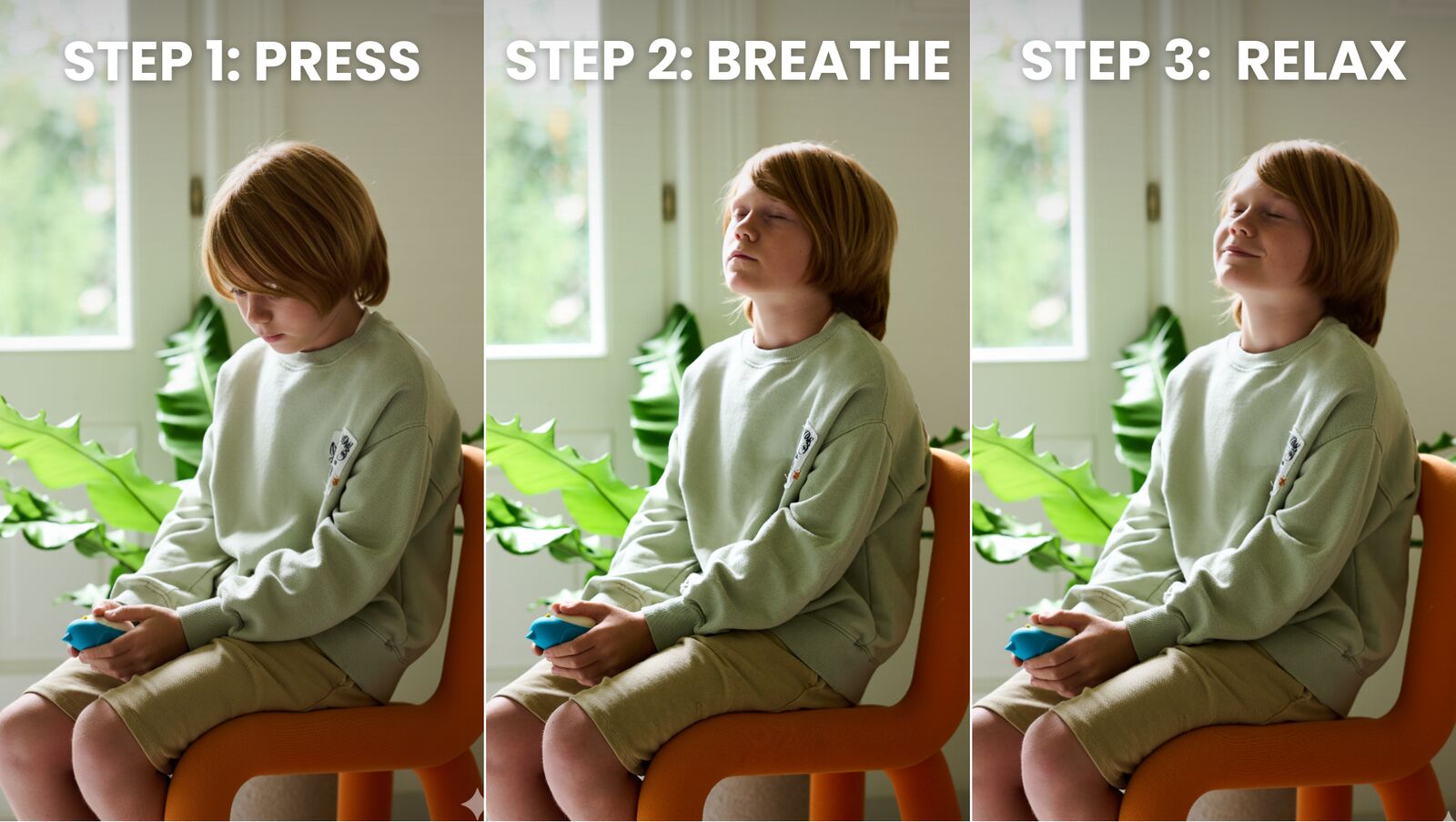
Here is a breakdown of what the four patterns are designed to accomplish:
- Pattern 1 — Calm & Sleep: A slow, even inhale-exhale rhythm ideal for winding down at bedtime. Best for children ages 4 and up.
- Pattern 2 — Anxiety Relief: An extended exhale pattern (longer out-breath than in-breath) that rapidly activates the vagus nerve. Useful during moments of acute anxiety or distress.
- Pattern 3 — Focus & Reset: A balanced box-breathing style rhythm that helps children regain focus without inducing drowsiness. Suitable for classroom or homework situations.
- Pattern 4 — Deep Relaxation: A slower, deeper cycle for older children and pre-teens who need a more substantial wind-down after a high-stress day.
Each pattern runs for four minutes and then the device powers off. This automatic shut-off is a subtle but important design choice — it removes any pressure on the child to "decide" when they're done, which itself can be a source of anxiety for younger kids.
Moonbuddy Key Features at a Glance
- One-button operation: Even young children can use it independently after the first demonstration.
- Screen-free and signal-free: No WiFi, no Bluetooth, no blue light. Zero impact on melatonin production.
- Lightweight at 88 grams: Fits comfortably in small hands; easy to pack for travel or school.
- USB-C rechargeable: Long battery life means it won't die mid-session after a single charge.
- Child-safe materials: Durable enough for daily use and rough handling.
- 2-year warranty: A meaningful commitment from the manufacturer on build quality.
- Backed by Mayo Clinic science: Breathing patterns developed using clinically validated research.
- Interchangeable character sleeves: Adds a playful, personalizable element that increases engagement.
Meet Barry the Bear and Bibi the Bird
This might sound like a small detail, but the character sleeve system is one of the smartest decisions Moonbuddy's designers made. Children do not engage with things they find boring or clinical. A plain plastic device that vibrates would be ignored within a week by most kids.
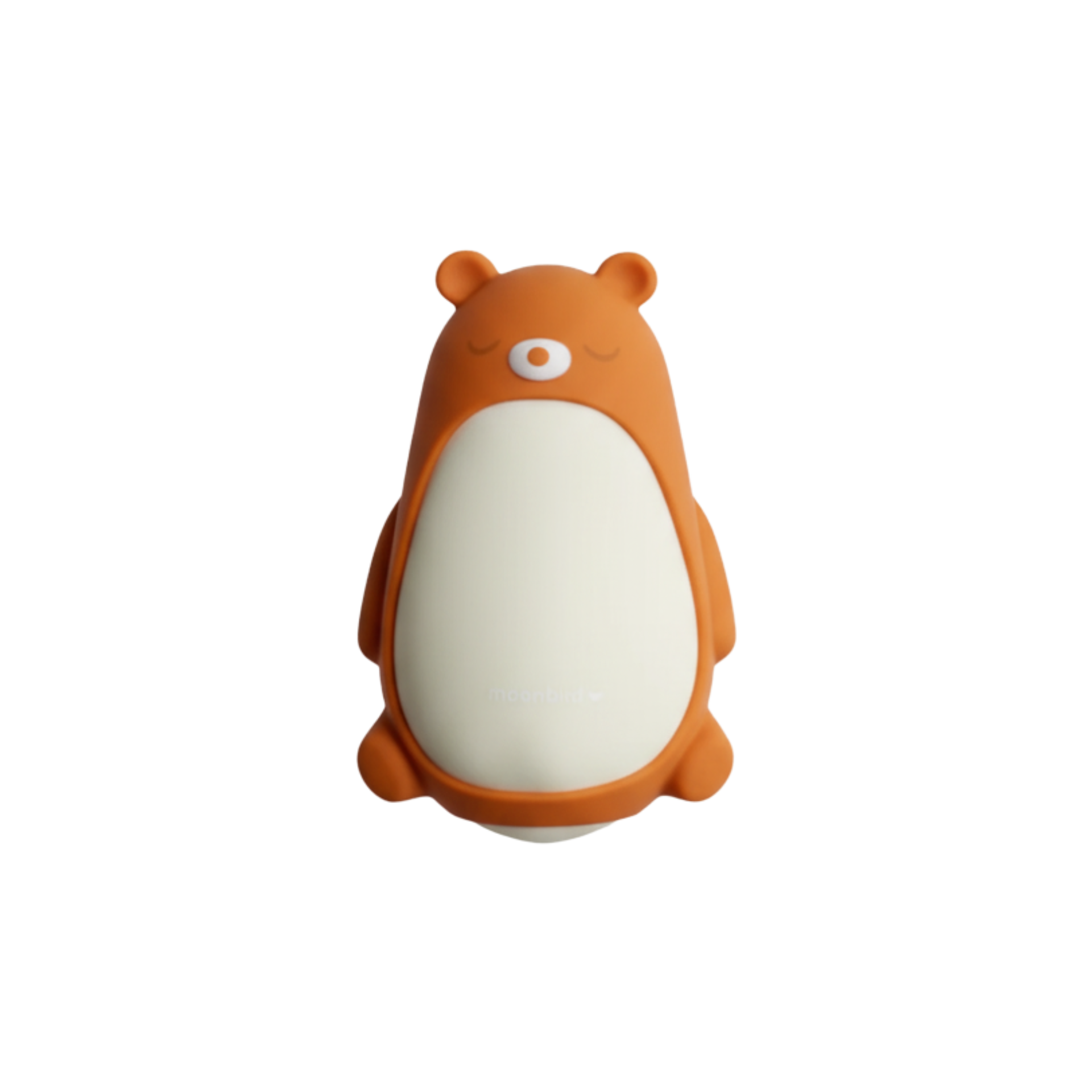
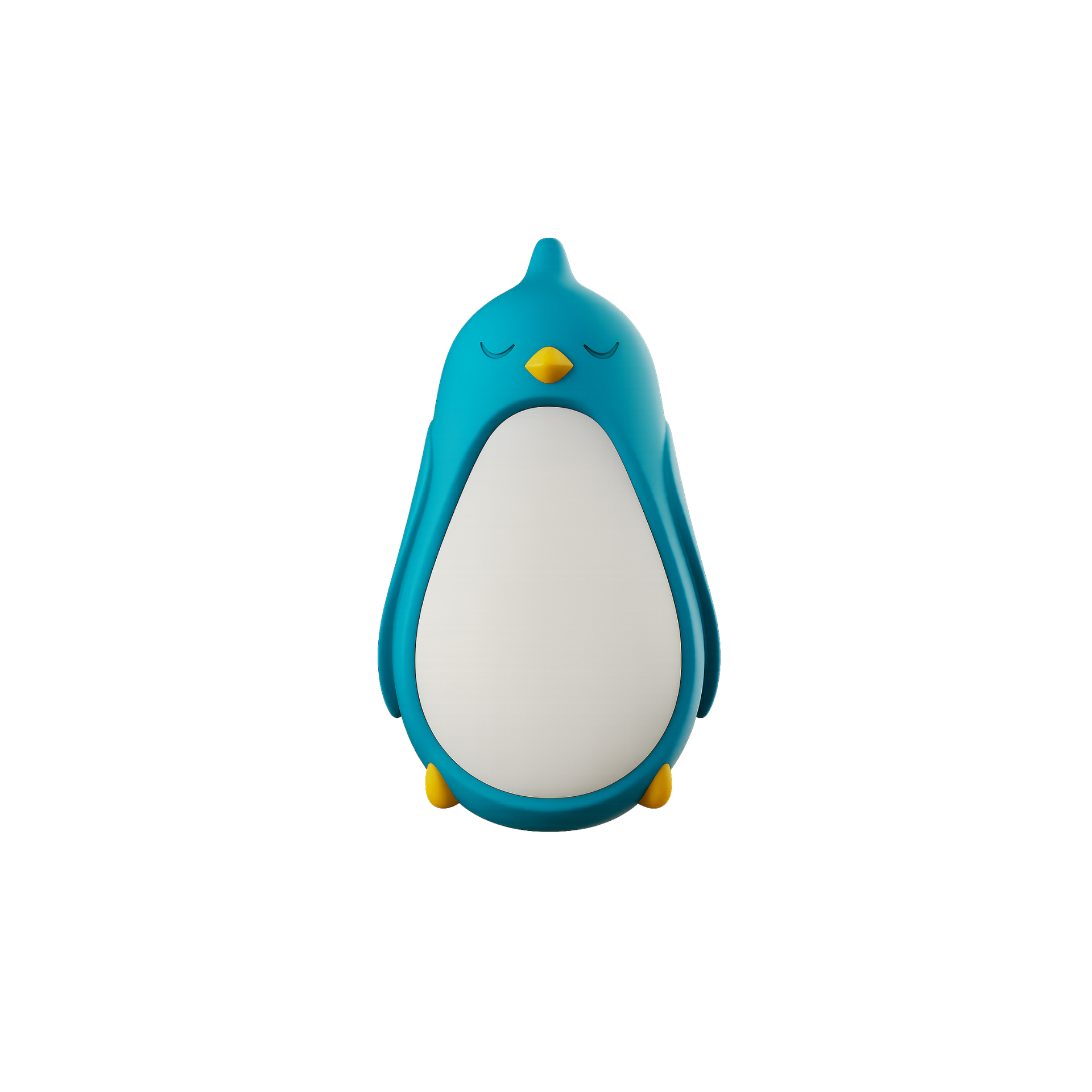
Barry the Bear offers a warm, cuddly aesthetic that works especially well at bedtime — many children will start treating Moonbuddy as a comfort object, which is precisely the goal. Bibi the Bird has a brighter, more playful personality that tends to resonate with children who want something that doesn't feel "babyish." Both sleeves are interchangeable, so you can switch based on mood or let siblings each have their own.
This emotional connection matters for habit formation. A child who looks forward to their breathing session with Barry is a child who is building a genuine self-regulation skill — not just complying with a parental demand.
Werbung | Affiliate-Link — Free shipping available on select orders
Who Is Moonbuddy Best For?
Moonbuddy is not a universal product — it's a targeted solution for specific challenges. In our testing, the children who benefit most are:
Children with anxiety: Anxious kids often lie awake catastrophizing, and telling them to "just relax" achieves nothing. Moonbuddy gives them a concrete, repeatable tool. The physical focus of following the device's movement interrupts the anxiety loop in a way that verbal reassurance rarely does.
Children with ADHD: The tactile element is particularly valuable here. Children with ADHD typically need sensory engagement to hold their attention. A voice telling them to breathe in for four counts will lose them in seconds. Their hands holding a device that physically moves gives their sensory system something to anchor to throughout the full four minutes.
Neurodivergent children: Autistic children and others who are sensory-sensitive often find traditional mindfulness apps overwhelming due to visual stimulation. Moonbuddy's screen-free, low-stimulation design is a genuine advantage in this context.
Children aged 4 and up who fight bedtime: Even neurotypical children can develop the kind of bedtime resistance that exhausts parents. The novelty of the device, combined with the character sleeves, reframes the bedtime routine as something engaging rather than something being imposed.
Families who travel: The lightweight, compact form factor and the absence of any connectivity requirements mean Moonbuddy works just as well in a hotel room or an airplane seat as it does at home.
Moonbuddy vs. Free Alternatives: Is It Worth the Price?
This is the honest question every parent will ask, so let's address it directly.
Free YouTube breathing videos: These require a screen. A screen at bedtime means blue light, which suppresses melatonin for up to two hours. You also have to navigate a child through an interface, deal with autoplay recommendations, and manage the transition from video to sleep. In practice, many parents find that introducing a screen at bedtime creates more problems than it solves.
Meditation apps: Apps like Calm and Headspace have children's content, but again — they live on a phone or tablet. They require WiFi, they emit blue light, and they require a parent to set them up. They also offer no tactile engagement, which limits their effectiveness for children with ADHD or sensory differences.
Melatonin supplements: Melatonin can be appropriate in specific situations, but it doesn't teach the child anything. A child who takes melatonin nightly is dependent on an external substance; a child who uses Moonbuddy is building a skill. Pediatricians increasingly caution against long-term melatonin use in children, particularly for doses commonly found in over-the-counter supplements.
The Moonbuddy advantage: The device teaches genuine self-regulation skills that transfer beyond bedtime. Children who learn controlled breathing in the context of sleep can draw on the same skill during a stressful test, a social conflict, or an emotional meltdown. This is an investment in a child's long-term emotional toolkit — not just a short-term sleep fix.
Pros and Cons
Pros
- Completely screen-free — no blue light interference with sleep
- Tactile design works especially well for children with ADHD and anxiety
- Four breathing patterns cover a wide range of ages and situations
- One-button simplicity means genuine child independence
- Character sleeves build emotional attachment and habit consistency
- Lightweight and travel-friendly at 88 grams
- Teaches transferable self-regulation skills, not just a sleep prop
- Backed by Mayo Clinic breathing science
- USB-C rechargeable with long battery life
- Solid 2-year warranty
Cons
- Requires an initial demonstration — young children may need a parent to model its use the first few times
- Not suited to children under 4 who cannot follow the physical rhythm
- Only two character sleeve options currently available
- Higher upfront cost than a free YouTube video (though the comparison doesn't hold when screen effects are factored in)
Frequently Asked Questions
Final Verdict
After examining everything — the science, the design philosophy, the competitive landscape, and the specific challenges of modern childhood sleep and anxiety — the Moonbuddy review conclusion is clear: this is a genuinely well-designed product that fills a real gap in the market.
Most children's sleep aids either involve screens (which actively worsen sleep quality), rely on supplements (which address symptoms without building skills), or demand parental involvement that exhausts caregivers. Moonbuddy does none of these things. It is screen-free, skill-building, child-independent, and grounded in real breathing science backed by Mayo Clinic research.
The character sleeves are not a gimmick — they are a smart engagement mechanism that turns a health tool into a comforting companion. The one-button design genuinely empowers children to manage their own nervous systems. The 2-year warranty signals meaningful confidence in the build quality.
Is it perfect? No single product ever is. It requires an initial demonstration, and very young children (under 4) are not the target audience. Two character options feel limited for families who want more variety. But these are minor considerations set against a product that genuinely delivers on its core promise.
If your child struggles with bedtime anxiety, ADHD-related wind-down difficulties, or simply cannot seem to turn their brain off at night, the Moonbuddy breathing device for kids is one of the most thoughtfully designed interventions available at any price point. Compared to nightly screen time, melatonin dependency, or endless bedtime negotiations, it represents excellent value for a tool your child will actually use — and benefit from — for years.
Werbung | Affiliate-Link — Check current pricing and bundle options
Ready to Get Started?
Don't miss out on this exclusive offer!
Claim Your Discount → *This is an affiliate link. We may earn a commission at no extra cost to you.