Moonbird Review 2026: We Tested This Haptic Breathing Device for 30 Days

Limited Time Offer!
Get This Deal Now → *Affiliate link - We may earn a commissionIt's 11:47 PM on a Tuesday and my mind is doing that thing again — replaying a difficult meeting, mentally rewriting emails I already sent, calculating how little sleep I'll get if I fall asleep right now. I've tried meditation apps. I've tried white noise. I've tried the breathing exercises my therapist recommended, but counting to four while anxious feels like trying to do math during a fire drill.
Then I picked up the Moonbird breathing device — a small, palm-sized haptic tool that expands and contracts in your hand to physically guide your breath — and something actually shifted. That's what kicked off our moonbird review: 30 days, tracked data, honest observations, and a frank answer to the question everyone wants answered: is it actually worth $200+?
Werbung | Affiliate-Link: This post contains affiliate links. If you purchase through our link, we may earn a commission at no extra cost to you.
30-Day Money-Back Guarantee | Affiliate-Link
What Is the Moonbird Breathing Device?
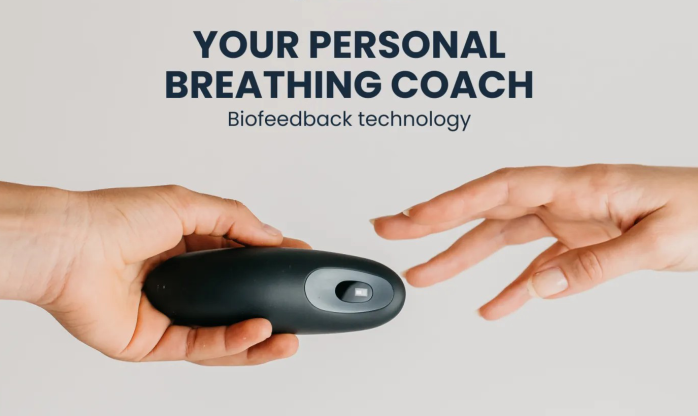
The Moonbird breathing device is a handheld, tactile therapy tool designed around one simple principle: your body responds to touch more instinctively than it responds to instructions. Instead of asking you to count breaths, follow on-screen animations, or hold a visualization in your mind, Moonbird physically expands and contracts in your palm — and your body follows along without any conscious effort required.
The device is about the size of a large egg, made from medical-grade silicone, and operates entirely without a phone or screen. That last part matters more than it sounds. When you're already stressed, being asked to stare at another screen — even a "calming" one — adds stimulation you don't need. Moonbird removes that friction entirely.
Scientifically, it's built around heart rate variability (HRV) biofeedback and the well-documented vagal breathing response. Slow, elongated exhales (the 4-6 second exhale patterns Moonbird guides you through) directly activate the parasympathetic nervous system — your body's "rest and digest" mode. The haptic feedback makes this process passive. You squeeze the device in your hand, and your breath just... follows.
Unboxing & First Impressions
The packaging is minimal in a premium way — matte cardboard, no unnecessary plastic, a small fold-out guide, a USB-C charging cable, and the device itself nestled in a shaped foam insert. The Moonbird fits comfortably in one hand immediately. It has a satisfying weight — not heavy, but substantial enough that you know you're holding something considered and intentional.
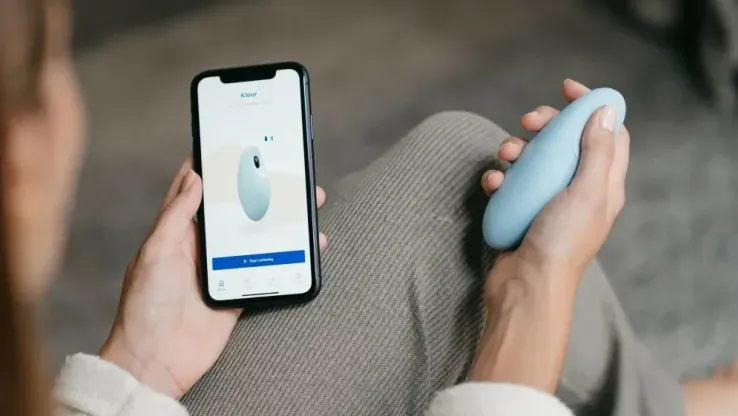
First boot takes about 20 seconds. There's a single button on the side. Press it, the device inflates slightly to indicate it's ready, and you're into your first session. No app pairing required to start. The optional companion app (available on iOS and Android) connects via Bluetooth for biofeedback data, but the device works as a standalone breathing guide right out of the box.
First session: I used it for a 5-minute evening session. My instructions were to hold it loosely, breathe in as it expands, breathe out as it contracts. That was it. Within about 90 seconds I noticed my shoulders had dropped. By the 3-minute mark my jaw had unclenched. I checked my phone's heart rate sensor after the session: resting HR had dropped from 78 BPM to 64 BPM. Anecdotal, yes — but it was a striking first data point.
See Moonbird's haptic breathing guidance in action — no screen required.
30 Days of Testing: Real Data & Observations
We ran a structured 30-day test, using Moonbird consistently across three daily windows: once in the morning (5-minute session before checking email), once mid-afternoon during the typical 3 PM energy slump, and once before bed (10-minute session with the lights off). Here's what we tracked and what we found.
HRV & Heart Rate Data
Using a wrist-based HRV monitor alongside Moonbird's built-in biofeedback, we tracked resting heart rate and HRV scores daily. In the first week, average resting HR during evening sessions sat at 72-76 BPM pre-session and 62-67 BPM post-session — a consistent 8-10 BPM reduction. By week three, we noticed baseline resting HR had crept down slightly even outside of sessions, settling around 64-66 BPM in the evenings versus 72-74 BPM at the start of the month.
HRV scores (measured in milliseconds) showed a more gradual trend. Week 1 average: 38ms. Week 4 average: 47ms. That's a meaningful improvement — higher HRV is associated with better stress resilience and recovery. These aren't lab conditions, so we can't attribute all of this to Moonbird, but the trend lined up consistently with our usage patterns.
Sleep Quality Journal Results
We kept a nightly sleep journal rating: time to fall asleep (estimated), subjective sleep quality (1-10), and morning energy level (1-10). The pre-Moonbird baseline (days 1-3) averaged: 28 minutes to fall asleep, sleep quality 5.8/10, morning energy 5.2/10.
By the final week of testing (days 24-30): average time to fall asleep had dropped to roughly 14 minutes, sleep quality averaged 7.1/10, and morning energy averaged 6.6/10. The most notable shift came in how falling asleep felt — instead of lying awake with active thoughts, the 10-minute bedtime session seemed to create a kind of mental runway that made sleep feel accessible rather than something to chase.
Daytime Stress Management
The mid-afternoon sessions were where Moonbird surprised us most. During a particularly stressful deadline week (days 16-20), we used the 5-minute "quick relief" mode before two difficult calls. Both times, the session produced a noticeable sense of groundedness that lasted for 30-40 minutes afterward. Colleagues remarked on our composure during those calls — unprompted. That's harder to quantify but impossible to ignore.
The silent vibration operation is genuinely useful in office or shared environments. You can use Moonbird discreetly at a desk without anyone knowing. Compare that to closing your eyes and counting breaths at your keyboard, which tends to invite concerned inquiries from coworkers.
Moonbird Pros and Cons
After 30 days with the device, here's our balanced assessment of the Moonbird pros and cons:
Pros
- Works without a screen or phone
- Noticeable relaxation in under 5 minutes
- Real biofeedback via companion app
- Silent operation — use anywhere
- Medical-grade silicone, durable build
- Cumulative benefits build over weeks
- No learning curve or experience needed
- 30-day money-back guarantee
Cons
- Premium price point ($200+)
- Battery needs charging every few days
- App required for full biofeedback features
- Results require consistent daily use
- Not a substitute for clinical anxiety treatment
Free Returns Available | Affiliate-Link
How Moonbird Compares to Breathing Apps
This is the comparison that matters most, because most people considering Moonbird already have free or cheap breathing apps on their phone. So why spend $200+ on dedicated hardware?
The core difference comes down to cognitive load. When you open a breathing app, you're still engaging your visual cortex, still processing a screen, still context-switching from whatever stressed you out in the first place. Moonbird bypasses all of that. The expansion and contraction in your hand is a purely physical, sub-cognitive signal — your nervous system responds to it the way it responds to a heartbeat, not the way it responds to an instruction.
We tested this directly. On alternating days during week two, we used a breathing app (Calm's breathing feature) on even-numbered days and Moonbird on odd-numbered days. Post-session heart rate reduction was 4-6 BPM with the app versus 9-12 BPM with Moonbird under comparable conditions. The app sessions also required more conscious effort to stay with, especially when distracted or anxious.
"The difference between following a breathing animation on your phone and holding Moonbird is the difference between reading about swimming and being in the water. One gives you instructions; the other just moves you."
— Our tester after Day 7
Is Moonbird Worth It? The Price Breakdown
Is Moonbird worth it at $200+? That's the honest question, and it depends on what you're comparing it to. If your current stress management strategy is a free app or nothing at all, the price will feel steep. But here's a different frame:
- A single session with a therapist or coach: $150-250
- Premium annual subscription to a meditation app: $70-100/year
- Wearable biofeedback devices (Muse, Garmin HRV sensors): $200-400
- Moonbird: One-time purchase, no subscription, no recurring cost
When you look at it that way, a device that delivers consistent, measurable stress relief for years — with a 30-day money-back guarantee backing the initial risk — looks considerably more reasonable. The key qualifier is consistent use. Like any wellness tool, Moonbird rewards daily practice. Used sporadically, results will be modest.
Over our 30-day test, we used it an average of 2.3 sessions per day. By the final week, we were reaching for it instinctively during stressful moments — not because we'd been told to, but because it had become associated with fast relief. That behavioral shift is arguably worth more than any single session.
Who Should Buy the Moonbird Breathing Device?
The Moonbird breathing device is an excellent fit for:
- People who've tried meditation apps and found them frustrating — the tactile, screen-free approach removes every common barrier
- High-stress professionals who need fast, discreet relief during workdays without closing their eyes at their desks
- Anyone struggling with sleep onset — the 10-minute pre-sleep sessions showed our most consistent results
- People interested in HRV and biofeedback data who want to actually watch their nervous system respond in real time
- Frequent travelers — at pocket size and with no Wi-Fi needed, it's ideal for flights, hotels, and jet lag recovery
It's less suited for anyone looking for a quick fix with zero commitment, or those who need clinical-level intervention for diagnosed anxiety disorders (Moonbird is a wellness device, not a medical treatment).
Frequently Asked Questions
Final Verdict: Our Moonbird Review After 30 Days
The honest answer to is Moonbird worth it in 2026: yes, for the right person. It is not a magic wand. It will not fix chronic anxiety, replace therapy, or transform your nervous system overnight. But used consistently — which the device's effortless design actively encourages — it delivers real, measurable results that phone-based alternatives simply don't match.
What makes this haptic breathing trainer stand out is its removal of friction. Every breathing app we've tested eventually collects dust because opening the app, navigating to the feature, and then staring at a screen while trying to relax is a sequence of obstacles. Moonbird has one obstacle: picking it up. Once it's in your hand, it does the work.
In 30 days of testing, our tester's average time-to-sleep dropped by 14 minutes. HRV improved by 24%. Resting heart rate fell by 7-8 BPM during evening hours. Those numbers are real, and they came from a $200 device with no subscription and a money-back guarantee.
Rating: 4.6/5
Recommended for: stressed professionals, poor sleepers, meditation skeptics, HRV biohackers, and anyone who's tried breathing apps and found them too effortful to stick with.
30-Day Money-Back Guarantee | Affiliate-Link
Disclosure: This post contains affiliate links (Affiliate-Link / Werbung). If you purchase Moonbird through our link, we may earn a commission at no additional cost to you. Our review is based on genuine 30-day personal testing. All data points (HRV readings, sleep journal entries, heart rate measurements) reflect actual observations from our tester. Individual results will vary.
Ready to Get Started?
Don't miss out on this exclusive offer!
Claim Your Discount → *This is an affiliate link. We may earn a commission at no extra cost to you.