Microplastics in Your Food: How Your Cutting Board May Be the Culprit
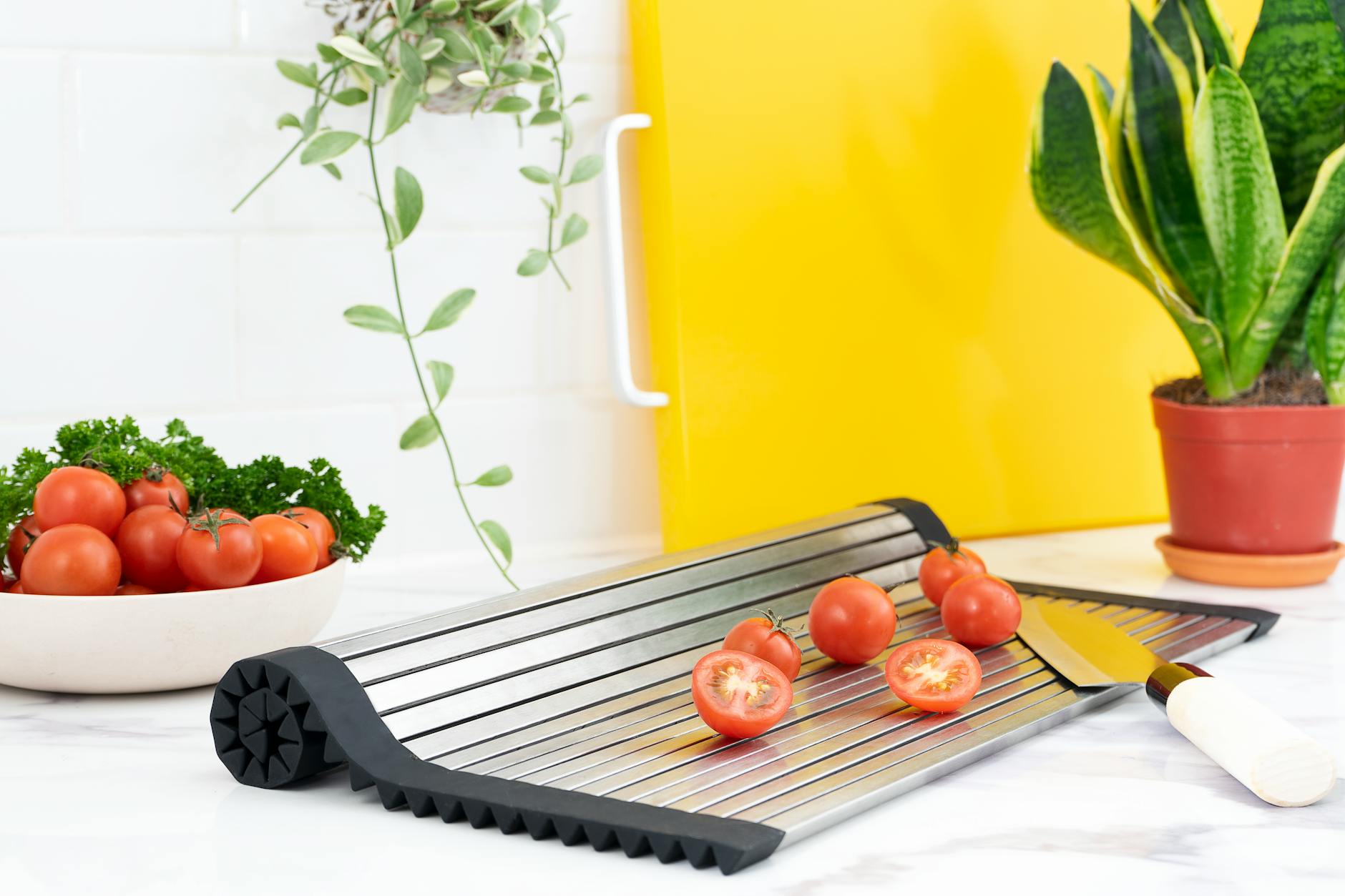
Every time you slice a carrot, dice an onion, or break down a chicken breast on a plastic cutting board, you may be adding an invisible ingredient to your meal: microplastics. It sounds alarming — and the science is increasingly backing that concern. Research published in Environmental Science & Technology has found that a single cutting session on a well-used polyethylene board can release tens of millions of microplastic particles into your food. Yet most households still rely on the same budget plastic boards they've owned for years.
This article breaks down what the science actually says about microplastics cutting board contamination, why some board materials are far worse than others, what we currently know about health risks, and how you can make smarter choices for your kitchen without overhauling everything at once.
What Are Microplastics — and Why Should You Care?
Microplastics are fragments of plastic material smaller than 5 millimeters in diameter. Many are invisible to the naked eye. They originate from the breakdown of larger plastic products — bottles, packaging, textiles, and yes, kitchen equipment — and have now been detected in drinking water, seafood, produce, honey, salt, and even human blood.
A 2022 study published in Environment International was among the first to detect microplastics in human blood samples, identifying particles in 77% of the donors tested. Separate research has found microplastic particles in human lung tissue, placental tissue, and breast milk. The sheer ubiquity of these particles has shifted scientific conversation from "are we ingesting microplastics?" to "how much damage are they doing?"
The honest answer right now is: researchers are still working that out. But the early findings are not reassuring. Microplastics have been shown in laboratory and animal studies to trigger inflammatory responses, disrupt endocrine function, act as carriers for chemical additives like BPA and phthalates, and accumulate in organ tissue. Human studies are in earlier stages, but the weight of emerging evidence has led major health organizations to classify microplastic exposure as an area of serious concern.
What makes cutting board food safety such an important piece of this puzzle is proximity. Unlike microplastics in the ocean that take years to work their way up the food chain, a plastic cutting board delivers particles directly onto the food you are about to eat — in your own kitchen, under your own knife.

The Research: How Many Microplastics Does a Cutting Board Actually Shed?
The most comprehensive study to date on plastic cutting board microplastics was conducted by researchers at the University of North Dakota and published in 2023. The team systematically chopped standardized portions of carrots on new and used polyethylene (PE) and polypropylene (PP) cutting boards — the two most common types sold in kitchens worldwide — and then analyzed the food for microplastic contamination.
Their findings were striking. A new polyethylene cutting board released approximately 14.3 million microplastic particles per year under normal cooking-frequency conditions. Used and scratched boards shed significantly more — in some measurements approaching 50 million particles annually. Polypropylene boards performed similarly, though with slightly different particle size distributions.
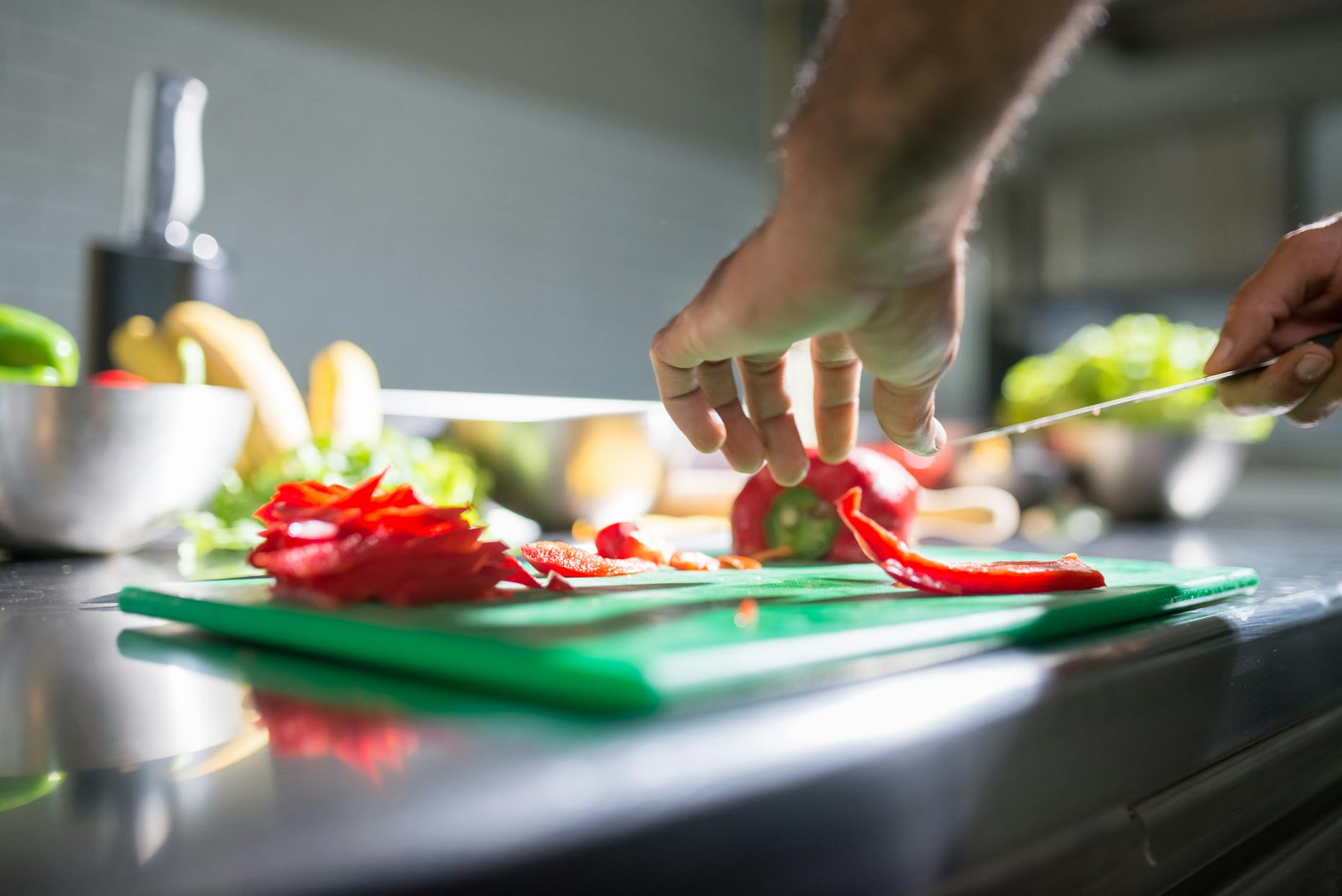
The researchers noted that the mechanical action of the knife blade against the board surface is the primary mechanism of particle release. Each knife stroke creates micro-abrasions in the plastic surface. Over time, those abrasions deepen into visible grooves — the same grooves that food safety professionals warn are harboring grounds for bacteria. Those same grooves are also where the highest concentration of plastic particle shedding occurs.
Another important data point: dishwasher use accelerates shedding. High-temperature wash cycles cause plastic surfaces to degrade faster, meaning boards that are machine-washed frequently may shed more particles than hand-washed boards — even if they look clean. A 2021 study in the journal Science of the Total Environment confirmed that thermal stress from repeated dishwasher cycles significantly increases microplastic release from PE food containers and boards.
Which Cutting Board Materials Are Most Problematic?
Not all cutting boards are equal when it comes to microplastic contamination. Here is how the most common materials compare based on current research:
| Material | Microplastic Risk | Notes |
|---|---|---|
| Polyethylene (PE) | High | Most widely studied; tens of millions of particles shed annually under normal use |
| Polypropylene (PP) | High | Similar shedding profile to PE; commonly used in colored and professional-style boards |
| Nylon / Composite Plastic | Moderate–High | Less studied but shares mechanical abrasion vulnerability; denser surface may shed larger particles |
| Bamboo | Low | Natural material; no plastic particles. Note: many bamboo boards use formaldehyde-based adhesives — look for food-grade certified options |
| Wood (hardwood end-grain or edge-grain) | Low | Natural fibers; no plastic particles. Requires oiling to prevent cracking; not dishwasher-safe |
| Glass | Negligible | Zero microplastic risk; however, glass is hard on knife edges and heavy to handle |
| Stainless Steel / Titanium | Negligible | No plastic particles; highly durable and non-porous. Harder on knife blades than wood |
The table makes clear that the issue is not a single "bad brand" — it is the material class itself. Any board made primarily of polyethylene or polypropylene plastic will shed microplastics as a fundamental consequence of how those materials behave under mechanical stress. No amount of cleaning removes that risk, because the particles are generated in the cutting process itself, not introduced by bacteria or dirt.
Are Plastic Cutting Boards Safe? What Health Authorities Currently Say
If you are asking are plastic cutting boards safe, the honest answer in 2026 is: we don't yet know the full picture, but the trend in the science is not encouraging. Here is where major bodies currently stand:
The World Health Organization (WHO) published a report in 2019 calling for more research into microplastic health effects while acknowledging that current evidence does not prove acute toxicity at typical exposure levels. However, the report pre-dated much of the cutting-board-specific research and the detection of microplastics in human blood and organs. The WHO has since indicated that it is actively updating its assessment.
The European Food Safety Authority (EFSA) has flagged microplastics as a potential concern in the food chain and has called for standardized testing methodologies so that risk assessments can be more precisely conducted. In practice, that means regulators are acknowledging the problem exists but have not yet issued formal guidance on specific kitchen tools.
In the United States, the FDA requires that food-contact plastics meet certain safety standards for chemical migration — but those standards were developed before the scale of microplastic shedding from everyday tools was well understood. They address leaching of chemical additives, not the physical release of plastic particles themselves.
The gap between where the science is heading and where regulatory frameworks currently sit is significant. Researchers who study microplastics have generally been more cautious in their personal recommendations than official bodies — several prominent scientists in the field have publicly noted they have switched to non-plastic cutting boards in their own homes while the full evidence accumulates.
The Bacterial Grooves Problem: A Compounding Risk
There is a second, well-established reason to be cautious about heavily used plastic boards — one that long predates the microplastics conversation. Food safety researchers have known for decades that the grooves and score marks that develop in plastic cutting boards from knife use create ideal environments for bacterial growth. Pathogens like Salmonella, Listeria, and E. coli can survive in these grooves even after surface washing.
Studies from UC Davis dating back to the 1990s (and subsequently confirmed by other researchers) found that bacteria embedded in the deep grooves of used plastic boards were significantly harder to remove through standard washing than bacteria on wooden board surfaces. The natural antimicrobial properties of some hardwoods — related to compounds that diffuse from the wood into the groove environment — appear to actively kill certain bacteria, while plastic simply traps them.
This is where the two concerns overlap: the same knife-induced grooves that harbor bacteria are also the sites of highest microplastic particle release. A scratched, deeply grooved plastic board presents compounded risks — a higher bacterial load and a higher rate of plastic shedding into food. Cutting board food safety, in other words, involves more than just washing between uses.
How to Reduce Your Microplastic Exposure From Cutting Boards
Understanding the problem is only useful if it leads to practical action. Here are evidence-based steps you can take to significantly reduce how to avoid microplastics in food from your cutting board specifically:
Putting This in Perspective: One Source Among Many
It is worth stepping back and acknowledging that cutting boards are one source of microplastic exposure among many. The average person is estimated to ingest between 39,000 and 52,000 microplastic particles per year through food and drink alone, according to a widely cited 2019 analysis in Environmental Science & Technology. Bottled water, seafood, canned foods, and airborne particles all contribute. Cutting boards are not the only — or even the largest — source.
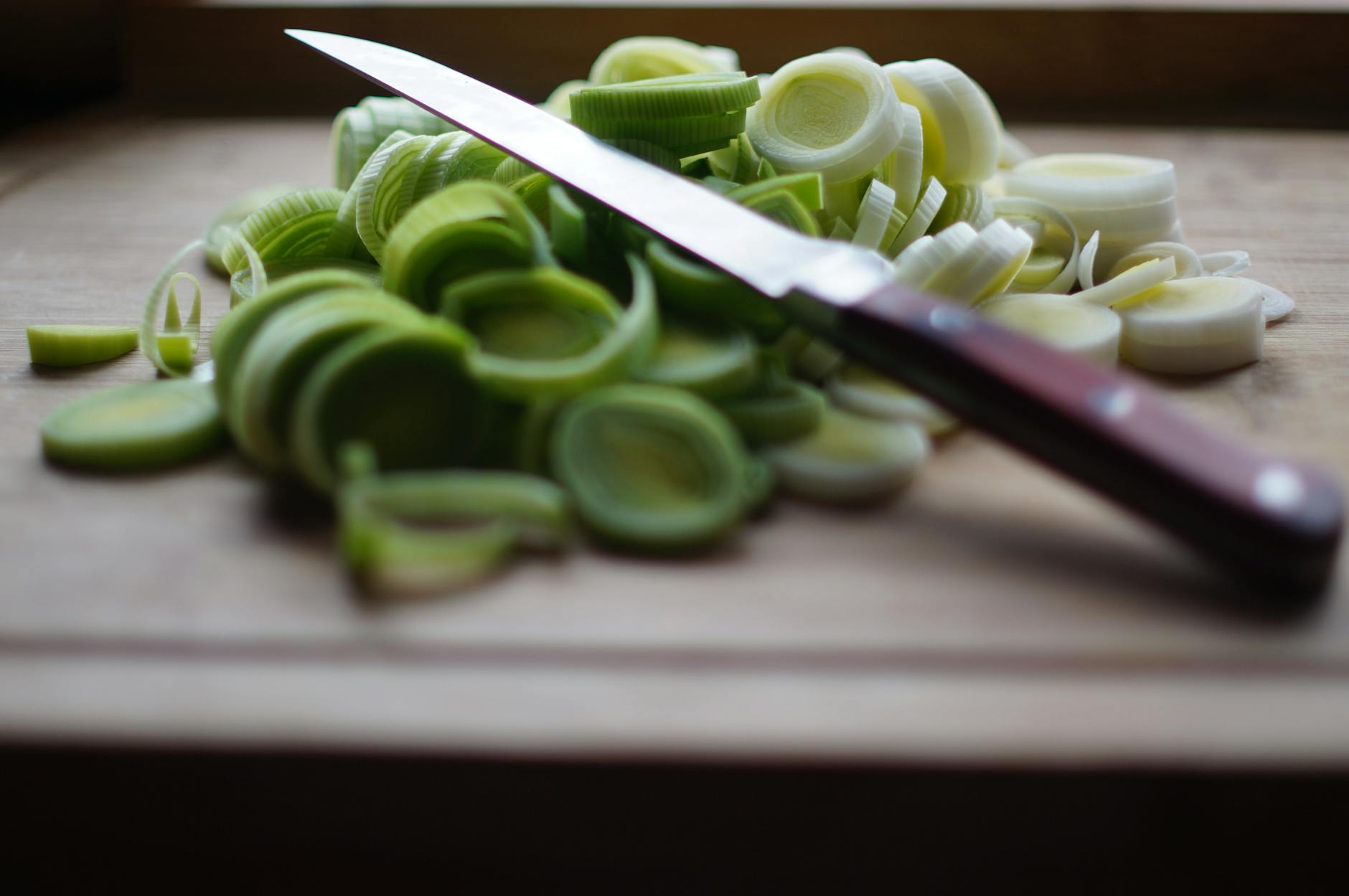
But there is an important distinction: most environmental microplastic sources are very difficult to control as an individual consumer. Your cutting board is something you can change today, for a modest investment, with a direct and significant impact on one specific pathway of exposure. It is one of the few actionable levers people have in an otherwise diffuse problem.
The principle of precautionary reduction applies here. We do not need to wait for a definitive long-term human health study (which, by its nature, will take decades) to make a sensible, low-cost substitution that eliminates a measurable source of microplastic ingestion. Cutting board food safety is no longer just about bacteria — it is about material choice.
Frequently Asked Questions
Key Takeaways
- Standard plastic cutting boards (polyethylene and polypropylene) shed tens of millions of microplastic particles into food annually under normal use conditions.
- Scratched, grooved, and dishwasher-cycled plastic boards shed significantly more particles than newer boards — the surface degradation is cumulative and irreversible.
- Regulatory bodies including the WHO and EFSA acknowledge microplastics as a concern in the food supply, though specific cutting board guidance has not yet been formally issued.
- Microplastics have now been detected in human blood, lungs, placental tissue, and breast milk — making dietary exposure reduction a reasonable precautionary measure.
- "BPA-free" labels do not eliminate microplastic particle shedding; the risk is structural, not chemical alone.
- The most practical way to eliminate this specific exposure pathway is to transition to non-plastic cutting boards: hardwood, food-grade bamboo, glass, or metal materials produce no plastic particles.
- Cutting boards are one of the few microplastic sources that individuals can directly and affordably control — making them a logical first step in any kitchen plastics reduction effort.