How to Put Out a Grease Fire Safely (What Most People Get Wrong)
Knowing how to put out a grease fire correctly could be the difference between a minor kitchen incident and a house fire. Every year, cooking fires cause thousands of injuries and millions of dollars in property damage — and the overwhelming majority start on the stovetop with hot oil or grease. The frightening part? Most people's instinctive response is exactly the wrong one.
This guide covers everything you need to know: what a grease fire actually is, the dangerous chemistry behind why water makes it explode, the correct step-by-step method to extinguish one safely, and how to prevent grease fires from starting in the first place.
What Is a Grease Fire?
A grease fire starts when cooking oil or animal fat is heated past its smoke point and reaches its autoignition temperature — the point at which it spontaneously ignites without needing a spark or open flame. Different oils have different ignition thresholds, but most common cooking fats will catch fire somewhere between 600°F and 700°F (315°C–370°C).
It can happen faster than you expect. A pan of oil left unattended on a medium-high burner can go from safe cooking temperature to fully ablaze in under two minutes. The warning sign is smoke — if your oil is smoking heavily and you haven't added any food, the pan is dangerously close to ignition.
Once ignited, a grease fire behaves very differently from other fires. The burning oil is its own fuel source, it can spread instantly, and — crucially — it reacts violently to several common firefighting methods that would be completely safe to use on other types of fires.
The #1 Mistake: Why You Should Never Put Water on a Grease Fire
If there is one thing you take away from this entire article, make it this: never put water on a grease fire. Not a splash. Not a glass. Not a bucket. Not a wet cloth. Not even water vapor from a pot of boiling soup placed nearby. Water and burning grease interact in a way that causes a sudden, violent, and potentially lethal explosion.
The Chemistry Explained Simply
Here is what happens at a molecular level. Burning oil is extremely hot — well above 600°F (315°C). Water boils at 212°F (100°C). When a small amount of water hits oil that is hundreds of degrees hotter than water's boiling point, it does not just boil — it flash vaporizes instantly.
That rapid conversion from liquid to steam causes the water to expand to roughly 1,700 times its original volume in a fraction of a second. That explosive expansion propels tiny burning oil droplets outward in every direction, creating a fireball that can reach the ceiling in an instant. What was a contained pan fire becomes a room-filling inferno.
This is not a rare edge case — firefighters demonstrate this reaction in controlled environments specifically to teach the public how catastrophic the water-on-grease reaction is. A single cup of water poured onto a burning pan has produced fireballs over 10 feet tall in safety demonstrations.
Other Things That Make Grease Fires Worse
Water is the most dangerous mistake, but it is not the only one. These actions can also escalate a grease fire rapidly:
- Using a standard dry chemical fire extinguisher incorrectly — the high-pressure spray can scatter the burning oil and spread the fire before it suppresses it.
- Carrying the flaming pan to the sink or outside — moving it introduces oxygen, destabilizes the burning oil, and dramatically increases the risk of dropping it and spreading fire to floors, cabinets, and your body.
- Blowing on it or fanning it — grease fires need oxygen to burn; introducing more airflow feeds them.
- Using a flour or sugar container — people sometimes confuse these for baking soda; flour and sugar are flammable and will cause the fire to surge explosively.
- Removing the lid too quickly — if you have smothered the fire with a lid, reopening it too soon reintroduces oxygen and the fire can reignite.
How to Put Out a Grease Fire: The Correct Step-by-Step Method
Grease fire kitchen safety comes down to one core principle: cut off the oxygen supply. Grease fires cannot sustain themselves without oxygen. If you can seal the fire away from fresh air, it will consume what oxygen remains in the pan and extinguish itself.
Here is the correct procedure, in order:
Step 1: Turn Off the Heat Immediately
If it is safe to reach the stove controls without leaning over the flames, turn off the burner immediately. Removing the heat source prevents the oil from getting any hotter and removes one of the three elements the fire needs to keep burning (heat, fuel, and oxygen). Do this first, but only if you can do it safely without putting yourself in the path of the fire or flames.
Step 2: Smother the Fire With a Lid
Smothering a grease fire with a lid is the single most effective first response for a contained pan fire. Grab a metal lid — ideally one that fits the pan — and slide it over the pan from the side rather than dropping it on top from directly above. Approaching from the side keeps your hands and arms away from the flames.
Once the lid is on, do not lift it. Leave it in place. The fire will consume the remaining oxygen trapped under the lid and extinguish. The pan needs to cool down significantly before the lid is safe to remove — this can take 15 to 30 minutes. Removing it too soon allows oxygen back in, and the oil may still be hot enough to reignite.
Step 3: If No Lid Is Available, Use Baking Soda or a Class K Fire Extinguisher
If a lid is not accessible, a large quantity of baking soda (sodium bicarbonate) can help smother a small grease fire. When heated, baking soda releases carbon dioxide, which displaces the oxygen the fire needs. You would need a significant amount — a full box or more — poured directly and carefully onto the flames. This method works only for small fires and should not be your primary plan.
For larger grease fires, a Class K fire extinguisher is specifically designed for commercial and residential kitchen grease fires. Class K extinguishers use a wet chemical agent that reacts with the burning oil through a process called saponification — essentially turning the surface of the burning oil into a soapy foam that seals it from oxygen. If your home has a Class K extinguisher (highly recommended for anyone who cooks frequently), this is the correct tool for a grease fire that has grown beyond a simple pan.
Standard ABC dry chemical extinguishers are less ideal for grease fires and can scatter flaming oil if the pressure is too high, though in an emergency any extinguisher is better than water.
Step 4: If the Fire Grows, Get Out and Call Emergency Services
No kitchen item is worth your life. If the fire spreads beyond the pan — to surrounding burners, a range hood, cabinets, or the wall — do not attempt to fight it yourself. Leave the kitchen immediately, close the door behind you to slow the spread of fire and smoke, and call emergency services from outside the home.
The decision point is simple: if you cannot cover the pan with a lid or you don't have a suitable extinguisher, and the fire is more than a foot tall or has left the pan, evacuate. Smoke inhalation is a serious danger even in the absence of visible flames reaching you, and kitchen fires can double in size every minute.
Quick-Reference Summary: What to Do and What Not to Do
DO:
- Turn off the burner if safe to do so
- Slide a metal lid over the pan
- Leave the lid on until the pan is fully cool
- Use baking soda for small fires if no lid is available
- Use a Class K extinguisher for larger fires
- Evacuate and call 911 if the fire spreads
NEVER:
- Pour water on a grease fire
- Use a wet cloth or wet towel
- Move the flaming pan
- Use flour or sugar
- Fan or blow on the flames
- Remove the lid too soon after smothering
How to Prevent Grease Fires From Starting
Understanding what to do if grease catches fire is essential — but preventing one in the first place is always the better outcome. Most grease fires are preventable with a few consistent habits.
Never Leave Hot Oil Unattended
This is the single most important prevention habit. Oil heats up quickly, and stepping away for even two or three minutes — to answer a phone, check on something in another room, or tend to another task — is enough time for oil to go from safe cooking temperature to ignition. If you need to leave the kitchen, turn the burner off first.
Know Your Oil's Smoke Point
Every cooking oil has a smoke point — the temperature at which it begins breaking down and producing visible smoke. Seeing smoke is your warning that the oil is approaching dangerous temperatures. Different oils have very different smoke points: extra virgin olive oil has a relatively low smoke point (around 375°F / 190°C), while refined avocado oil has a very high one (up to 520°F / 270°C). Match your oil to your cooking method, and always treat heavy smoke as a serious warning sign.
Add Food Before the Oil Gets Too Hot
A common home-cooking mistake is heating oil on high until it shimmers aggressively, then adding food. Adding cold, wet food to very hot oil causes violent spattering and increases the risk of flame. Heat oil to the appropriate temperature for the recipe — usually a moderate heat — and add food before the oil starts producing smoke.
Keep the Cooking Area Clear
Paper towels, dish cloths, wooden utensils, and food packaging left near the stove can catch fire from splattering oil or burner heat. Keep a clear zone around active burners and never drape anything over a stove handle or burner while cooking.
Use the Right Size Pan
A pan that is too small for the amount of oil you are using increases the risk of boil-over and splatter. Use a pan large enough that the oil fills no more than one-third of its depth when frying.
Keep a Lid and Baking Soda Within Reach
The best time to locate your fire response tools is before you need them. Keep a fitting lid for your most-used frying pan somewhere accessible, and consider keeping a box of baking soda on the counter near the stove while cooking with oil. Knowing exactly where these are saves critical seconds in an emergency.
Fire Extinguisher Classes: Which One Belongs in Your Kitchen?
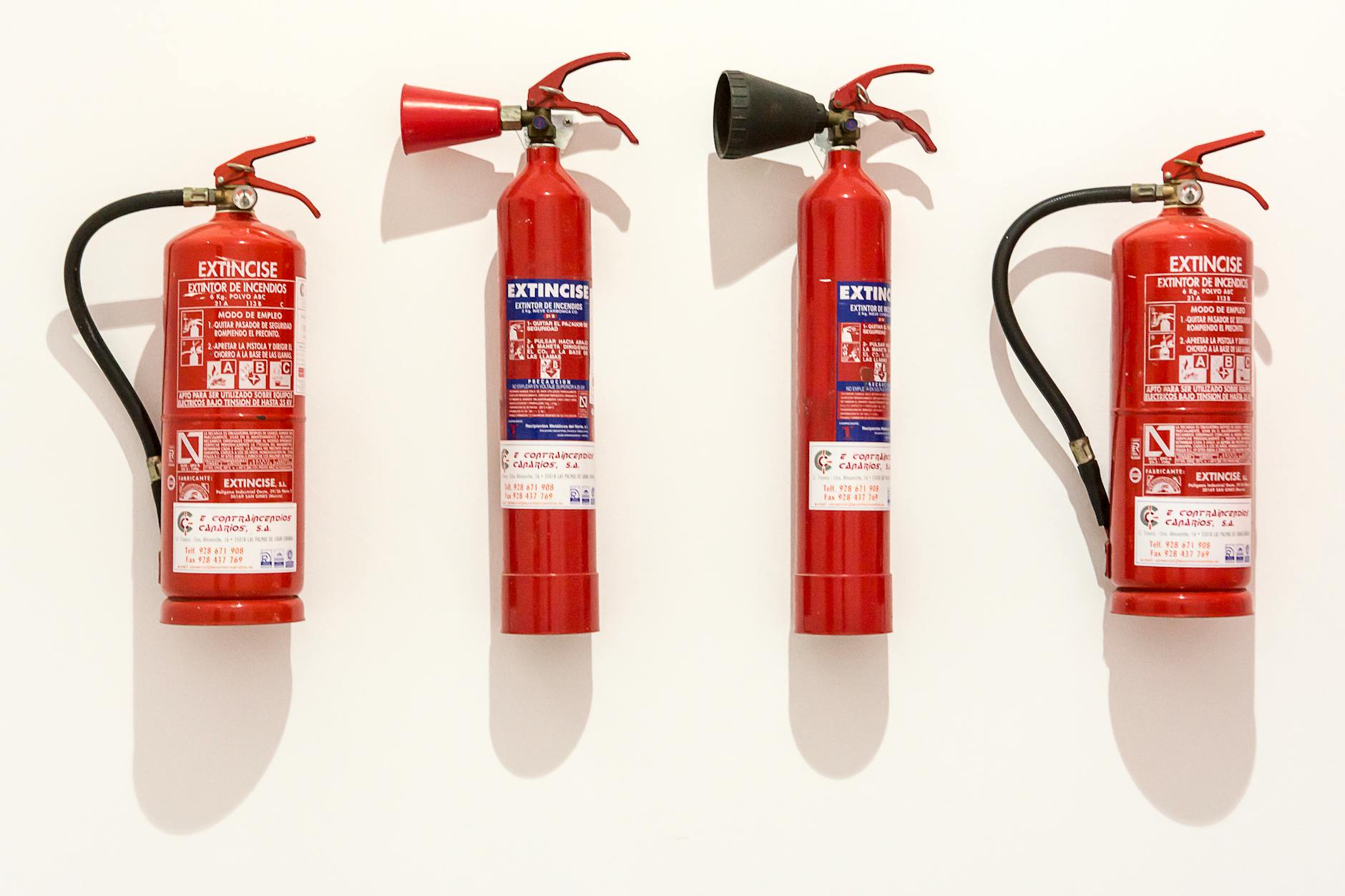
Not all fire extinguishers are created equal, and using the wrong one on a grease fire can make the situation worse. Here is a quick breakdown of the relevant classes:
- Class K: Designed specifically for cooking oil and grease fires. Uses wet chemical agents that saponify burning fats, forming a foam barrier that seals off oxygen. This is the ideal extinguisher for any kitchen where serious cooking takes place.
- Class B: Rated for flammable liquid fires including oil, but not optimized for cooking grease. Less effective than Class K for stovetop fires.
- ABC (Dry Chemical): The most common household extinguisher. Works on multiple fire types and is better than nothing, but the high-pressure stream can scatter burning oil. Use only if a Class K is not available.
- Class A: For ordinary combustibles like wood and paper. Not appropriate for grease fires.
If your home has a fire extinguisher but you are not sure what class it is, check the label. It will be clearly marked. If you do not have an extinguisher at all, the kitchen is one of the highest-priority places to install one — grease fire kitchen safety planning starts with having the right tools in the right place.
Key Takeaways
Grease fires are one of the most common and most dangerous kitchen emergencies, but they are also one of the most preventable — and when they do occur, they are manageable if you respond correctly in the first few seconds.
The core rules are straightforward:
- Never use water on a grease fire under any circumstances.
- Turn off the heat source if it is safe to reach.
- Smother the fire by sliding a metal lid over the pan and leaving it until the pan is completely cool.
- Use baking soda or a Class K extinguisher for fires that cannot be covered.
- Evacuate immediately if the fire spreads beyond the pan.
- Prevent fires by never leaving hot oil unattended and keeping flammable materials away from the stove.
Printing this list and putting it inside a kitchen cabinet is not a bad idea. In an emergency, muscle memory and pre-planned responses outperform in-the-moment thinking every time. The few seconds it takes to do the right thing — smothering a grease fire rather than reaching for the sink — can prevent a catastrophic outcome.