Does Facial Hair Grow Back Thicker After Shaving? The Truth, Explained
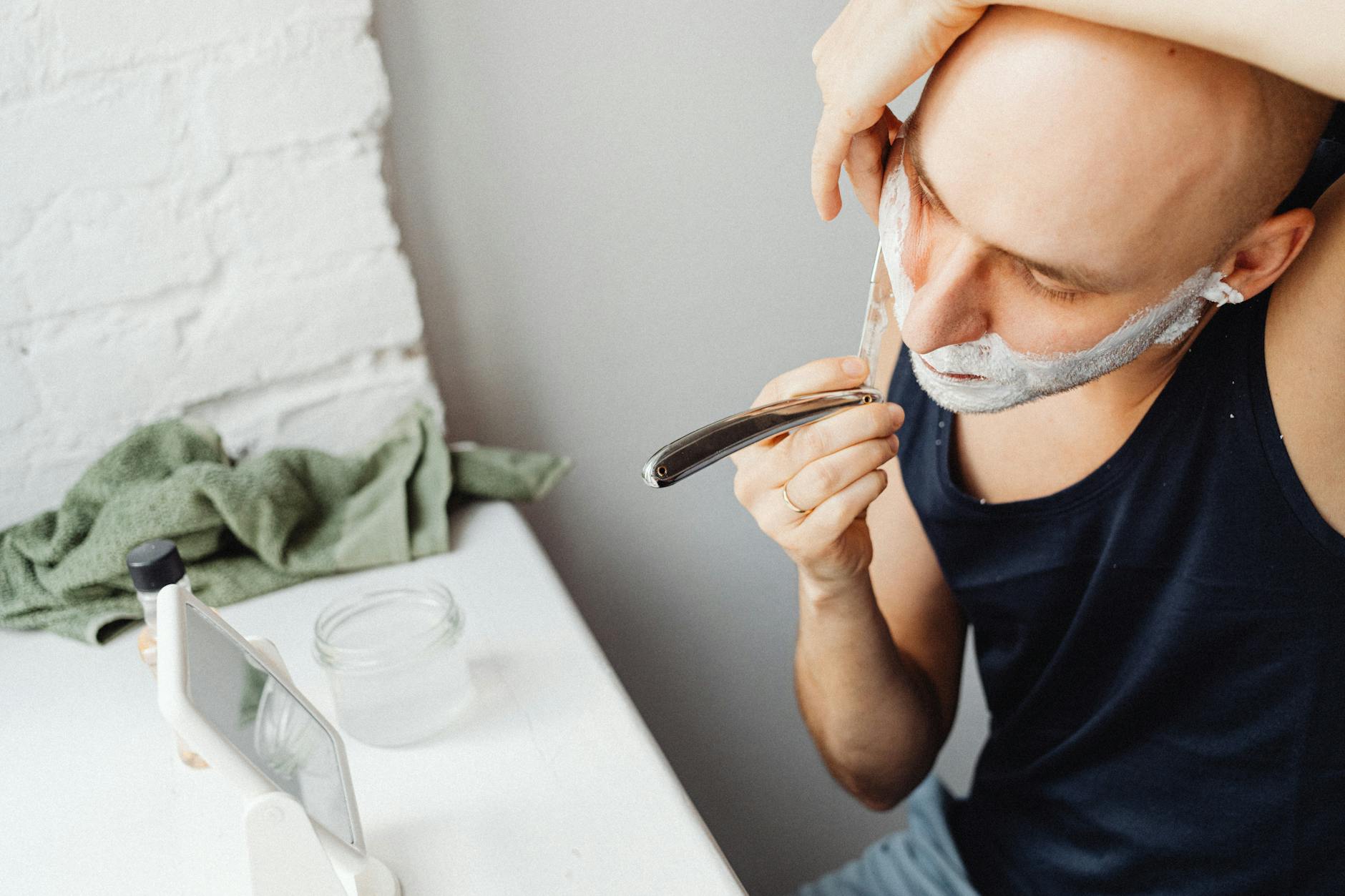
If you've ever hesitated before shaving your upper lip or chin because someone warned you that facial hair removal before and after shaving looks dramatically different — specifically that the hair comes back darker, coarser, and denser — you are not alone. This fear has stopped countless people from choosing the most convenient hair removal method available to them. But here's the thing: the science simply does not support it.
The belief that shaving makes hair grow back thicker is one of the most stubborn myths in modern beauty culture. Dermatologists have been debunking it for decades, yet it persists in family advice, online forums, and beauty magazines. In this article, we're going to walk through what actually happens to a hair shaft when you shave it, why the myth feels so believable, and what removal methods — if any — genuinely do change how hair grows back over time.
Where Did the "Shaving Makes Hair Thicker" Myth Come From?
The myth is old. Early 20th-century medical literature contains references to the belief that shaving stimulates hair growth — but the studies that seemed to support this idea were small, poorly controlled, and never replicated under rigorous conditions. One of the most frequently cited early studies, published in 1928 by Mildred Trotter, concluded there was no measurable effect of shaving on hair growth rate or texture. Despite this, the cultural belief lived on.
Part of the reason it persisted is that the observation itself is real — even if the interpretation is wrong. After you shave, the hair that grows back does feel different. It feels stubbly, rough, and sometimes appears darker at the skin's surface. But feeling different and being different are not the same thing. Understanding why requires a quick look at hair biology.
The Science: What Shaving Actually Does to a Hair
A strand of hair grows from a follicle, which sits beneath the surface of your skin. The part of the hair you can see — the shaft — is made of dead keratin cells. It has no connection to nerves, blood supply, or any biological feedback system. Cutting it has zero effect on the follicle below.
When a hair grows naturally, the tip has spent weeks or months being exposed to sunlight, friction, and general wear. This gives it a tapered, slightly worn end — fine and soft to the touch. When you shave, you slice the shaft cleanly at skin level, creating a blunt, flat tip. That blunt tip is what you feel when stubble grows back in the days after shaving. It's the same hair — the same diameter, the same color, the same follicle — but the freshly cut end feels sharper against your fingertips than a naturally tapered end would.
Critically, the follicle determines hair thickness, not anything happening at the surface. The follicle is genetically programmed. A razor blade touching a hair shaft several millimeters above the skin cannot send any signal to a structure beneath it. The biology simply doesn't work that way.

What Dermatology Research Actually Says
The scientific consensus on this question is unusually clear for a beauty topic. Multiple controlled clinical studies have examined whether shaving affects hair thickness, color, or growth rate — and all of them have come to the same conclusion: it does not.
A landmark study published in the British Medical Journal in 1970 by Lynfield and MacWilliams directly measured hair width, growth rate, and overall weight in participants who shaved one leg regularly while leaving the other unshaved as a control. After several months, there was no statistically significant difference between the shaved and unshaved legs in any of those measurements. The study used objective measurement tools, not subjective touch assessments, and it remains one of the most rigorous tests of this myth ever conducted.
More recent reviews, including a widely cited 2007 paper in the Journal of Investigative Dermatology Supplements, have confirmed the same finding: shaving has no effect on the intrinsic qualities of hair growth. The follicle is the engine. The blade is just trimming the exhaust pipe.
So when someone says "I started shaving and now my facial hair is so much thicker," what they are describing is a perception shaped by the blunt tip and the relative freshness of regrowth — not an actual biological change.
Why It Feels Thicker: Perception vs. Reality
There are three specific reasons why post-shave regrowth feels and looks different, even though it is structurally identical to hair that was never shaved:
1. The blunt tip effect. As described above, the cut end of a hair shaft is flat and rigid rather than tapered and soft. When this flat end emerges from the skin, it catches on clothing, fingers, and skin in a way that a tapered tip never would. It is a tactile illusion — the hair itself is unchanged.
2. Synchronised growth. When you shave an area, all the hairs in that zone are cut to the same length at the same time. They then regrow in unison. This creates a more uniform, dense-looking field of stubble compared to the naturally staggered growth pattern of unshaved hair, where different follicles are at different stages of the growth cycle. The density looks higher even though the follicle count hasn't changed at all.
3. Color contrast at the base. Hair tends to be darkest at the root, closest to the follicle, and lightens toward the tip due to sun exposure and oxidation. When you shave, only the darkest, most pigmented part of the hair is left to grow out first. This creates the appearance of darker, more prominent hair — even though the pigmentation per strand is exactly the same.
All three of these effects are optical and tactile illusions. None of them reflect a real change in hair structure.

Methods That Actually Do Change Regrowth Over Time
Shaving does not affect hair thickness — but some removal methods genuinely do produce finer, sparser regrowth with repeated use. Understanding these distinctions is important for anyone researching facial hair removal before and after results.
Epilation
Epilators work by mechanically pulling hairs out from the root — similar to tweezing, but much faster. Because the hair is removed from beneath the skin's surface, the follicle has to rebuild the entire shaft from scratch. Over time and with repeated epilating sessions, many users notice that hair grows back finer after epilating. This is a real, documented effect.
The mechanism is thought to involve minor, repeated trauma to the follicle wall. Each time the hair is pulled from the root, it can cause slight inflammation and microscopic damage to the follicle structure. Over many sessions, this can cause the follicle to produce a thinner, less pigmented shaft. The hair doesn't disappear, but it becomes progressively less noticeable. This is why regular epilating is often recommended for people who want a longer-term change in facial hair appearance without committing to professional treatments.
Waxing
Waxing operates on a similar principle to epilating — the hair is removed at the root, not the surface. Regular waxers frequently report that after months or years of consistent waxing, their regrowth becomes softer, patchier, and easier to manage. Again, this is attributed to repeated follicular stress rather than any chemical effect of the wax itself.
It is worth noting that neither epilating nor waxing produces the same level of follicular disruption as professional treatments, so the changes are gradual and partial rather than permanent or dramatic.
Laser Hair Removal and IPL
These are the only methods that can produce permanent or semi-permanent reductions in hair growth. Both work by targeting the melanin (pigment) in the hair follicle with concentrated light energy, which damages the follicle's ability to produce new hairs. After a full course of treatment, most people experience a significant reduction in hair density and thickness — and some follicles stop producing hair altogether.

Threading
Threading removes hair at the root using a twisted cotton thread. Like waxing and epilating, repeated threading over long periods may produce some softening of regrowth, though the evidence for threading specifically is less robust than for epilating. It remains popular for facial hair — particularly eyebrows and upper lip — because of its precision and low cost.
Depilatory Creams
Depilatory creams dissolve the hair shaft at or just below the skin's surface using chemicals like thioglycolate. Because they don't remove the root, they behave similarly to shaving in terms of regrowth: the blunt chemical cut produces the same stubble effect. They do not cause hair to grow back thicker either — but they also don't produce the long-term softening effects of root-removal methods.
Natural Facial Hair Removal: What the Evidence Shows
Interest in natural facial hair removal methods has grown alongside broader awareness of what we put on our skin. Some people explore options like turmeric paste (a traditional remedy from South Asia said to slow hair growth), spearmint tea (which some studies suggest may have mild anti-androgenic effects when consumed regularly), or sugaring (a natural alternative to waxing using sugar, lemon, and water).
The evidence for topical natural remedies is thin. Turmeric paste, for example, has a long cultural tradition but limited peer-reviewed backing for hair removal specifically. Spearmint's anti-androgenic effects have been studied mainly in relation to hormonal conditions like PCOS, and the effects are modest and systemic rather than localised to specific hair follicles.
Sugaring is effectively the same mechanical process as waxing — hair removed from the root — so the same long-term softening effects are plausible with consistent use. It has the added benefit of being gentle enough for sensitive skin.
If you are exploring natural options, the most realistic expectation is that root-removal methods (sugaring, threading) will produce gradual softening with consistency, while topical natural applications are unlikely to produce measurable results on their own.
What to Realistically Expect: Facial Hair Removal Before and After
Setting the right expectations is the most useful thing any guide can offer on this topic. Here is a straightforward summary of what the evidence says you can expect from different methods:
- Shaving: Immediate smoothness, regrowth within 1–3 days with a blunt, stubbly feel. No change to hair thickness, color, or density over time. The hair is not growing back thicker — it simply feels that way due to the cut edge.
- Epilating: Longer-lasting smoothness (3–6 weeks per session). With regular use over months, many people notice finer, sparser regrowth. Some initial discomfort during the process.
- Waxing / Sugaring: Similar to epilating in terms of root removal. Results last 3–6 weeks. Gradual softening of regrowth over time with consistent use.
- Threading: Precise root removal. Results last 2–4 weeks for finer facial hair. Some softening possible with long-term use.
- Depilatory creams: Smooth results for 3–7 days. No long-term change in regrowth characteristics. Similar to shaving in effect.
- Laser / IPL: Permanent or semi-permanent reduction in hair density and thickness after multiple sessions. The only methods with clinical evidence for lasting follicular change.
The Bottom Line on Shaving and Hair Thickness
If you are avoiding shaving your face because you're worried that does shaving make hair grow back thicker is a real risk — you can put that fear to rest. The science is unambiguous: shaving does not change the structure, color, or growth rate of your hair. The follicle is completely unaffected by what happens to the shaft above the skin. What you feel as "thicker stubble" is simply the geometric reality of a blunt tip — not a biological change.
At the same time, if you genuinely want regrowth to become finer and softer over time, root-removal methods like epilating, waxing, and sugaring are worth exploring. And if you want a more permanent result, laser and IPL treatments have the strongest evidence base. But shaving? It remains a fast, safe, and thoroughly myth-free option that has no lasting effect on your hair whatsoever.
Key Takeaways
- Shaving does not make facial hair grow back thicker, darker, or faster — this is a thoroughly debunked myth.
- The stubbly feel after shaving is caused by the blunt, flat tip of the cut hair shaft — not a change in the hair itself.
- Multiple controlled dermatology studies confirm there is no measurable effect of shaving on hair diameter, color, or growth rate.
- Methods that remove hair from the root — epilating, waxing, sugaring, threading — can produce genuinely finer regrowth over time with consistent use.
- Hair grows back finer after epilating because repeated root removal causes minor, cumulative changes to the follicle structure.
- Laser and IPL are the only methods with clinical evidence for permanent or semi-permanent reduction in hair growth.
- Natural facial hair removal options like sugaring have plausible softening effects; topical herbal remedies have limited evidence.
- When evaluating facial hair removal before and after results, the method matters enormously — choose based on how long you want results to last and whether long-term follicular change is your goal.