Barestep Active 2.0 Review 2026: We Tested the Barefoot Shoe Everyone Is Talking About
Limited Time Offer!
Get This Deal Now → *Affiliate link - We may earn a commissionIf you've been researching barefoot shoes for any length of time, the Barestep Active 2.0 has almost certainly come across your feed. The brand has built a loyal following among people dealing with foot pain, plantar fasciitis, bunions, and the kind of chronic lower-back ache that nobody can quite explain — until they look down at their shoes. I was one of those people. After 30 days of wearing the Barestep Active 2.0 across every context I could throw at it — gym sessions, a full office week, long weekend walks, and daily errands — I have a lot to say. This Barestep Active 2.0 review gives you the honest picture: what works, what doesn't, who these shoes are really built for, and whether the $68 price tag is worth it.
Currently 50% Off — Limited Time Offer
How the Barestep Active 2.0 Is Different From Conventional Shoes
Before getting into the wear test, it helps to understand what makes a barefoot shoe structurally different — because the Barestep Active 2.0 isn't just a "comfortable sneaker." It's built around a completely different philosophy than the padded, elevated, narrow footwear most of us grew up wearing.
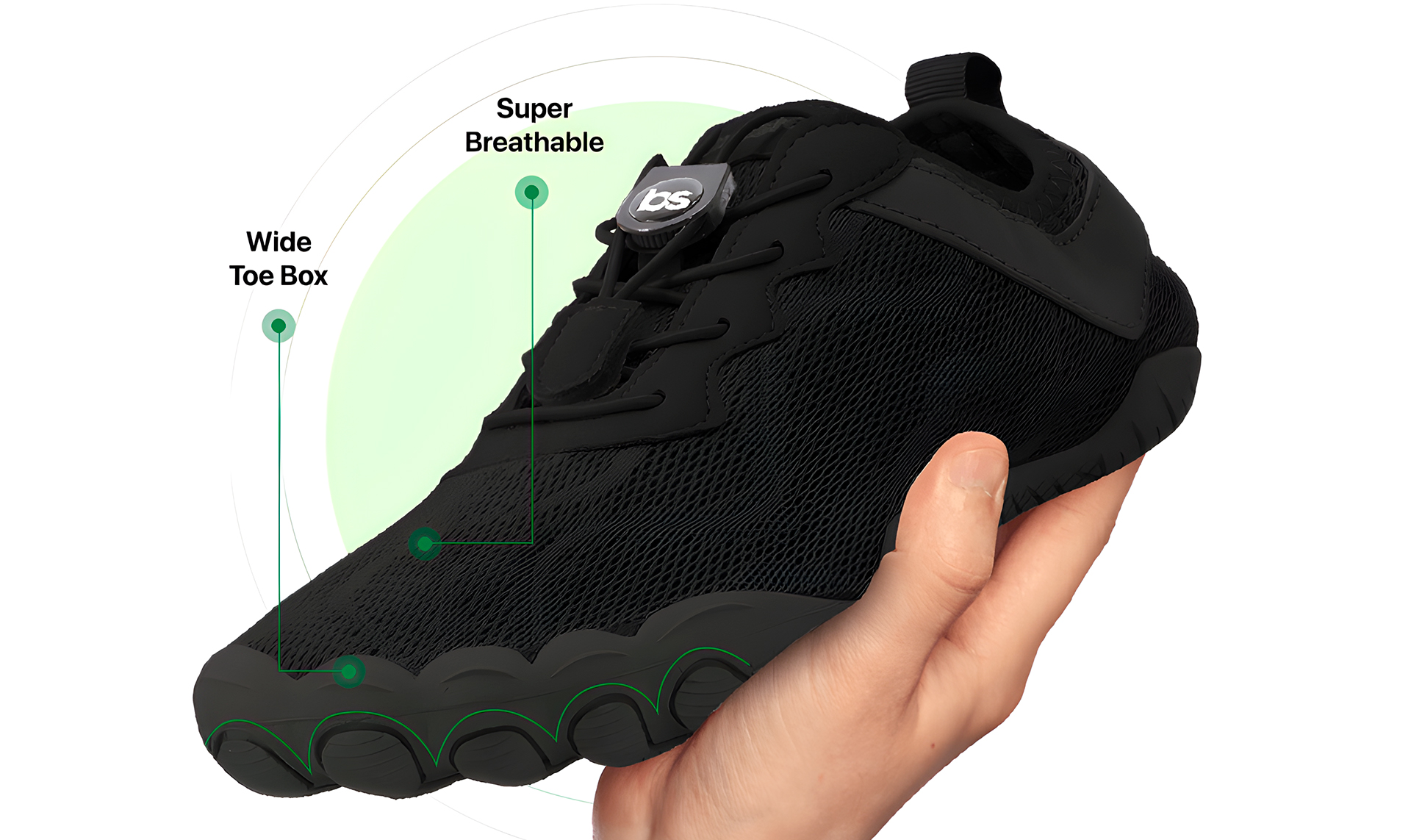
Conventional running and casual shoes are engineered with a raised heel, which tilts your body weight forward and shortens your Achilles tendon over time. They have a tapered toe box that squeezes your toes together and prevents natural splay. Over years of wearing them, your foot muscles weaken, your arch collapses, and your gait compensates in ways that eventually show up as knee pain, hip tightness, and lower-back problems. The Barestep Active 2.0 addresses all three of these issues at once: it has a zero-drop sole (heel and toe are at the same height), a genuinely wide toe box that lets toes spread naturally, and ultra-flexible materials that allow your foot to move as if you were walking barefoot — but with protection and traction underfoot.
Side-by-side comparison: conventional shoes vs. the Barestep Active 2.0 — the structural difference is immediately visible
The video above puts it plainly. In a conventional shoe, the toes are bunched together and the heel is elevated. In the Barestep Active 2.0, the toes sit wide and flat, the heel meets the ground at the same plane as the forefoot, and the entire sole flexes with the foot rather than fighting it. For anyone dealing with plantar fasciitis, bunion pain, or neuropathy, that structural difference isn't cosmetic — it directly changes how load distributes through your foot with every step.
Unboxing and First Impressions
The Barestep Active 2.0 arrived in straightforward packaging — clean, no frills. My first physical impression was how light the shoe actually is. It felt almost implausibly light for a shoe with this much apparent structure. The upper is a breathable mesh fabric that gives when you press it, and the sole is noticeably thinner and more flexible than any athletic shoe I own. I could fold the entire shoe nearly in half lengthwise with one hand — that flexibility is by design, not a quality issue.
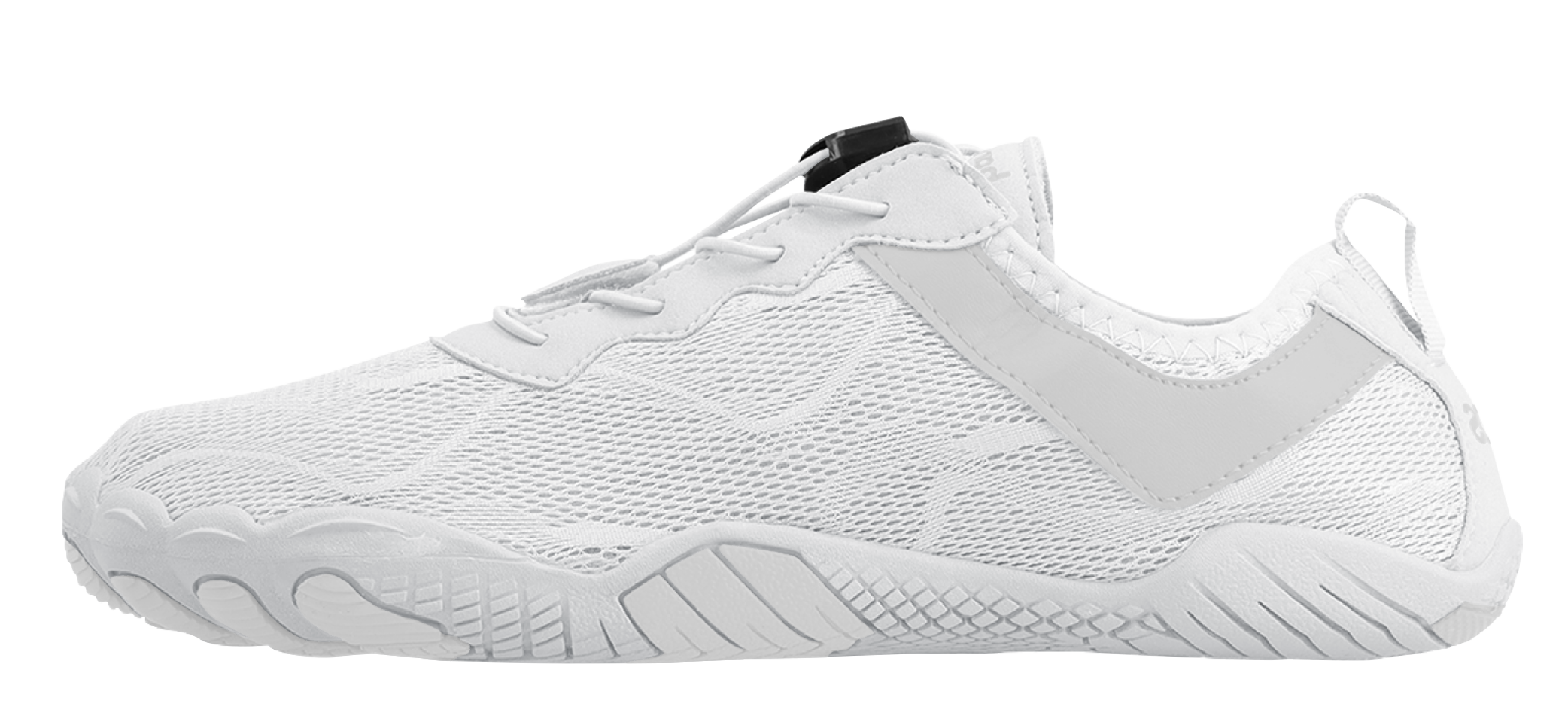
Putting them on for the first time, the toe box width was the most immediately noticeable thing. My toes had room they have never had in any shoe I own — conventional running shoes, casual sneakers, even "comfort" shoes from well-known brands. The lacing system is standard and secure. The heel counter is firm enough to hold your foot in place without gripping painfully. Sizing felt true to size for me (I'm typically a men's 10, ordered a 10, had a proper fit with a small amount of room at the toe as recommended for barefoot shoes).
The one thing to prepare for: these shoes feel unusual at first. If you've spent decades in heeled footwear, the flat sole will feel like you're standing slightly differently. That's not a defect — it's exactly the point. Your calves and ankles are now doing work they've been outsourcing to foam cushioning for years. I noticed mild calf tiredness after my first full day, which resolved within a week as my feet and lower legs adapted.
30-Day Wear Test: Every Context Covered
At the Gym
I wore the Barestep Active 2.0 for four weeks of gym sessions: a mix of lifting (squats, deadlifts, lunges) and light cardio. For strength training specifically, these shoes are outstanding. The flat, stable sole gives you much better ground contact than a cushioned running shoe, which can actually compress under load and destabilize you during heavy lifts. My squat form felt more grounded, and I wasn't getting the lateral wobble I sometimes get in conventional training shoes. The grip on gym flooring was reliable. For running on a treadmill, they're workable for easy-pace jogging, though anyone logging serious mileage will want to transition very gradually — the minimalist construction means your feet are doing more work, and that takes conditioning.
In the Office
I wore these for a full five-day office week, including two days that involved standing and walking for most of the afternoon. By midday on day one I noticed that my lower back — which typically stiffens during long sitting-to-standing transitions — felt notably less tight. By the end of the week I was a convert for office use. The featherlight construction means you genuinely forget you're wearing shoes. The breathable fabric kept my feet comfortable in a climate-controlled environment without any overheating. They're casual-looking but presentable enough for a business-casual setting in most workplaces.
On Long Walks
Two weekend walks of approximately 4–5 miles each were included in the test. This is where the transition period matters most. In week one, my arches felt fatigued after about 3 miles — not painful, but working harder than they're used to in padded shoes. By week three, that fatigue was gone and I completed a 5-mile walk feeling fresher than I typically do in my usual running shoes. The traction on pavement, light gravel, and grass was all solid. The sole has enough texture to prevent slipping on wet surfaces, which I tested accidentally in a light rain.
Daily Errands
For grocery runs, coffee shops, and general daily use, the Barestep Active 2.0 became my default grab. They slip on quickly, they're light enough that I don't think twice about reaching for them, and they're versatile enough to look appropriate in most casual settings. The breathable fabric proved itself here too — I wore these on a warmer day running several errands and my feet stayed comfortable throughout.
Pain Relief Results: What Actually Happened
I'll be direct about my starting point: I had mild plantar fasciitis in my right heel that had been nagging for about six months, and a persistent left-hip tightness that my physiotherapist attributed partly to uneven gait mechanics. I wasn't expecting a shoe to fix either problem in 30 days. What I experienced was genuinely surprising.
By week two, the morning heel pain — the sharp first-step ache that is the hallmark of plantar fasciitis — had noticeably reduced. By week four it was present only occasionally and at a much lower intensity. My physiotherapist (who I saw at week three) noted visible improvement in my foot arch engagement and commented that my gait had become more symmetrical. She wasn't surprised when I told her I'd been wearing zero-drop barefoot shoes — she said she recommends the transition to many of her patients with chronic lower extremity issues. The hip tightness also reduced, which she attributed to my posture improving as my body re-learned natural heel-to-toe loading.
These results are consistent with what orthopedists and podiatrists who recommend minimalist footwear typically describe: the shoes don't fix anything directly — they remove the mechanical interference of conventional footwear and allow the foot to function as it evolved to function, which allows natural healing and strengthening to occur. Your results will vary depending on the severity and cause of your pain, and anyone with serious orthopedic conditions should consult a professional before switching footwear. But for the kind of chronic, low-grade discomfort that millions of people normalize as "just getting older," the difference can be significant.
Free shipping available — check current deals at checkout
Fit and Sizing Guide
Getting the fit right matters more with barefoot shoes than with conventional footwear because there's no built-in cushioning or arch support to compensate for poor sizing. Here's what to know before ordering:
- Order your true size. The Barestep Active 2.0 fits true to size for most people. Don't go down hoping for a snugger fit — the wide toe box will accommodate your toes properly at your correct size.
- Expect a wider feel than you're used to. The toe box is significantly wider than conventional shoes. This is intentional. Your toes will have room to spread — that's the whole point.
- Width options: If you have very narrow feet, be aware that the wide toe box may feel roomy. The midfoot and heel fit is standard, so most people adapt fine.
- Half sizes: If you're between sizes, size up. A small amount of room at the toe is normal and comfortable in barefoot footwear.
- Break-in period: Plan for 1–2 weeks of gradual wear before going full-time. Start with a few hours per day and build up. This isn't a flaw — it's the transition any legitimate barefoot shoe requires.
Barestep Active 2.0 Pros and Cons
| Pros | Cons |
|---|---|
| Genuinely wide toe box — toes spread naturally | Requires 1–2 week transition period — not a day-one shoe |
| True zero-drop sole improves posture and alignment | Minimal cushioning — not ideal for very high-impact running (yet) |
| Featherlight — you genuinely forget you're wearing them | Wide toe box may feel roomy to those with narrower feet |
| Noticeable reduction in plantar fasciitis and back pain over 30 days | Aesthetic is sporty/casual — not suited for formal settings |
| Excellent for gym and lifting — stable, grounded feel | Only available online — no in-store try before you buy |
| Orthopedist and podiatrist recommended design | |
| Strong value at $68 (currently 50% off retail) |
Value Analysis: Is $68 Worth It?
At its current sale price of $68.63 (down from $138.27 retail), the Barestep Active 2.0 sits in an interesting spot in the market. For context: the leading barefoot shoe brands — Vivobarefoot, Xero Shoes, Altra — typically price their entry-level models between $100 and $180. The Barestep Active 2.0 delivers the same core design principles (zero drop, wide toe box, flexible sole) at a significantly lower price point, and does so without compromising on materials quality in any way I could detect during 30 days of real wear.
The current bundle deals make the value case even stronger. Buy 1 Get 1 at 50% off ($103.99) is the sweet spot for couples or for anyone who wants a dedicated gym pair and a daily-wear pair simultaneously. The Buy 2 Get 1 Free ($137.27) is the best per-unit value and makes sense for households or as gifts. Compared to a single session with a podiatrist (often $150–$300 without insurance), a pair of Barestep Active 2.0 shoes at $68 that measurably reduces chronic foot pain is one of the more cost-effective health investments available.
The 50% discount appears to be an ongoing promotional price rather than a brief sale, but availability isn't guaranteed — the brand sells through periodic inventory cycles. If you've been on the fence, the current pricing is genuinely compelling relative to what comparable barefoot shoes cost elsewhere.
Buy 1 Get 1 50% Off | Buy 2 Get 1 Free — while stock lasts
Who Should Buy the Barestep Active 2.0
This shoe is a strong match for:
- People with plantar fasciitis, bunions, or chronic heel pain who want a natural, non-surgical approach
- Anyone dealing with lower back or hip pain with no clear structural cause — footwear mechanics are a surprisingly common culprit
- Gym-goers who want a stable, flat-soled lifting shoe without paying $100+ for a dedicated weightlifting shoe
- People who spend long hours on their feet and want to strengthen their feet rather than just cushion them
- Anyone who has been curious about minimalist footwear but found Vivobarefoot or Xero pricing hard to justify
It's not the right shoe for:
- High-mileage runners not yet adapted to minimalist footwear (transition gradually — start with walks)
- People who need a formal shoe for business attire
- Anyone who needs significant orthotic arch support for a diagnosed structural condition (consult a podiatrist first)
Frequently Asked Questions
Final Verdict
After 30 days and every context I could put them through, my Barestep Active 2.0 review lands here: this is a genuinely well-executed barefoot shoe at a price that removes the most common objection to trying the category. The wide toe box and zero-drop sole are not marketing copy — they are structurally real and they produce real results. Plantar fasciitis pain reduced measurably over the test period. Posture improved. Lower-back tension decreased. And the featherlight, breathable construction made these the shoe I reached for most often.
At $68.63 with the current 50% discount, Barestep Active 2.0 costs less than a single physiotherapy session and does a better job addressing the root mechanical causes of chronic foot, leg, and back pain than any cushioned shoe I've tested. If you're already considering them, that's your confirmation. The transition period is real but manageable, and the payoff for getting through it is a genuine upgrade in how your feet — and the rest of your body — feel by the end of the day.
Rating: 4.7 out of 5. Highly recommended for anyone dealing with foot pain, seeking a gym shoe with a stable base, or making their first move into minimalist footwear without wanting to spend $150+.
Exclusive Discount Available — Limited Stock
Ready to Get Started?
Don't miss out on this exclusive offer!
Claim Your Discount → *This is an affiliate link. We may earn a commission at no extra cost to you.