10 Science-Backed Ways to Boost Confidence Around Women

If you've ever felt your mind go blank, your voice get quieter, or your palms get sweaty the moment an attractive woman walks into the room, you're not alone — and you're not broken. Learning how to boost confidence around women is one of the most common self-improvement goals among men, and the good news is that confidence is not a fixed personality trait. It is a trainable skill backed by decades of psychological research.
This guide breaks down 10 practical, science-rooted strategies — each with a clear explanation of why it works and an immediate action step you can put into practice today. No pick-up artist gimmicks, no manipulation tactics. Just genuine self-confidence improvement grounded in real evidence.

1. Master Your Posture
Why it works: Harvard social psychologist Amy Cuddy's widely cited research found that adopting expansive, open body postures — what she called "power poses" — influences how both you and others perceive your status and confidence. More importantly, upright posture activates proprioceptive feedback loops that signal to your brain that you are safe and in control. A 2017 study published in Health Psychology found that sitting upright during stressful tasks led to higher self-esteem, better mood, and lower fear compared to a slumped posture.
Poor posture is one of the first signals of low confidence that women — and everyone else — pick up on subconsciously. Rounded shoulders and a downward gaze communicate submission and discomfort before you've said a single word.
Action step: Right now, pull your shoulders back and down, lift your chin to neutral (not tilted up or down), and imagine a string pulling the crown of your head toward the ceiling. Set a phone reminder every two hours to check your posture. Practice this consistently until it becomes your default.
2. Develop a Deeper, Steadier Vocal Tone
Why it works: Voice quality is one of the most powerful non-verbal signals of attractiveness and confidence. Research published in PLOS ONE found that women rated men with lower-pitched voices as more dominant, more attractive, and better potential mates. But pitch is only part of the equation — pace matters just as much. Men who speak too quickly signal anxiety. A measured, unhurried delivery communicates that you believe what you're saying is worth hearing.
Nervousness causes muscles in the throat and chest to tighten, which raises vocal pitch. Learning to breathe diaphragmatically before and during conversations naturally lowers your voice and steadies your delivery.
Action step: Practice speaking from your diaphragm rather than your chest. Place one hand on your belly and breathe so that your hand moves outward — not your chest. Before any conversation you're nervous about, take three slow, deep belly breaths. Read aloud for 10 minutes each morning, focusing on speaking at 70% of your natural speed.
3. Make Consistent, Comfortable Eye Contact
Why it works: Eye contact is one of the clearest indicators of social confidence and emotional presence. Research from the University of Wolverhampton found that sustained eye contact significantly increases perceived attractiveness and interpersonal connection. The key word is "comfortable" — darting eyes signal anxiety, while unblinking stares come across as threatening. The sweet spot is holding eye contact roughly 60–70% of the time during conversation.
Many men break eye contact instinctively when they feel self-conscious. This is a nervous system response — breaking gaze reduces arousal and anxiety in the moment, but it also reinforces the avoidance pattern over time.
Action step: Start with low-stakes interactions. When ordering coffee, hold the barista's gaze through the entire exchange. Work up to holding eye contact for a count of three seconds before naturally looking away mid-conversation. Over time, this becomes effortless.

4. Build a Consistent Grooming Ritual
Why it works: Grooming is about more than hygiene — it's a daily act of self-investment. When you take care of your appearance deliberately, you signal to yourself (and others) that you respect your own presence. A 2019 paper in Frontiers in Psychology confirmed that physical grooming rituals function as self-regulatory behaviors that improve mood, reduce stress, and increase performance confidence before social interactions.
Scent plays a particularly powerful role. Research published in Chemical Senses found that wearing a pleasant fragrance measurably increases men's confidence and causes observers (including women) to rate them as more attractive in video clips — even observers who couldn't smell the fragrance, suggesting the confidence change was visible in behavior. A consistent scent becomes an identity anchor that puts you at ease.
Action step: Create a 10-minute morning grooming routine you enjoy. Include skincare, a consistent fragrance, and any grooming steps that make you feel put-together. The goal is to walk out the door feeling like the best version of yourself before the day starts.
5. Lift Weights and Prioritize Physical Fitness
Why it works: Resistance training is one of the most reliable interventions for self-confidence improvement in men. A comprehensive meta-analysis published in the British Journal of Sports Medicine found that exercise — particularly strength training — produces significant reductions in anxiety and depression while substantially improving body image and self-efficacy. Beyond body image, weightlifting raises baseline testosterone levels, which directly influences mood, assertiveness, and the ease with which you initiate social contact.
Men who train consistently also develop better posture, more deliberate movement, and a calmer demeanor under pressure — all of which read as confidence to the people around them.
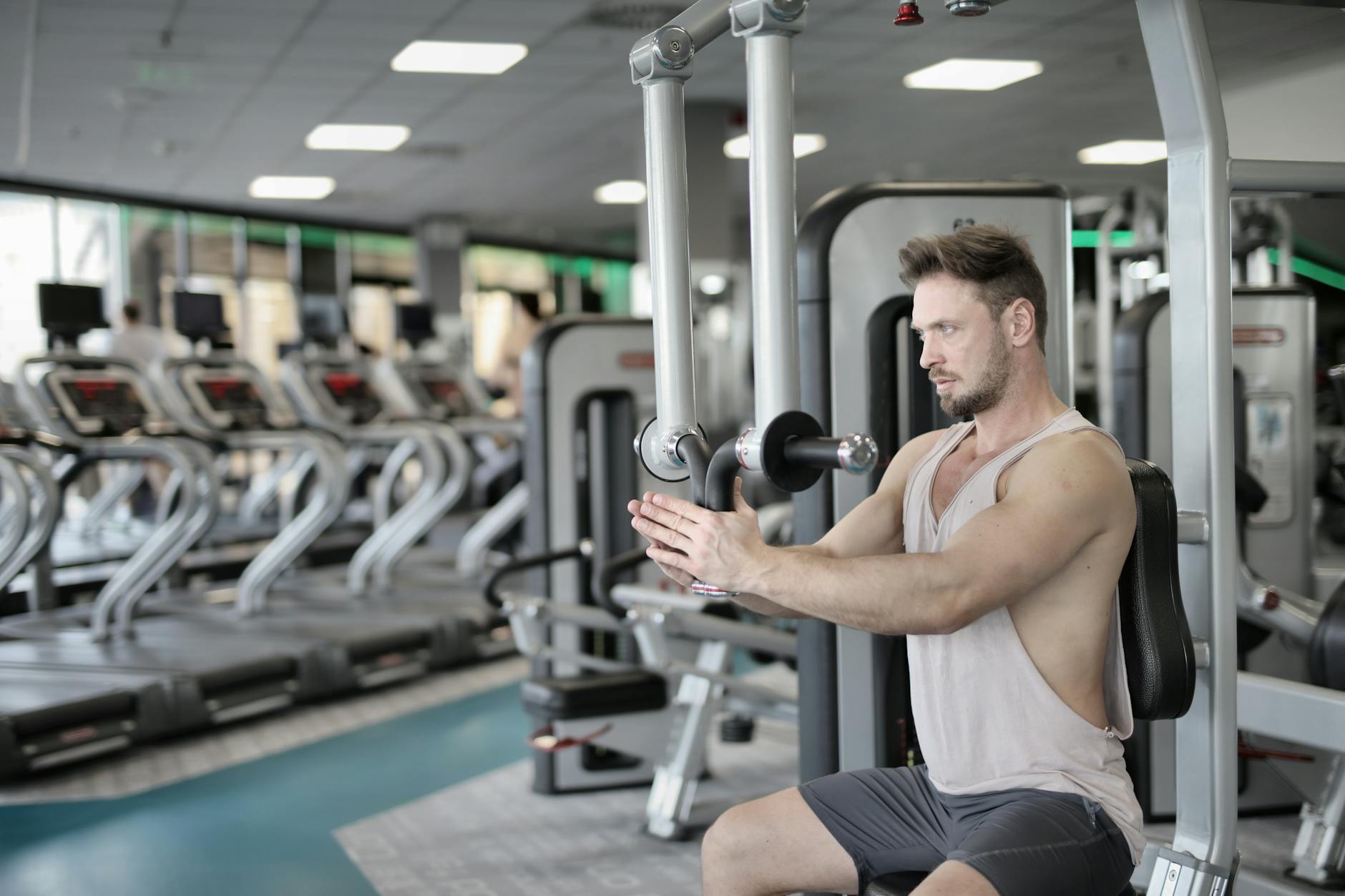
Action step: Commit to three resistance training sessions per week. You don't need an advanced program — compound lifts like squats, deadlifts, pull-ups, and bench press are enough to produce meaningful hormonal and psychological changes within 8–12 weeks. Track your progress so you have tangible evidence of growth to reinforce your self-image.
6. Practice Social Exposure Therapy (Gradually)
Why it works: Avoidance is the engine that keeps social anxiety running. Every time you sidestep a situation that makes you nervous around women, you reinforce the neural pathway that tells your brain "this is dangerous." Exposure therapy — the most evidence-based treatment for anxiety disorders — works by doing the opposite: repeatedly engaging with anxiety-provoking situations at a manageable intensity until your nervous system learns there is no real threat.
You don't need a therapist for mild social nervousness. You can design your own graduated exposure ladder, starting with interactions that feel only slightly uncomfortable and progressively increasing the challenge over weeks.
Action step: Build an exposure ladder. Level one might be making eye contact and smiling at a stranger. Level two is asking a woman for a casual recommendation (a restaurant, a book). Level three is starting a five-minute conversation with no agenda. Work through each level until it feels comfortable before moving to the next. Consistency matters far more than speed.
7. Prepare Conversation Topics in Advance
Why it works: Much of the anxiety men feel around women stems from a fear of running out of things to say. This fear activates the prefrontal cortex's threat-detection system, which actually makes recall harder — a vicious loop. Research on cognitive load theory shows that having pre-loaded mental frameworks for conversation dramatically reduces in-the-moment cognitive strain, freeing up attention for genuine listening and spontaneity.
This isn't about scripting conversations — it's about having a few reliable conversation threads you can reach for when you feel a lull coming. The preparation itself reduces anxiety before the conversation even starts.
Action step: Before any social event, mentally prepare three open-ended questions related to the context (travel, passions, weekend plans) and two interesting things about your own life you'd genuinely enjoy discussing. The F.O.R.D. framework — Family, Occupation, Recreation, Dreams — is a simple and effective scaffolding tool for keeping conversations alive naturally.
8. Dress Intentionally for Confidence
Why it works: Clothing shapes cognition — a phenomenon researchers at Northwestern University called "enclothed cognition." Their studies found that wearing clothes associated with positive traits (authority, professionalism, attractiveness) causes measurable changes in the wearer's behavior and attention, independent of how others perceive them. In plain terms: when you dress like someone you respect, you start acting like someone you respect.
This is one of the fastest and most underrated levers for masculine confidence habits. The right outfit won't make you confident in a vacuum, but it removes a layer of self-consciousness that can otherwise be an anchor around your social energy.
Action step: Identify three outfits in your wardrobe that make you feel your sharpest — clothes that fit well, feel appropriate for the context, and make you think "I look good" when you pass a mirror. Wear them strategically for situations where you want to feel your best. If those outfits don't exist yet, invest an afternoon identifying your style and adding two or three well-fitting basics to your rotation.

9. Shift Your Focus Outward — to Her
Why it works: The majority of social anxiety is self-focused — an internal spotlight on how you're coming across, what she thinks of you, whether you said the wrong thing. This self-monitoring consumes cognitive resources that could otherwise be spent on actually connecting. Psychologists refer to this as "self-focused attention," and multiple studies confirm it is the single strongest predictor of social anxiety in conversation.
The antidote is deliberate outward focus: genuine curiosity about the other person. When your attention is truly on her — her words, her expressions, what she's getting at — there's simply no bandwidth left for self-consciousness. As an added benefit, people who feel genuinely listened to consistently rate their conversation partners as more charismatic and attractive. It is one of the most effective confidence tips for men dating because it reframes the entire goal of the interaction.
Action step: In your next conversation, make it your only goal to understand one interesting thing about the person you're talking to that you didn't know beforehand. Ask follow-up questions. Let the conversation breathe. Notice how much less anxious you feel when your internal commentary goes quiet.
10. Celebrate Small Wins and Track Your Progress
Why it works: Confidence is not built in dramatic leaps — it is built through an accumulating body of evidence that you are capable. Psychologist Albert Bandura called this "mastery experiences," and identified them as the single most powerful source of self-efficacy (your belief in your ability to succeed). Every conversation you push through, every approach you make, every time you hold eye contact when you wanted to look away — these are data points that your subconscious uses to update its model of who you are.
The problem is that without deliberate tracking, these wins disappear into the noise of daily life while the painful moments stick around in memory (a well-documented negativity bias). Intentionally recording and acknowledging small wins counteracts this bias and accelerates confidence-building significantly.
Action step: Keep a brief daily note — even just three sentences — logging one social win from the day. It doesn't have to be grand: maintained eye contact, started a conversation, didn't bail on a social event. Review your log once a week. Over 30 days, the cumulative evidence of your own growth becomes a powerful internal reference point that makes future confidence feel earned, not performed.
Key Takeaways
Understanding how to boost confidence around women comes down to a straightforward truth: confidence is behavioral before it is emotional. You don't wait until you feel confident to act — you act in confident ways consistently until the feeling follows. Every tip in this list works through that same mechanism: you change the input (posture, voice, fitness, social exposure) and the internal state shifts in response.
Here is a quick summary of all 10 strategies:
- Posture: Stand tall — your brain reads your body's signals as much as the outside world does.
- Vocal tone: Slow down, breathe from your diaphragm, and let your words carry weight.
- Eye contact: Hold it comfortably and consistently — it signals presence and interest.
- Grooming ritual: A daily self-care routine is an act of self-respect that others feel.
- Fitness: Resistance training is one of the most reliable anxiety-reducers and confidence-builders available.
- Social exposure: Gradually face the situations that make you nervous — avoidance makes it worse.
- Conversation prep: Remove cognitive load before social situations so you can be fully present.
- Intentional dressing: Clothes that fit and feel right change how you carry yourself.
- Outward focus: Genuine curiosity about her quiets self-consciousness more effectively than any mental trick.
- Celebrate wins: Document your progress so your brain updates its story about who you are.
None of these strategies require a charismatic personality, natural good looks, or a transformation overnight. They require consistency. Pick two or three from this list that resonate most and apply them deliberately for 30 days. The compound effect of small, consistent improvements in how to be more attractive to women — and to yourself — is far greater than most men realize.