10 Essential Tools Every Hiker Should Pack (And What They Actually Weigh)
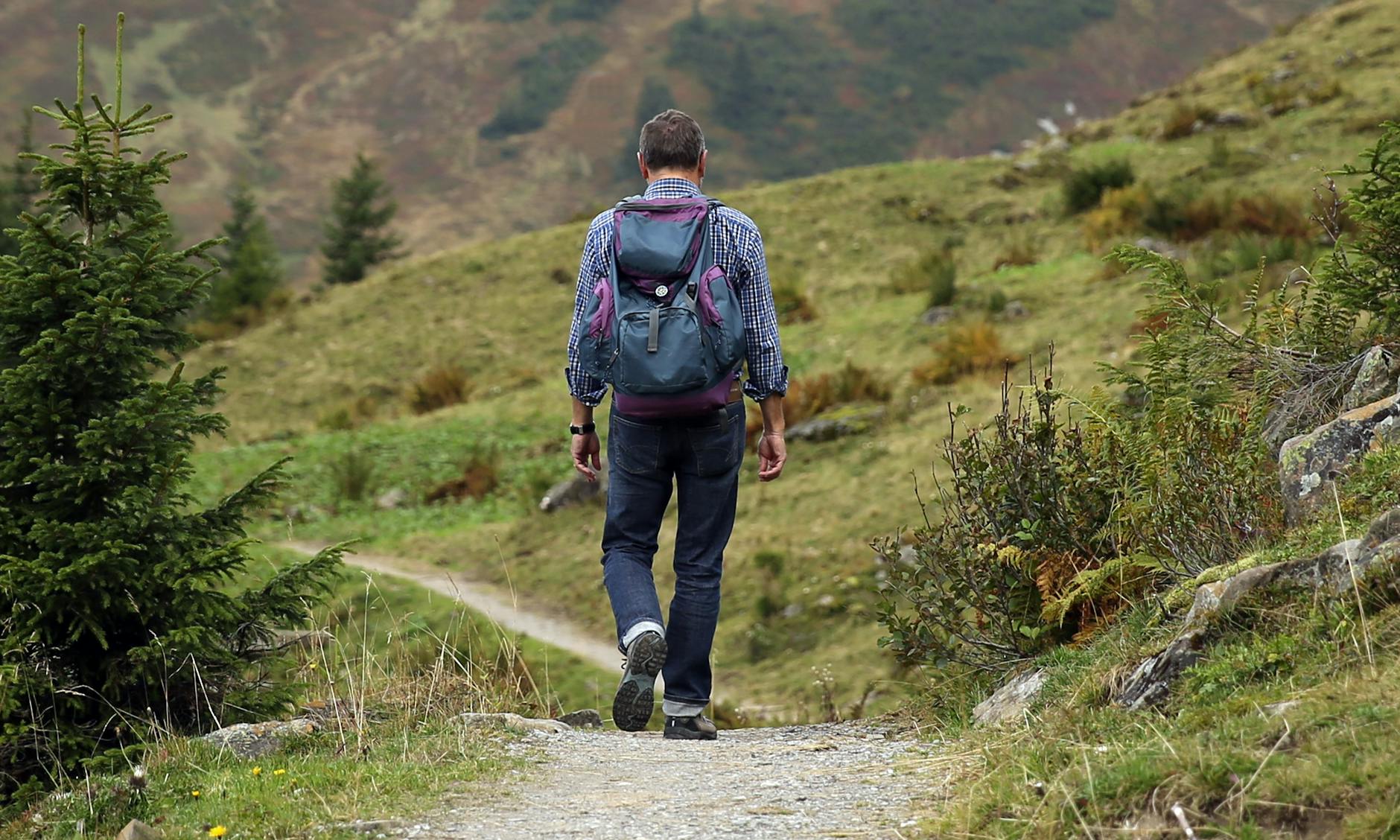
Every serious hiker eventually becomes a weight obsessive. It starts the moment you notice your shoulders aching at mile three, or when you unpack at camp and realize half your bag is "just in case" items you never touched. The math is simple: every 100 grams you shave off your pack makes the trail measurably easier, and over the course of a full day or a multi-day trip, those grams compound into real fatigue savings.
This guide breaks down the 10 essential tools for hiking that belong in virtually every pack — along with their actual weights in grams so you can make informed decisions rather than guessing. We cover which items are truly non-negotiable regardless of trip length, which are situational, and how to think about trade-offs between weight and safety. Whether you're heading out for a three-hour day hike or a four-day backpacking loop, this is the data-driven hiking checklist you need before you zip up.
Why Hiking Gear Weight Actually Matters
Research on load carriage consistently shows that carrying more than 10–15% of your body weight significantly increases energy expenditure and the risk of lower-limb injury. For a 160-pound hiker, that threshold sits around 7–11 kg (roughly 15–24 lbs) of total pack weight. The hiking gear weight of individual items might seem trivial in isolation — an extra first aid kit here, a redundant fire starter there — but the cumulative effect on your joints, pace, and enjoyment is real.
The ultralight community has a saying: "The best gear is the gear you don't carry." That doesn't mean going dangerously minimal. It means being deliberate about every item's weight-to-value ratio. The list below is built around that principle.
The 10 Essential Tools for Hiking (With Gram Weights)
Each entry below includes a typical weight range, the primary purpose of the item, when you genuinely need it, and lightweight alternatives where they exist.
1. Multi-Tool or Pocket Knife
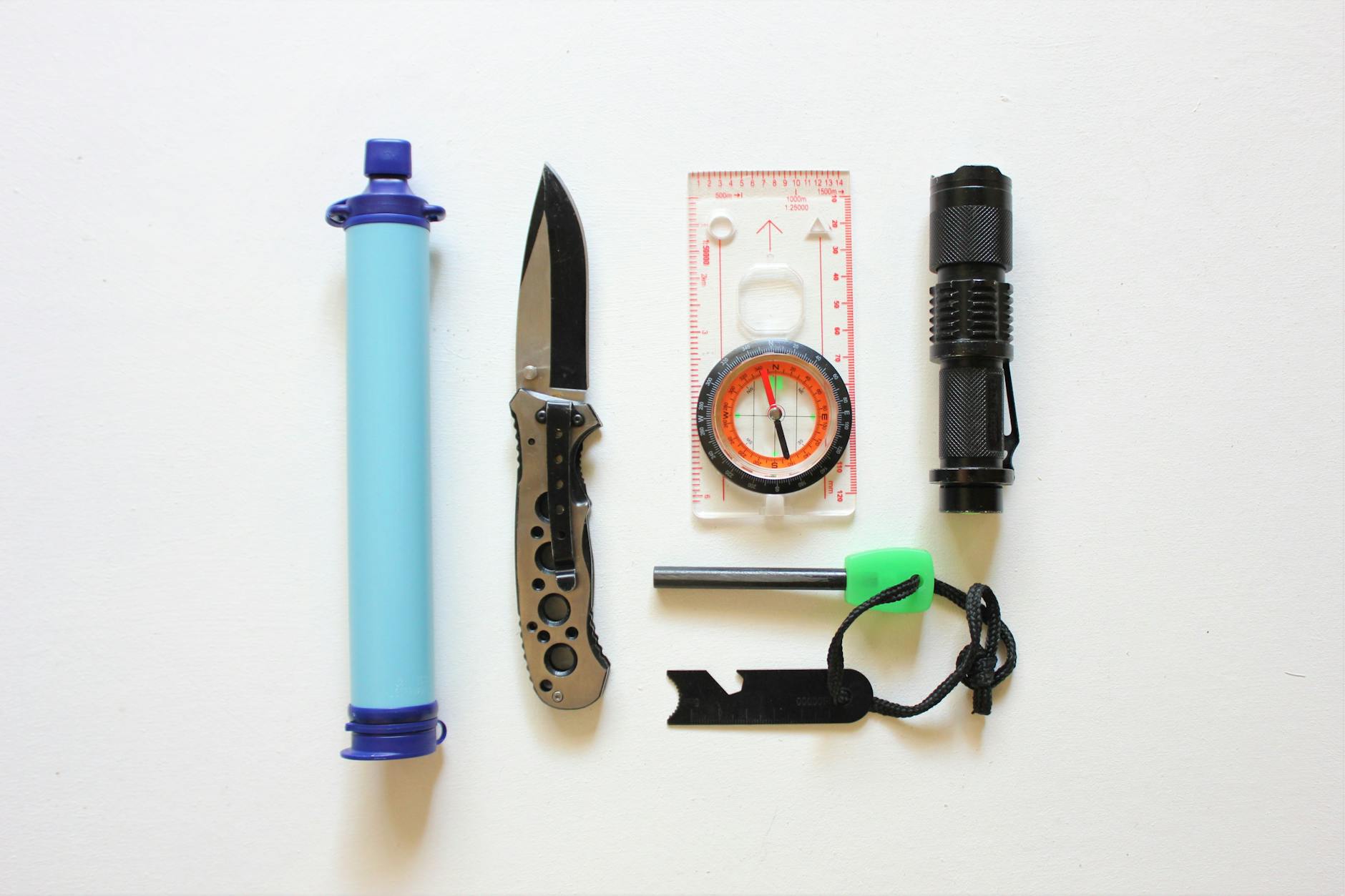
Typical weight range: 28–230 g
A cutting edge is one of the most versatile problem-solvers on the trail. From cutting cordage to slicing food, opening blisters, or improvising repairs, a knife earns its place in virtually every pack. Full multi-tools (like a Leatherman Wave at ~230 g) give you pliers, screwdrivers, and a file on top of a blade — genuinely useful for mechanical repairs. If you're going ultralight, a simple folding knife or even a small fixed blade can weigh as little as 28–50 g.
Non-negotiable for: Any trip. Ultralight alternative: Single-blade folding knife, 28–40 g.
2. Headlamp
Typical weight range: 55–95 g (including batteries)
A headlamp is one of those items hikers skip until the one time they desperately need it. Starting late, stopping for a twisted ankle, or simply misjudging trail length can leave you navigating after dark. Modern LED headlamps deliver 200–350 lumens at weights well under 100 g including batteries. Compact "ultralight" models hit 35–55 g but often sacrifice battery life and lumens. For backpacking tools, a headlamp with a red-light mode (to preserve night vision) is ideal.
Non-negotiable for: Any trip where you might be out past sunset. Ultralight alternative: Clip-on LED light, ~20 g (limited runtime).
3. Fire Starter
Typical weight range: 10–30 g
A reliable fire starter is one of the lightest safety items you can carry. A standard BIC lighter weighs about 20 g and delivers hundreds of ignitions. Waterproof matches in a sealed container run 10–15 g for a full book. Ferrocerium rods (ferro rods) sit at 15–30 g depending on size and are indefinitely reliable in wet conditions. Carrying two fire-starting methods adds negligible weight but meaningfully improves your emergency preparedness — fire is shelter, signaling, and water purification all in one.
Non-negotiable for: Overnight trips, cold climates, remote areas. For day hikes: One lighter suffices.
4. First Aid Supplies
Typical weight range: 85–250 g
The hiking checklist item that gets either wildly over-packed or dangerously under-packed. A minimalist day-hike kit — adhesive bandages in multiple sizes, blister treatment (moleskin or gel pads), antiseptic wipes, pain reliever tablets, and a compression wrap — weighs around 85–120 g. Full backcountry kits with SAM splints, irrigation syringes, and more elaborate wound care climb toward 250 g. The right kit weight depends on trip length, remoteness, and group size.
Non-negotiable for: All trips. Weight tip: Repack only what you need from a store-bought kit into a small zip-lock bag.
5. Emergency Whistle
Typical weight range: 5–15 g
At 5–10 g, a pea-less plastic emergency whistle is the single most weight-efficient safety item you can carry. A whistle carries farther than the human voice, requires no battery, works when you're too exhausted to shout, and can be heard through dense vegetation. The international distress signal is three blasts in succession. Clip it to your pack strap or shoulder belt so it's accessible without opening your bag.
Non-negotiable for: All trips. No meaningful ultralight alternative — these already weigh almost nothing.
6. Navigation Tools (Compass and/or GPS)
Typical weight range: 20–175 g
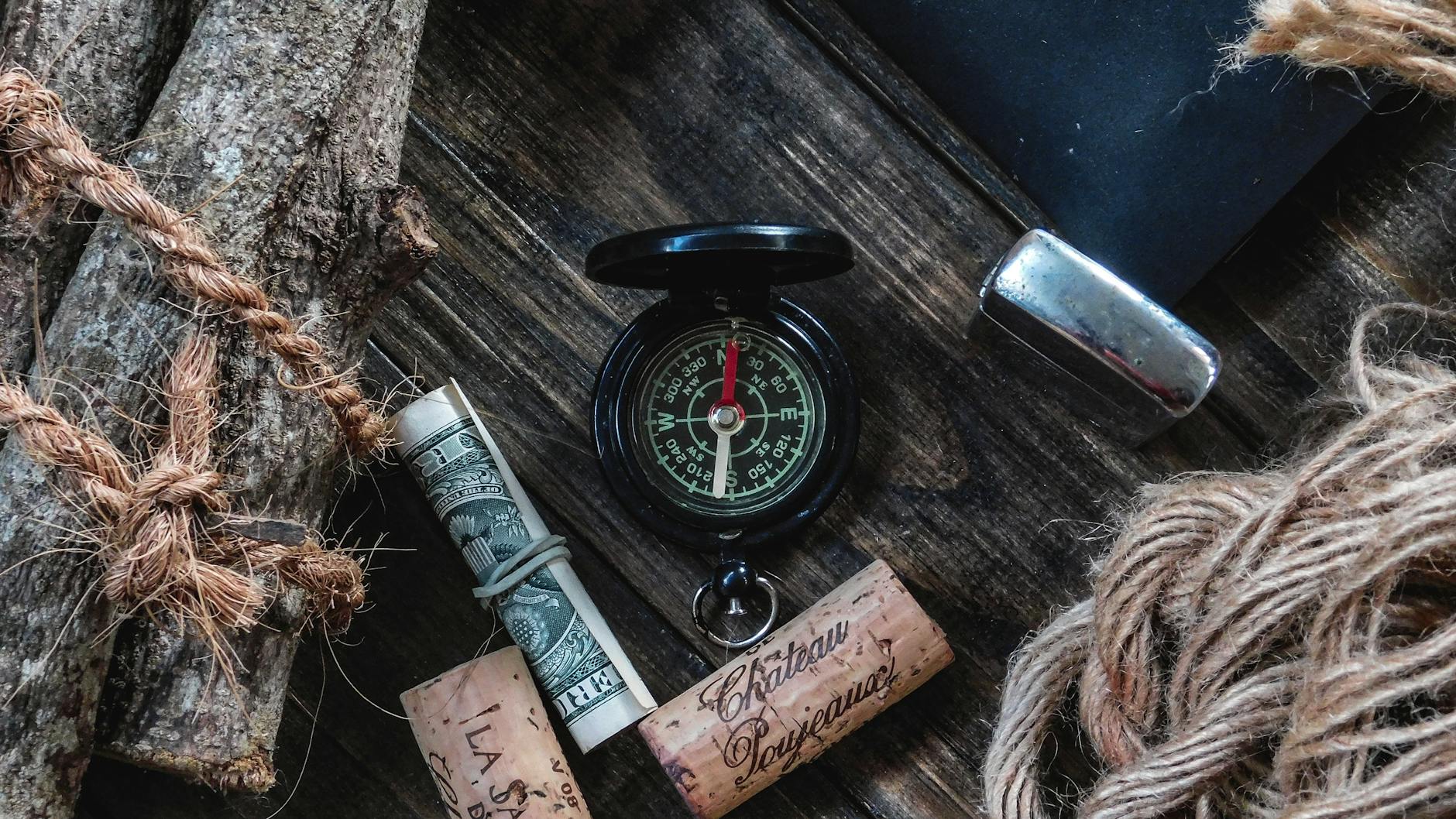
A baseplate compass weighs as little as 20–30 g and works without batteries, signal, or charging. It is arguably the most underrated item on this list. A downloaded offline map on your phone adds zero weight but requires battery management. Dedicated GPS devices like a Garmin inReach weigh 100–175 g and add satellite communication — a significant upgrade for remote trips. For well-marked day hikes, a compass plus a downloaded trail map is all most hikers need. For off-trail travel or international trips, the GPS investment pays off.
Non-negotiable for: Any trip off marked trails or in unfamiliar terrain. Weight tip: A mirror-sighting compass doubles as an emergency signaling device.
7. Repair Kit (Duct Tape and Cordage)
Typical weight range: 40–90 g
Gear fails on the trail. Boot soles separate, pack straps snap, trekking pole baskets crack, tent poles bend. A compact repair kit doesn't need to be heavy to be effective. Wind a meter of duct tape around a water bottle or trekking pole (adds almost nothing to your weight tally). Add 3–5 meters of 2mm Dyneema cord or paracord at around 15–25 g. Some hikers also carry two small safety pins (negligible weight) for clothing repairs. Together you have a repair system for 40–50 g that can save a multi-day trip.
Non-negotiable for: Multi-day trips. For day hikes: A few wraps of duct tape and a short length of cord will cover most scenarios.
8. Water Purification Tool
Typical weight range: 25–120 g
Clean water is survival. Chemical tablets (iodine or chlorine dioxide) weigh as little as 25–30 g for a pack that treats 20+ liters — the lightest option by far, with a 30-minute wait time and a mild taste impact. Squeeze filters like the Sawyer Squeeze weigh around 90 g and filter indefinitely with no chemical taste. UV purifiers (SteriPen-style) run 75–120 g with batteries and are fast but battery-dependent. For ultralight hiking gear, chemical tablets are the minimum-weight solution; a squeeze filter is the most practical balance of weight and usability.
Non-negotiable for: Any trip where you'll source water from streams, lakes, or springs. Skip only for: Short day hikes where you carry all your water from home.
9. Emergency Shelter (Space Blanket or Bivy)
Typical weight range: 40–140 g
Hypothermia can occur in summer at altitude. An unexpected night out, a wrong turn that extends your day by three hours, or a sudden storm can turn a comfortable day hike into a survival situation. A basic Mylar emergency space blanket weighs 40–55 g and packs to the size of a deck of cards. Emergency bivies (aluminized sleeping bag-shaped bags) weigh 85–140 g and are dramatically more effective at retaining body heat and blocking wind. For backpackers already carrying a tent, this is a backup system. For day hikers, it's a lightweight insurance policy.
Non-negotiable for: Remote day hikes, high-altitude routes, shoulder-season trips. Situational for: Short, well-traveled trails close to the trailhead.
10. Trekking Pole Repair Tips and Accessories
Typical weight range: 15–45 g
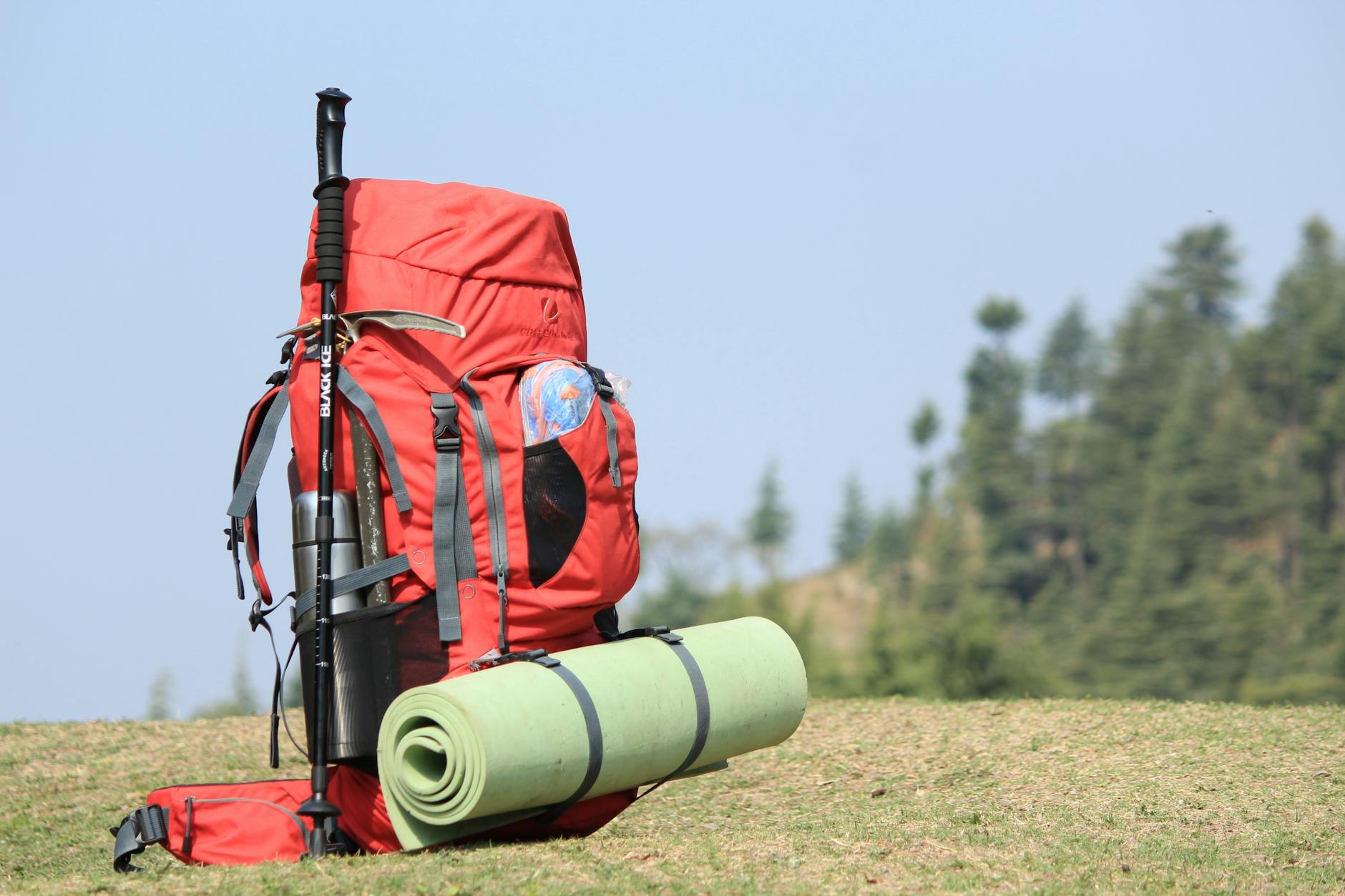
If you use trekking poles — and for any technical terrain or extended mileage you should — carrying a small repair kit specific to poles adds minimal weight but avoids a common trip-ender. Extra pole baskets (the snow/mud discs at the tip) weigh 10–15 g each. Replacement carbide tips run 5–10 g per pair. A short length of electrical tape serves as a field fix for cracked pole shafts. For hikers who don't use trekking poles, a length of strong cordage can serve a similar stabilizing function when improvised with a stick on the trail.
Non-negotiable for: Anyone using poles on technical terrain or multi-day trips. Situational for: Flat, easy trails where poles aren't used.
Non-Negotiable vs. Situational: How to Decide What to Bring
The classification of hiking tools into "non-negotiable" and "situational" comes down to three variables: remoteness, trip length, and consequence of failure.
Non-negotiable items are those where the downside of not having them in a genuine emergency is severe enough that no weight saving justifies leaving them behind. For most hikers on most trails, that means: whistle, headlamp, first aid kit, fire starter, and navigation tools. These five items together weigh as little as 150–200 g at their lightest, and rarely exceed 400 g even in their more capable versions.
Situational items are those whose necessity scales with conditions. A water purification tool is non-negotiable on a backcountry trip but genuinely optional on a two-hour out-and-back where you're carrying enough water from home. A space blanket is critical on a remote alpine route but adds marginal safety value on a busy, well-signed trail a mile from the trailhead. Ask yourself honestly: what is the realistic worst-case scenario on this specific trip, and does this item address it?
One practical framework: if a rescue would take more than two hours to reach you, treat every item on this list as non-negotiable. If you're never more than 30 minutes from a road, you have more latitude to trim the list.
Hiking Gear Weight Comparison Table
The table below summarizes the weight range for each of the 10 essential tools for hiking and gives you a realistic total for both an ultralight and a standard kit. Use this as your baseline when planning what to pack for hiking.
| # | Tool | Ultralight (g) | Standard (g) | Priority |
|---|---|---|---|---|
| 1 | Multi-tool / Pocket Knife | 28 | 115 | Non-negotiable |
| 2 | Headlamp | 40 | 85 | Non-negotiable |
| 3 | Fire Starter | 10 | 30 | Non-negotiable |
| 4 | First Aid Supplies | 85 | 175 | Non-negotiable |
| 5 | Emergency Whistle | 8 | 15 | Non-negotiable |
| 6 | Navigation (Compass / GPS) | 25 | 130 | Non-negotiable |
| 7 | Repair Kit (Tape + Cord) | 40 | 80 | Situational |
| 8 | Water Purification Tool | 28 | 95 | Situational |
| 9 | Emergency Shelter (Space Blanket) | 45 | 115 | Situational |
| 10 | Trekking Pole Repair Tips | 20 | 45 | Situational |
| Total (All 10 Items) | 329 g | 885 g | ||
All weights are approximate mid-range estimates. Actual product weights vary by brand and configuration.
Your Printable Hiking Checklist
Use the checklist below when packing for your next trip. Check the "Day Hike" column for short outings and the "Backpacking" column for overnight and multi-day trips.
HIKING ESSENTIALS CHECKLIST
<div style="padding: 8px 0; border-bottom: 1px solid #e2e8f0;">Multi-tool / pocket knife</div>
<div style="padding: 8px 12px; border-bottom: 1px solid #e2e8f0; text-align: center;">☐</div>
<div style="padding: 8px 12px; border-bottom: 1px solid #e2e8f0; text-align: center;">☐</div>
<div style="padding: 8px 0; border-bottom: 1px solid #e2e8f0; background: #f8fafc;">Headlamp (with spare batteries)</div>
<div style="padding: 8px 12px; border-bottom: 1px solid #e2e8f0; text-align: center; background: #f8fafc;">☐</div>
<div style="padding: 8px 12px; border-bottom: 1px solid #e2e8f0; text-align: center; background: #f8fafc;">☐</div>
<div style="padding: 8px 0; border-bottom: 1px solid #e2e8f0;">Fire starter (lighter or matches)</div>
<div style="padding: 8px 12px; border-bottom: 1px solid #e2e8f0; text-align: center;">☐</div>
<div style="padding: 8px 12px; border-bottom: 1px solid #e2e8f0; text-align: center;">☐</div>
<div style="padding: 8px 0; border-bottom: 1px solid #e2e8f0; background: #f8fafc;">First aid kit (trip-appropriate size)</div>
<div style="padding: 8px 12px; border-bottom: 1px solid #e2e8f0; text-align: center; background: #f8fafc;">☐</div>
<div style="padding: 8px 12px; border-bottom: 1px solid #e2e8f0; text-align: center; background: #f8fafc;">☐</div>
<div style="padding: 8px 0; border-bottom: 1px solid #e2e8f0;">Emergency whistle (clipped to pack strap)</div>
<div style="padding: 8px 12px; border-bottom: 1px solid #e2e8f0; text-align: center;">☐</div>
<div style="padding: 8px 12px; border-bottom: 1px solid #e2e8f0; text-align: center;">☐</div>
<div style="padding: 8px 0; border-bottom: 1px solid #e2e8f0; background: #f8fafc;">Compass (+ downloaded offline map)</div>
<div style="padding: 8px 12px; border-bottom: 1px solid #e2e8f0; text-align: center; background: #f8fafc;">☐</div>
<div style="padding: 8px 12px; border-bottom: 1px solid #e2e8f0; text-align: center; background: #f8fafc;">☐</div>
<div style="padding: 8px 0; border-bottom: 1px solid #e2e8f0;">Repair kit (duct tape + cord)</div>
<div style="padding: 8px 12px; border-bottom: 1px solid #e2e8f0; text-align: center;">—</div>
<div style="padding: 8px 12px; border-bottom: 1px solid #e2e8f0; text-align: center;">☐</div>
<div style="padding: 8px 0; border-bottom: 1px solid #e2e8f0; background: #f8fafc;">Water purification tool</div>
<div style="padding: 8px 12px; border-bottom: 1px solid #e2e8f0; text-align: center; background: #f8fafc;">—</div>
<div style="padding: 8px 12px; border-bottom: 1px solid #e2e8f0; text-align: center; background: #f8fafc;">☐</div>
<div style="padding: 8px 0; border-bottom: 1px solid #e2e8f0;">Emergency shelter (space blanket)</div>
<div style="padding: 8px 12px; border-bottom: 1px solid #e2e8f0; text-align: center;">☐</div>
<div style="padding: 8px 12px; border-bottom: 1px solid #e2e8f0; text-align: center;">☐</div>
<div style="padding: 8px 0;">Trekking pole repair tips</div>
<div style="padding: 8px 12px; text-align: center;">—</div>
<div style="padding: 8px 12px; text-align: center;">☐</div>☐ = Recommended | — = Optional / situational
Key Takeaways
The essential tools for hiking don't have to be heavy. An ultralight kit covering all 10 categories can weigh under 330 grams — lighter than a standard water bottle. The key insight is that most of the weight difference between a minimalist kit and an over-packed one comes from choosing heavier versions of items rather than carrying truly necessary extras.
Here's what the data tells us about smart backpacking tools selection:
- The five non-negotiable safety items (whistle, headlamp, fire starter, first aid, navigation) together weigh just 168–435 g. There is no weight argument strong enough to leave any of these behind.
- The biggest weight savings come from choosing a simple folding knife over a full multi-tool (saving up to 200 g) and chemical purification tablets over a filter (saving up to 65 g) — both legitimate trade-offs depending on trip type.
- The emergency shelter is the most commonly skipped item among day hikers and the one most likely to matter in a genuine emergency. At 45–55 g for a basic space blanket, skipping it rarely makes sense.
- Ultralight hiking gear is about deliberate selection, not deprivation. Every item on this list justifies its weight on the right trip.
Before every hike, run through your checklist, check your weights, and ask the honest question: am I packing for the trip I'm actually taking, or for the trip I'm imagining? The trail rewards preparation and punishes wishful thinking.