10 Car Organization Tips That Actually Reduce Distracted Driving
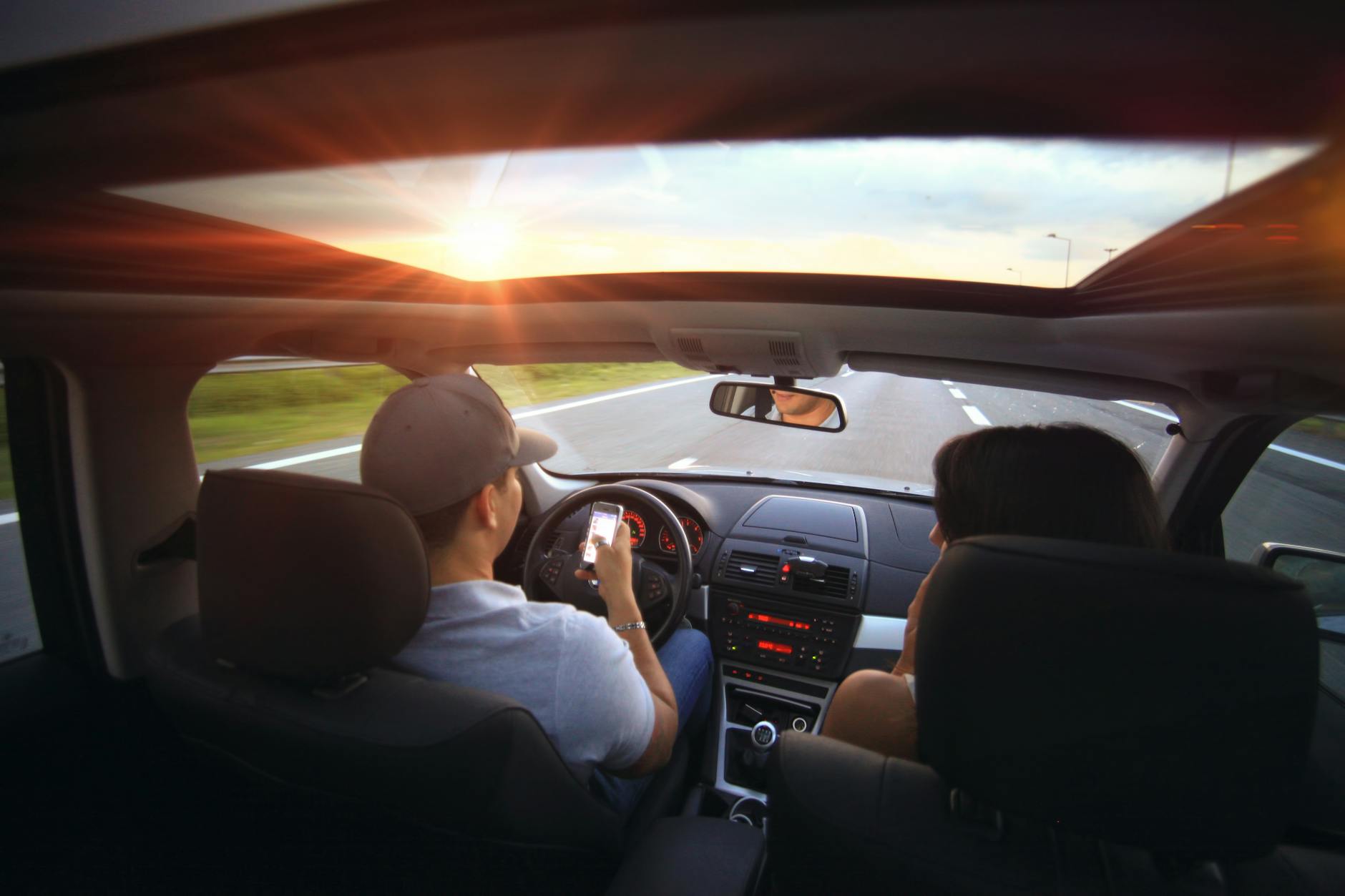
Distracted driving prevention is one of the most important — and most overlooked — aspects of everyday road safety. Most people think distraction means texting at the wheel. But according to the National Highway Traffic Safety Administration (NHTSA), reaching for a moving object inside the vehicle is among the top causes of distraction-related crashes. A rolling water bottle, a phone sliding off the seat, a cluttered console you're fishing through at 60 mph — each of these small moments of inattention dramatically increase your crash risk.
The good news is that car organization tips can directly address the physical sources of distraction before you ever start the engine. A well-organized car is not just tidier — it is measurably safer. Studies show that taking your eyes off the road for just two seconds doubles your crash risk. When you eliminate the need to search, reach, or react to loose items, you give yourself the cognitive and physical bandwidth to focus entirely on driving.
Below are 10 practical, research-informed strategies to organize your vehicle in ways that genuinely reduce distractions while driving and keep you, your passengers, and everyone else on the road safer.
1. Keep Frequently Used Items in Dedicated, Predictable Spots
One of the simplest principles in automotive safety is also the most ignored: every item in your car should have a fixed home. When items are stored in random locations, finding them requires active visual and manual searching — exactly the kind of distraction that causes accidents.
Designate a specific spot for your phone, sunglasses, wallet, and keys. If sunglasses always go in the same overhead compartment, you can reach for them by feel without looking. If your phone always sits in the same mount or tray, you eliminate the frantic seat-patting that distracts so many drivers. Consistency of placement trains muscle memory, and muscle memory keeps eyes on the road.
2. Use Cupholder Organizers to Secure Oversized Bottles
Standard cupholders were designed for standard cups — not the 32 oz insulated tumblers and wide-mouth water bottles that most people carry today. An oversized bottle wedged loosely into a cupholder will wobble, tip, and eventually roll. When a cold bottle rolls under the brake pedal or spills across the center console, the instinctive grab for it pulls a driver's attention away from the road at the worst possible moment.
Cupholder inserts and expanders are inexpensive accessories that create a snug, secure fit for bottles of varying diameters. Keeping drinks stable means you never have to retrieve a rolling bottle mid-drive — one of the most dangerous forms of car clutter safety risk.

3. Store Loose Items in the Console or Glove Box Before You Drive
Loose objects on passenger seats and floors are a two-fold hazard. First, they invite the driver to grab, adjust, or check on them while in motion. Second, in a sudden stop or collision, unsecured items become high-velocity projectiles — a hazard that most drivers never consider until it is too late.
Make it a habit: before starting the engine, scan the cabin for anything that is not secured. Receipts, chargers, sunglasses, change, pens, earbuds — all of it should go into the glove box, center console, or a door pocket. This 30-second pre-drive sweep is one of the highest-leverage automotive safety tips available, and it costs absolutely nothing.
4. Install a Phone Mount at Eye Level
Navigation is a reality of modern driving. The question is not whether you will use your phone for GPS, but how. Holding a phone, placing it in your lap, or leaving it on the passenger seat all require you to look away from the road. A windshield or air vent mount that positions the screen at or near eye level dramatically reduces the glance angle needed to check directions.
Research from the AAA Foundation for Traffic Safety found that voice-activated and hands-free systems still carry cognitive distraction risk, but physical eye-off-road time is the most directly correlated with crash risk. A properly positioned phone mount reduces that time to a momentary glance — the same as checking a mirror. Without one, a driver may spend 3–5 full seconds looking down at a phone in their lap, which at highway speeds means traveling several hundred feet without watching the road.
Choose a mount with a secure grip that does not vibrate loose on bumpy roads. A mount that rattles or falls mid-drive creates exactly the distraction it was supposed to prevent.
5. Secure Shopping Bags and Groceries in the Trunk
Bags placed on rear seats or in the footwell shift, tip, and spill during cornering and braking. The sound of rolling cans or a tipping grocery bag is a powerful trigger for the human startle reflex — drivers instinctively turn around or reach back, removing their focus from forward traffic.
The trunk is the correct place for groceries, gym bags, shopping hauls, and any other loose cargo. If your vehicle lacks trunk space or you frequently drive a sedan, trunk organizers with upright compartments keep bags from tipping. Reusable grocery bags with wide flat bases that stand upright on their own are also a practical solution. The principle is the same: eliminate the sensory cues — sights, sounds, movements — that tempt you to look away from the road.

6. Minimize Dashboard Clutter
The dashboard and top of the center console are high-visibility zones. Items placed there — receipts, charger cables, coins, sticky notes, toll tags left loose — catch the driver's peripheral vision and generate subtle but continuous cognitive load. Every object in your visual field that is not the road ahead competes for attentional resources.
Keep the dashboard clear of everything that does not serve an active navigational or safety function. Toll transponders should be mounted in a fixed position, not left lying flat. Charger cables should be routed tidily rather than coiling across the dash. A clean visual environment supports a focused, calm mental state while driving — a psychological benefit that is easy to underestimate.
7. Use Seatback Organizers for Rear Passengers
Rear passengers — especially children — are a significant source of driver distraction. They ask for items, drop objects that roll forward, and generate noise that pulls a driver's attention backward. Seatback organizers attached to the back of the front seats give rear passengers a dedicated place to store their tablets, books, snacks, and small toys within arm's reach.
When rear passengers can access their own belongings without involving the driver, the number of mid-trip requests and interruptions drops considerably. For families with young children, this is one of the most practically impactful car organization tips available. Pre-loading the seatback pockets with everything a child might need before departure also reduces the temptation to hand items back while driving.
8. Keep Emergency Items Accessible But Organized
Emergency preparedness and distraction prevention might seem like separate topics, but they intersect in an important way. Drivers who cannot quickly locate their emergency items — jumper cables, a first-aid kit, warning triangles — spend time digging through disorganized trunks in stressful, time-sensitive situations. The frustration and confusion involved in searching through chaos can itself impair judgment.
Designate a trunk organizer or a dedicated bag specifically for emergency gear. This bag should always be in the same place, fully stocked, and never used as a catchall for other cargo. The value of this practice extends beyond routine car clutter safety: in a genuine roadside emergency, the ability to quickly access a flashlight, reflective triangle, or first-aid kit can make a critical difference.
9. Establish a "Clean Car Before Driving" Pre-Trip Routine
Organization is not a one-time project — it is an ongoing habit. A car that is tidy at the start of a Monday quickly accumulates coffee cups, receipts, charger cables, and passenger debris by Thursday. The most reliable solution is a brief, non-negotiable pre-drive check.
Before starting the engine, spend 30–60 seconds doing the following:
- Clear the passenger seat and floor of loose items.
- Confirm your phone is in its mount or in a pocket — not in your lap.
- Check that drinks are secured in the cupholder.
- Ensure nothing is on the dashboard that does not belong there.
- If passengers are present, ask them to stow loose items before departure.
This routine reinforces the habit loop that keeps distracted driving prevention top of mind. Like a pilot's pre-flight checklist, it creates a moment of intentional attention before the task begins — and that mindset carries over into the drive itself.
10. Remove Visual Distractions: Air Fresheners, Dangling Objects, and Excessive Decorations
Hanging air fresheners, decorative charms on the rearview mirror, and large bobbleheads on the dashboard are so common that most drivers stop noticing them consciously. But these objects create visual clutter in the driver's primary sightlines. Dangling objects sway during driving and motion in the peripheral visual field is neurologically compelling — the brain is wired to notice movement, which means swinging objects continuously pull at attention even when a driver is not looking directly at them.
Beyond distraction, some jurisdictions have laws prohibiting objects that obstruct the driver's forward view. A pair of large air fresheners hanging from a rearview mirror can meaningfully reduce visibility in intersections and during lane changes.
The fix is straightforward: keep the rearview mirror clear of anything hanging from it. Air fresheners can go in a vent clip instead. Dashboard decorations should be removed or kept compact and low-profile. A clear windshield zone is not just a legal nicety — it is a genuine safety margin.
Why Car Clutter Is a Safety Problem, Not Just an Aesthetic One
The connection between car clutter safety and crash risk is well established in traffic safety research. The NHTSA's large-scale naturalistic driving studies — which use in-vehicle cameras to record real drivers in real conditions — consistently identify reaching for and handling objects as among the most common driver distractions leading to near-crashes and crashes.
Distraction is not always dramatic. It does not require a buzzing phone or a screaming argument. A water bottle rolling toward the brake pedal, a sunglasses case sliding off the passenger seat, a receipt fluttering in the air conditioning vent — each creates a micro-moment of divided attention. The cumulative effect of a disorganized car is a driver who is never fully focused on the road.
The statistics are sobering. The NHTSA reports that distracted driving claimed 3,308 lives in the United States in a single recent year. Approximately 8% of all fatal crashes involved a distracted driver. While phone use captures most of the public attention on this issue, the broader category of driver inattention — which includes reaching for objects, looking at things inside the vehicle, and managing passenger demands — accounts for a substantial share of those deaths.
Car organization, viewed through this lens, is not a lifestyle preference. It is a form of crash prevention. When you reduce distractions while driving by eliminating the physical triggers that pull your eyes and hands away from the primary task, you reduce your risk in a direct and meaningful way.
Building Long-Term Habits Around Vehicle Organization
Knowing the tips is the easy part. Maintaining them is the challenge. Human beings default to convenience, and the most convenient behavior is to leave things wherever they land when you get in the car. Building lasting organization habits requires deliberate repetition until the tidy defaults become automatic.
A few strategies that help:
- Keep a small bag or bin in the car specifically for trash. When loose items have a designated disposal point, they are less likely to accumulate on seats and floors.
- Do a weekly reset. Pick one day each week — Sunday night before the work week, for example — to spend five minutes removing accumulated items from the car. This prevents small messes from compounding into a chronic problem.
- Make it a household standard. If multiple people share the vehicle, agree on basic rules: no items left on seats, drinks always in cupholders, personal items carried in or stored in a designated spot.
- Anchor new habits to existing ones. Pair the pre-drive check with buckling your seatbelt. Do both every single time, without exception, and they will eventually fuse into a single automatic sequence.
These habits take time to form, but the payoff — a consistently organized, distraction-reduced driving environment — is worth the initial effort. Over a lifetime of driving, the cumulative risk reduction is significant.
Key Takeaways
Distracted driving prevention is not limited to putting down your phone. The physical environment inside your vehicle is a direct determinant of how much of your cognitive attention stays on the road. A disorganized car forces micro-decisions, unexpected reaches, and sensory interruptions that fragment attention across every trip you take.
The ten tips above — from securing drinks and stowing loose items before departure, to clearing the dashboard and removing dangling mirror ornaments — are all actionable, low-cost, and evidence-supported. None of them require expensive technology or significant time investment. They require only a shift in habit and a recognition that a clean, organized car is not a luxury: it is a safety tool.
The next time you get behind the wheel, take 30 seconds to look around before you start the engine. What you see — and choose to address — may be more consequential than you realize.