10 Breathing Exercises to Instantly Reduce Stress and Anxiety
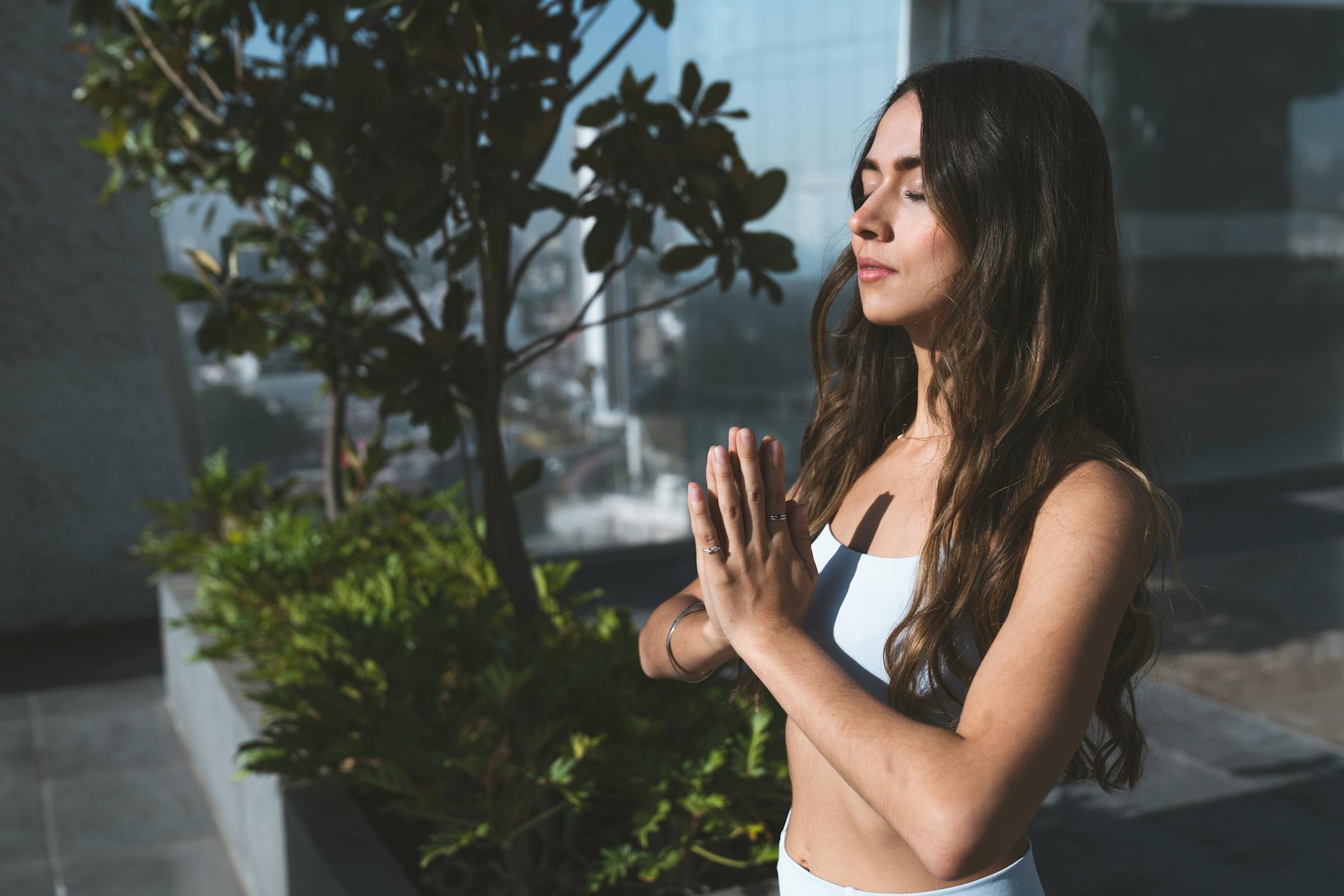
Breathing exercises are one of the most powerful — and most underused — tools for managing stress and anxiety. You carry the solution with you everywhere, at no cost, and it works within minutes. Yet most people have never been taught how to use their breath deliberately.
The science is clear: controlled breathing directly activates your parasympathetic nervous system, signaling your body to shift out of "fight or flight" and into "rest and digest." At the center of this process is the vagus nerve, the longest nerve in your body, which runs from your brainstem through your heart, lungs, and gut. When you slow and deepen your breath, you stimulate the vagus nerve, lowering heart rate, reducing cortisol, and quieting the mental chatter that comes with anxiety.
A 2018 review published in Frontiers in Human Neuroscience found that slow, controlled breathing significantly increased heart rate variability (HRV) — a key marker of resilience and emotional regulation — while reducing self-reported stress levels. Another study from Stanford University (2023) identified a dedicated neural circuit linking the breathing rhythm directly to brain states, confirming that how you breathe shapes how you feel.
Below are 10 deep breathing techniques for anxiety and stress, each with step-by-step instructions, the science behind why it works, and the best situations to use it. Whether you need to calm down fast before a meeting, wind down before sleep, or build long-term nervous system resilience, there is a technique here for you.
1. Box Breathing (4-4-4-4)
Box breathing — also called square breathing — is a simple, rhythmic technique used by Navy SEALs, surgeons, and high-performance athletes to stay calm under extreme pressure. Each side of the "box" is four seconds long.
How to do it:
- Sit upright with your feet flat on the floor.
- Exhale completely through your mouth.
- Inhale slowly through your nose for 4 counts.
- Hold your breath for 4 counts.
- Exhale slowly through your mouth for 4 counts.
- Hold empty for 4 counts.
- Repeat 4–6 cycles.
The science: The equal-ratio pattern keeps carbon dioxide levels stable, preventing the light-headedness associated with rapid breathing. The deliberate holds extend each breath cycle to approximately 16 seconds, bringing the breathing rate well below the 10 breaths-per-minute threshold associated with parasympathetic activation.
Best use case: Pre-performance anxiety (before a presentation, interview, or competition), acute stress spikes, or anytime you need to regain composure fast.
Common mistake: Holding the breath too forcefully. During both holds, your throat should be open and relaxed — think of it as a gentle pause, not a clench.
2. 4-7-8 Breathing
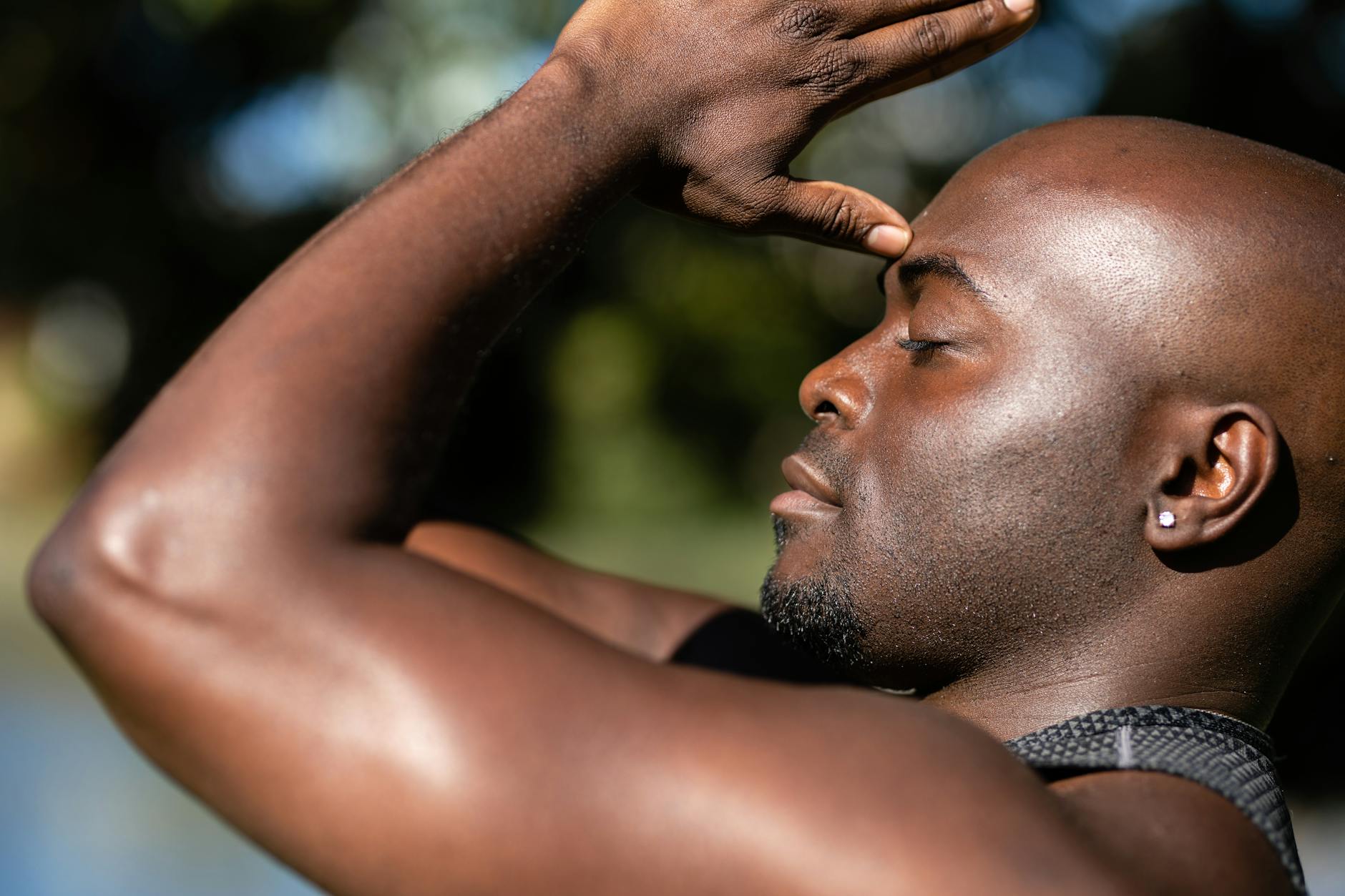
Developed by Dr. Andrew Weil and rooted in the ancient yogic practice of pranayama, the 4-7-8 breathing technique is often described as a "natural tranquilizer for the nervous system." The extended exhale is its most powerful feature.
How to do it:
- Place the tip of your tongue against the ridge behind your upper front teeth.
- Exhale completely through your mouth, making a whoosh sound.
- Close your mouth and inhale quietly through your nose for 4 counts.
- Hold your breath for 7 counts.
- Exhale completely through your mouth (with the whoosh sound) for 8 counts.
- This completes one cycle. Start with 4 cycles.
The science: The ratio of 4:7:8 creates an exhale that is twice as long as the inhale, which maximises vagal tone — the degree of activity of the vagus nerve. Research from the University of Sussex (2021) found that an extended exhale relative to inhale was the single most reliable predictor of parasympathetic activation across multiple breathing protocols.
Best use case: Pre-sleep anxiety, winding down after a stressful day, or interrupting a racing mind at 2am.
Common mistake: Rushing through the counts. If 7 seconds feels too long for the hold, try a 2-3.5-4 ratio initially and build up over time. Speed defeats the purpose.
3. Diaphragmatic Breathing
Diaphragmatic breathing — breathing from your belly rather than your chest — is the foundation of almost every other technique on this list. Most adults have drifted into shallow chest breathing as their default, and reversing this habit alone produces significant reductions in baseline anxiety.
How to do it:
- Lie on your back with knees bent, or sit comfortably upright.
- Place one hand on your chest and one hand on your belly.
- Inhale slowly through your nose. Your belly hand should rise; your chest hand should remain mostly still.
- Exhale through pursed lips, feeling your belly fall.
- Aim for 6–10 breaths per minute. Practice for 5–10 minutes daily.
The science: The diaphragm is rich in mechanoreceptors connected to the vagus nerve. Activating it with deep belly breaths sends direct calming signals to the brain. A meta-analysis in Frontiers in Psychology (2017) found that 8 weeks of daily diaphragmatic breathing training reduced salivary cortisol by 20% and improved sustained attention.
Best use case: Daily stress management practice, chronic anxiety reduction over time, and as a baseline check before any other technique.
Common mistake: Forcing the belly out artificially. The belly should rise naturally as the diaphragm descends — not because you're pushing it. If you're straining, you're working too hard.
4. Box Breathing Variant: Alternate Nostril Breathing (Nadi Shodhana)
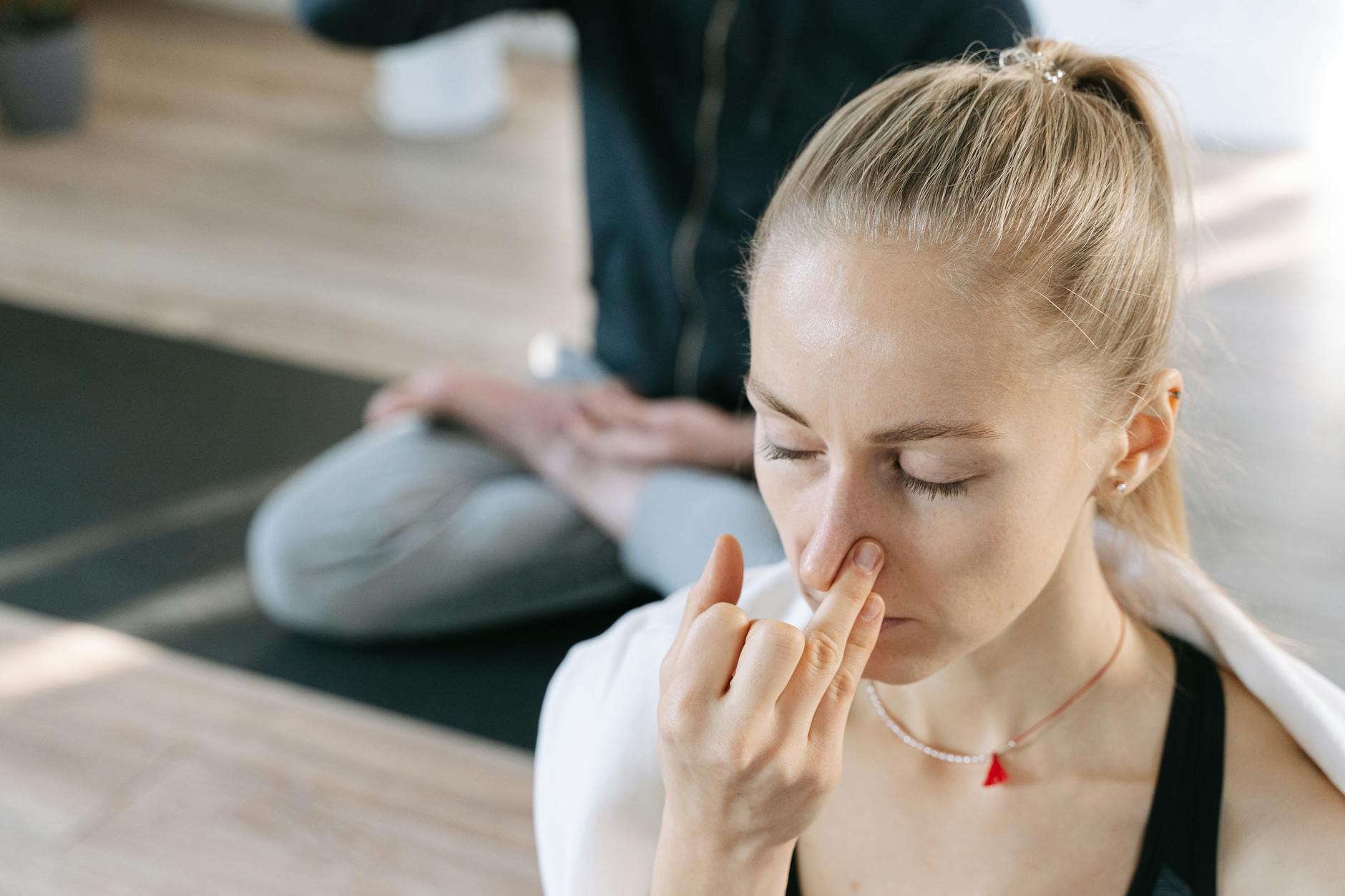
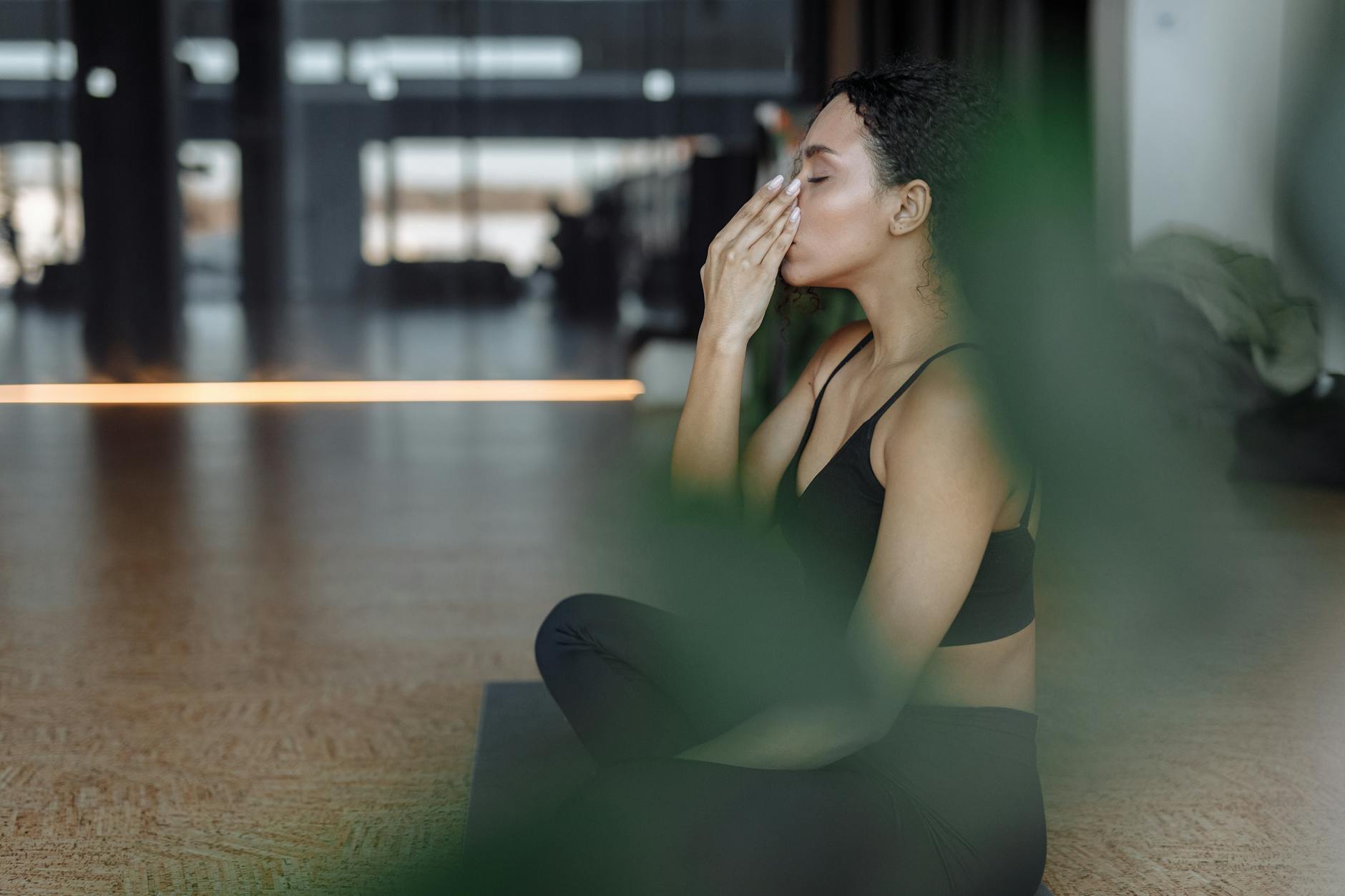
From the yogic tradition, alternate nostril breathing (Nadi Shodhana Pranayama) is one of the most studied deep breathing techniques for anxiety. It balances activity between the left and right hemispheres of the brain and produces a profound sense of mental clarity.
How to do it:
- Sit comfortably with your spine straight.
- Rest your left hand in your lap. Bring your right hand to your face, with your index and middle fingers between your eyebrows.
- Close your right nostril with your right thumb. Inhale through your left nostril for 4 counts.
- Close both nostrils. Hold for 4 counts.
- Release your right nostril and exhale fully for 4 counts.
- Inhale through the right nostril for 4 counts.
- Close both nostrils. Hold for 4 counts.
- Release left nostril and exhale for 4 counts. This is one full cycle.
- Complete 5–10 cycles.
The science: A 2013 study published in the Journal of Clinical and Diagnostic Research found that regular Nadi Shodhana practice significantly reduced perceived stress scores and lowered heart rate. Separate research indicates it modulates autonomic tone by alternately stimulating each nostril's connection to opposite brain hemispheres via olfactory nerves.
Best use case: Pre-meditation, before a creative task requiring focus, or to clear mental fog during a stressful workday.
Common mistake: Applying too much pressure to the nose. Use just the weight of your finger — enough to close the nostril without distorting your face or creating tension.
5. Coherent Breathing (5 Breaths Per Minute)
Coherent breathing involves slowing your breath to exactly 5 breaths per minute — approximately a 6-second inhale and 6-second exhale. This specific rate creates maximum resonance between your breathing rhythm, heart rate, and blood pressure oscillations, a state called cardiovascular resonance.
How to do it:
- Sit or lie comfortably with eyes closed.
- Inhale gently through your nose for 6 seconds.
- Exhale gently through your nose for 6 seconds.
- Do not pause between breaths — keep the rhythm smooth and continuous.
- Practice for at least 10 minutes for full effect.
The science: Cardiologist Stephen Elliott, who popularized coherent breathing in his book The New Science of Breath, demonstrated that 5 breaths per minute maximizes heart rate variability (HRV). High HRV is strongly associated with lower anxiety, better emotional regulation, and improved cardiovascular health. A 2019 study in Psychophysiology confirmed that 5 bpm breathing produced the highest HRV amplitudes of any tested rate.
Best use case: Daily 10–20 minute practice for long-term anxiety reduction, building HRV over weeks and months, and deepening meditation sessions.
Common mistake: Breathing too shallowly. At 5 breaths per minute your tidal volume (the amount of air per breath) will naturally increase — allow yourself to take fuller, deeper breaths than usual.
6. Resonant Breathing
Often used interchangeably with coherent breathing, resonant breathing refers to the same 5 bpm rate but is sometimes practiced with a slight emphasis on the exhale (e.g., a 5-second inhale and 7-second exhale). The asymmetric ratio amplifies the vagal response further.
How to do it:
- Sit upright with your spine long and shoulders relaxed.
- Inhale through your nose for 5 seconds, expanding your belly first, then your chest.
- Exhale through your nose (or pursed lips) for 7 seconds, releasing chest first, then belly.
- Let breathing feel smooth, not forced. Aim for 10 minutes minimum.
The science: The extended exhale triggers the baroreceptor reflex — sensors in the aorta and carotid arteries detect the drop in blood pressure during exhalation and send a "slow down" signal to the heart via the vagus nerve. This directly dampens sympathetic nervous system activity.
Best use case: Evening wind-down routine, reducing chronic high-cortisol symptoms, or alongside gentle stretching and yoga.
Common mistake: Confusing effort with effect. Resonant breathing should feel almost effortless. If your face is red or you feel dizzy, you're trying too hard — ease up and let the breath be natural.
7. Pursed Lip Breathing
Pursed lip breathing is a staple technique in pulmonary rehabilitation but is equally effective for managing acute anxiety and panic. It works by slowing your exhale, which controls the pace of the entire breathing cycle.
How to do it:
- Relax your shoulders and neck.
- Inhale slowly through your nose for 2 counts, keeping your mouth closed.
- Pucker your lips as if you're about to whistle or blow out a candle.
- Exhale slowly and evenly through pursed lips for 4 counts — twice as long as your inhale.
- Repeat for 5–10 minutes, or until you feel calm.
The science: Pursed lips create gentle resistance to outflowing air, which slightly increases pressure in the airways, slowing the breath and preventing airway collapse. For anxiety, the primary mechanism is the slowed exhale-to-inhale ratio, which activates the parasympathetic response. Research in people with COPD shows it reduces breathlessness perception by up to 65% — the same effect translates to panic-induced hyperventilation.
Best use case: Acute panic attacks, hyperventilation, shortness of breath from anxiety, or whenever you feel your breathing has become rapid and uncontrolled.
Common mistake: Blowing too hard. The airflow through pursed lips should be very gentle — like fogging up a mirror slightly, not extinguishing birthday candles.
8. Lion's Breath (Simhasana Pranayama)
Lion's breath is the most dramatic technique on this list — and one of the most immediately releasing. It uses a forceful exhalation with an open mouth, extended tongue, and wide eyes to discharge accumulated tension from the face, jaw, and throat.
How to do it:
- Sit in a comfortable position — on your heels, cross-legged, or in a chair.
- Place your hands on your knees with fingers spread wide.
- Inhale deeply through your nose.
- Open your mouth as wide as possible, stick your tongue out and down toward your chin, open your eyes wide, and exhale forcefully through your mouth making a loud "HA" sound.
- Return to a neutral expression and breathe normally for a few breaths.
- Repeat 3–6 times.
The science: The forceful "HA" exhalation activates the muscles of the face, throat, and tongue — areas where tension accumulates silently under chronic stress. This technique also stimulates the vagal branches that run through the throat (via the superior laryngeal nerve). Studies in somatic therapy suggest that releasing facial and vocal tension has measurable effects on perceived stress and emotional suppression.
Best use case: After a frustrating meeting, before a difficult conversation, or to physically shake off stress when you feel "wound up." Best done in private or with a trusted group — it looks and sounds unusual.
Common mistake: Being too timid with the exhalation. The technique requires commitment — half-hearted lion's breath produces half the benefit. Give it a real roar.
9. Breath Counting (Zen Anapanasati)
Breath counting is one of the oldest meditation practices in the world, rooted in Zen Buddhism and Theravada mindfulness traditions. It combines controlled breathing with focused attention, making it particularly effective for anxiety driven by mental rumination.
How to do it:
- Sit with your spine straight and eyes gently closed.
- Breathe naturally — do not try to control the pace.
- On each exhale, count silently: "one," "two," "three," up to "ten."
- After "ten," return to "one."
- If your mind wanders and you lose count, gently return to "one" without self-judgment.
- Practice for 10–15 minutes.
The science: A 2017 study from Trinity College Dublin found that focused attention on the breath directly regulates the locus coeruleus — the brain's primary norepinephrine center — dampening the arousal and vigilance responses that drive anxiety. The counting element provides an anchor that interrupts rumination loops without requiring cognitive effort beyond simple numerical tracking.
Best use case: Chronic worry and overthinking, building a daily meditation habit, or as a gateway practice for those who find seated meditation "too boring" without structure.
Common mistake: Judging yourself for losing count. The moment of noticing that you've drifted and returning your attention IS the practice — not a failure. Every return to "one" is a mental rep that strengthens attentional control.
10. Equal Breathing (Sama Vritti)
Equal breathing — called Sama Vritti in Sanskrit — uses matched inhale and exhale durations to create balance and calm. Unlike box breathing's held pauses, equal breathing is continuous and smooth, making it more accessible for beginners and easier to sustain for longer periods.
How to do it:
- Find a comfortable seated or supine position.
- Inhale through your nose for 4 counts.
- Without pausing, exhale through your nose for 4 counts.
- Keep the flow unbroken and smooth — like a continuous circle.
- Once comfortable at 4 counts, gradually extend to 5, 6, or even 8 counts per breath over multiple sessions.
- Practice for 5–10 minutes, or longer as your capacity develops.
The science: Equal breathing at longer count durations progressively slows the breath rate toward the 5–6 bpm coherence zone, gradually engaging the parasympathetic nervous system. The equal ratio also avoids the sympathetic arousal that can paradoxically occur in some people when the exhale is significantly longer than the inhale early in practice. A 2020 study in Applied Psychophysiology and Biofeedback found that equal breathing at 5–6 second cycles produced comparable HRV improvements to more complex protocols, with significantly lower dropout rates — suggesting it is both effective and sustainable.
Best use case: Building a daily stress-relief breathing practice, introducing children or beginners to breathwork, or as a gentle morning centering routine.
Common mistake: Jumping to long count durations too quickly. Start at 4 counts and only extend when 4 feels completely effortless. Pushing the count before you're ready creates tension and defeats the purpose.
How to Choose the Right Breathing Exercise
Not every technique suits every situation. Here is a quick reference to help you match the right stress relief breathing tool to the right moment:
| Situation | Best Technique |
|---|---|
| Acute panic or hyperventilation | Pursed Lip Breathing |
| Pre-performance anxiety | Box Breathing |
| Can't fall asleep / racing mind | 4-7-8 Breathing |
| Daily practice for long-term resilience | Coherent / Resonant Breathing |
| Mental fog or lack of focus | Alternate Nostril Breathing |
| Reducing chronic background stress | Diaphragmatic Breathing |
| Releasing tension after frustration | Lion's Breath |
| Overthinking / rumination | Breath Counting |
| Beginners or children | Equal Breathing |
Safety Considerations
Breathing exercises are generally safe for most healthy adults, but there are important exceptions:
- Do not practice breath-holding techniques (4-7-8, box breathing) if you are pregnant without guidance from your healthcare provider — breath retention can reduce oxygen delivery.
- If you have COPD, asthma, or cardiovascular disease, consult your doctor before starting any structured breathing practice, particularly those involving extended holds or forced exhalations.
- Stop immediately if you feel faint, dizzy, or experience chest pain. Light tingling in the hands or around the mouth during slow breathing is normal (a mild CO₂ shift) but dizziness or near-fainting is not.
- Do not practice intense breathing techniques while driving or operating machinery. Some techniques induce relaxation that can reduce alertness.
- If you have a history of trauma or PTSD, be aware that some breathing practices can temporarily intensify emotional responses. Start with shorter sessions and consider working with a trained somatic therapist.
Key Takeaways
Breathing exercises are not a wellness trend — they are a clinically validated tool for activating your body's built-in stress response system. Whether you are managing everyday anxiety, preparing for a high-stakes moment, or building long-term nervous system resilience, there is a technique for you in this list.
The most important thing is consistency. A single session of box breathing can calm you down in minutes, but 10 minutes of daily diaphragmatic breathing practiced for eight weeks measurably rewires your stress response at a physiological level. Start with one technique, practice it daily for two weeks, and notice the shift — not just in moments of crisis, but in your baseline level of calm throughout the day.
Your breath is always with you. Learning to use it deliberately may be the simplest high-return skill you ever develop.